

-
IN-SIGHT: Johann Baptist Lampi The Elder and The Younger
Overpainted and Uncovered
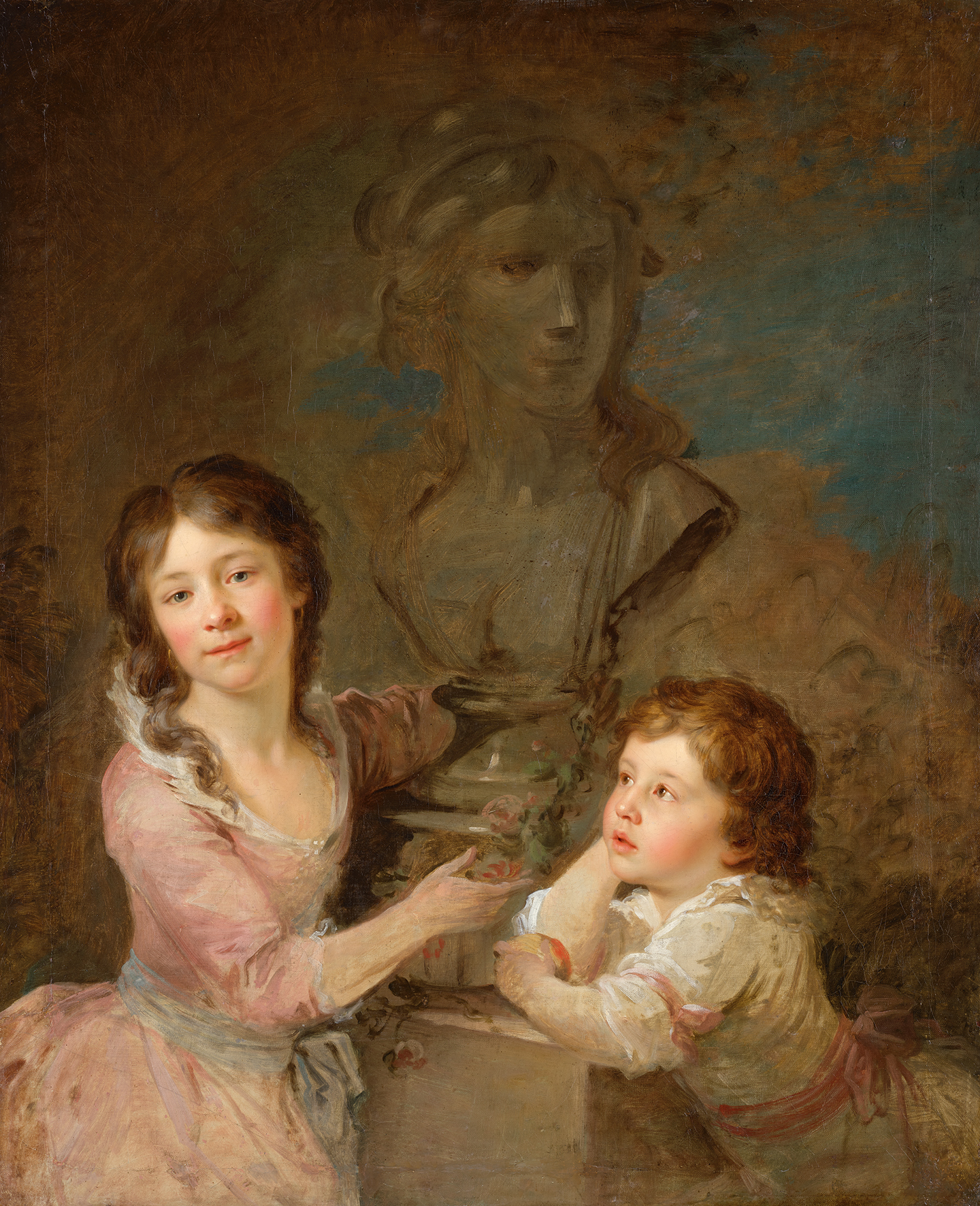
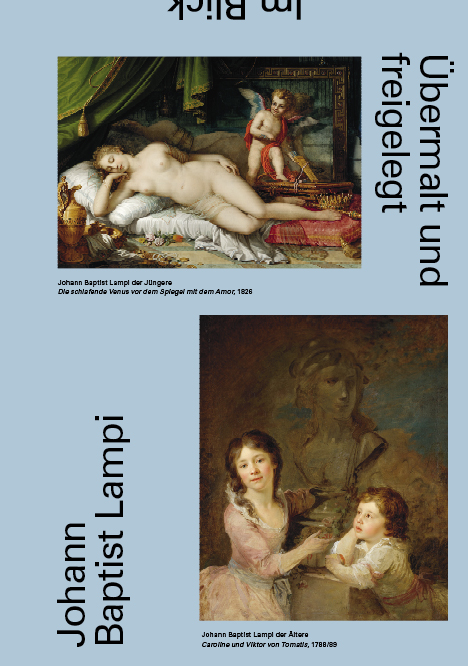
What do a Neoclassical family portrait and a Biedermeier painting of Venus have in common? Both the portrait of Caroline and Viktor von Tomatis by Johann Baptist Lampi the Elder (1751 Romeno – 1830 Vienna) and the painting Sleeping Venus with Cupid in Front of a Mirror by his eponymous son Johann Baptist the Younger (1775 Trento – 1837 Vienna) were significantly overpainted. This IN-SIGHT exhibition traces how these major interventions altered the meaning of both works.
Curated by Katharina Lovecky.
Upper Belvedere
Opening Hours
Address
Prinz-Eugen-Straße 27, 1030 Vienna
Getting thereImpressions
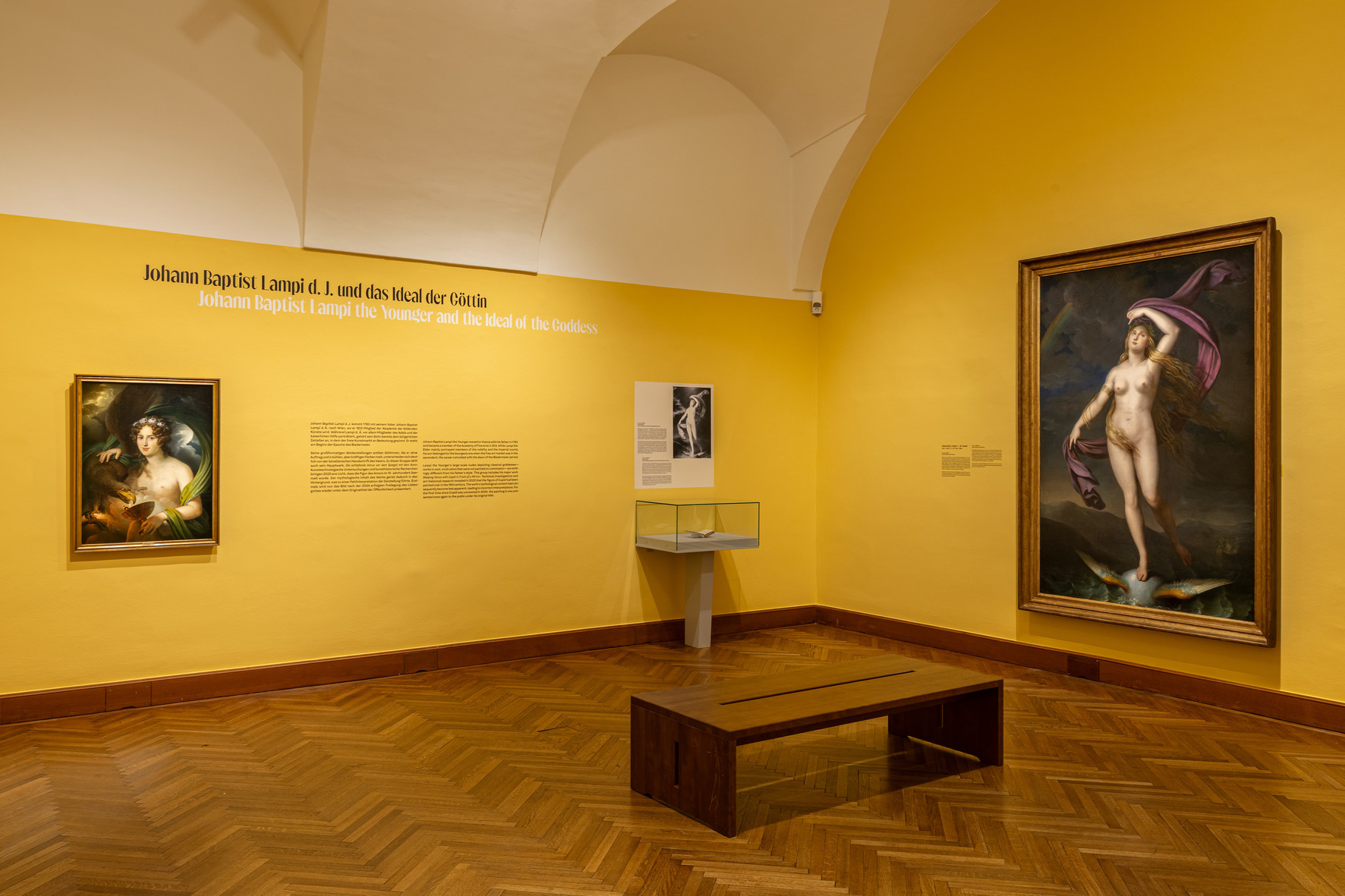
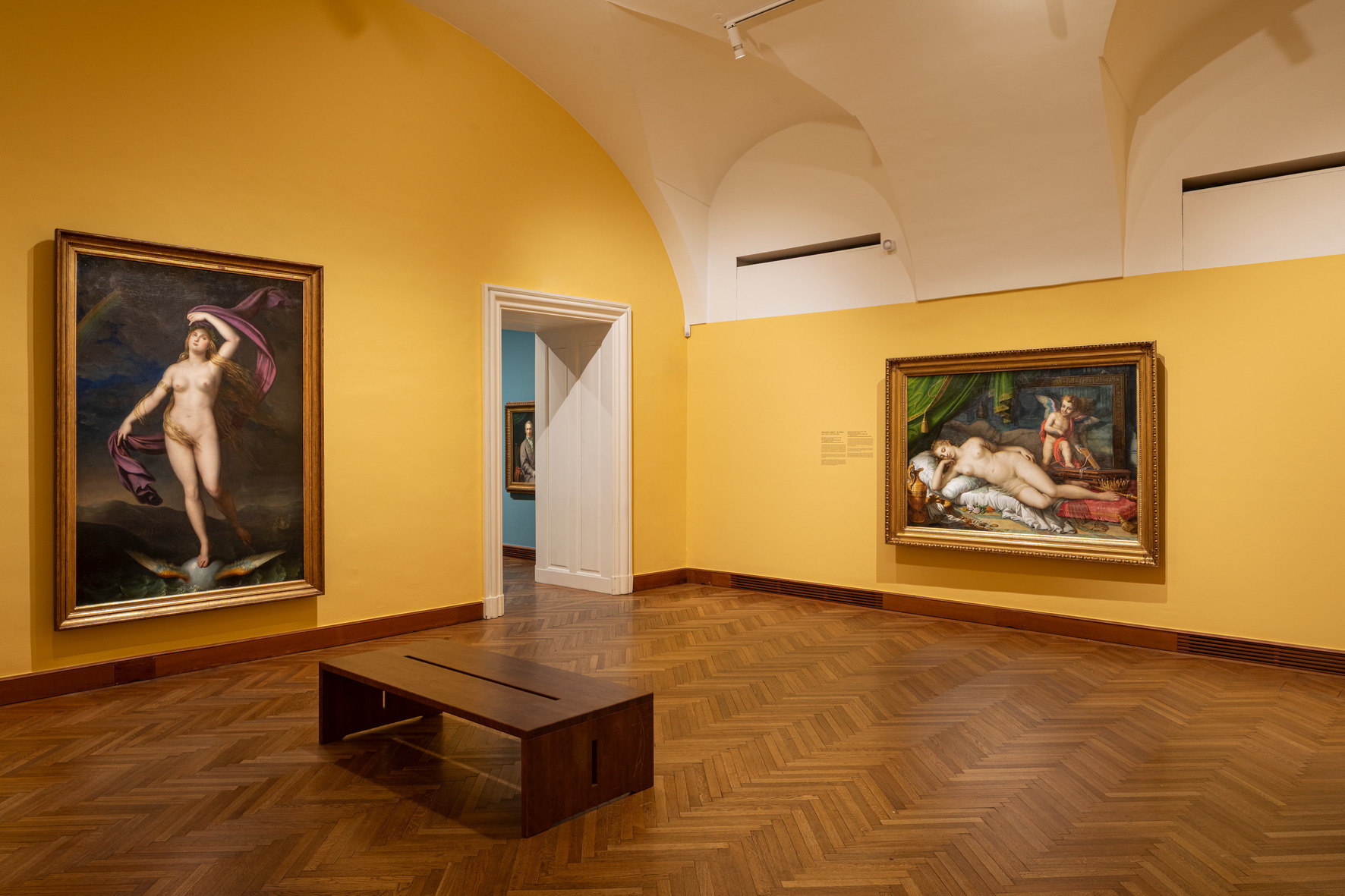



The Exhibition
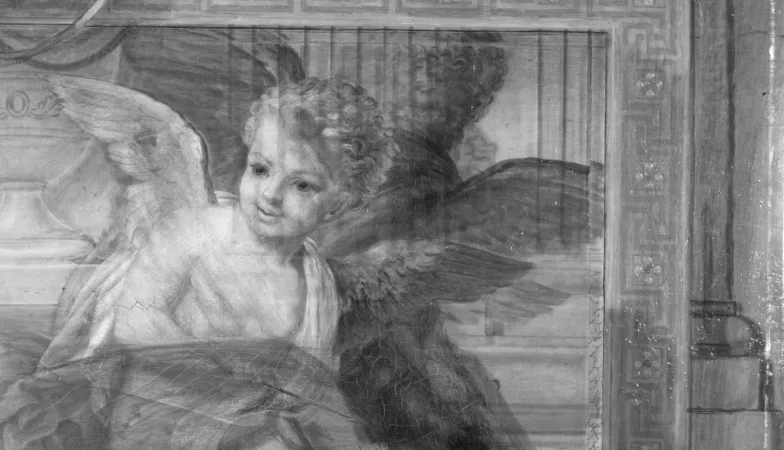
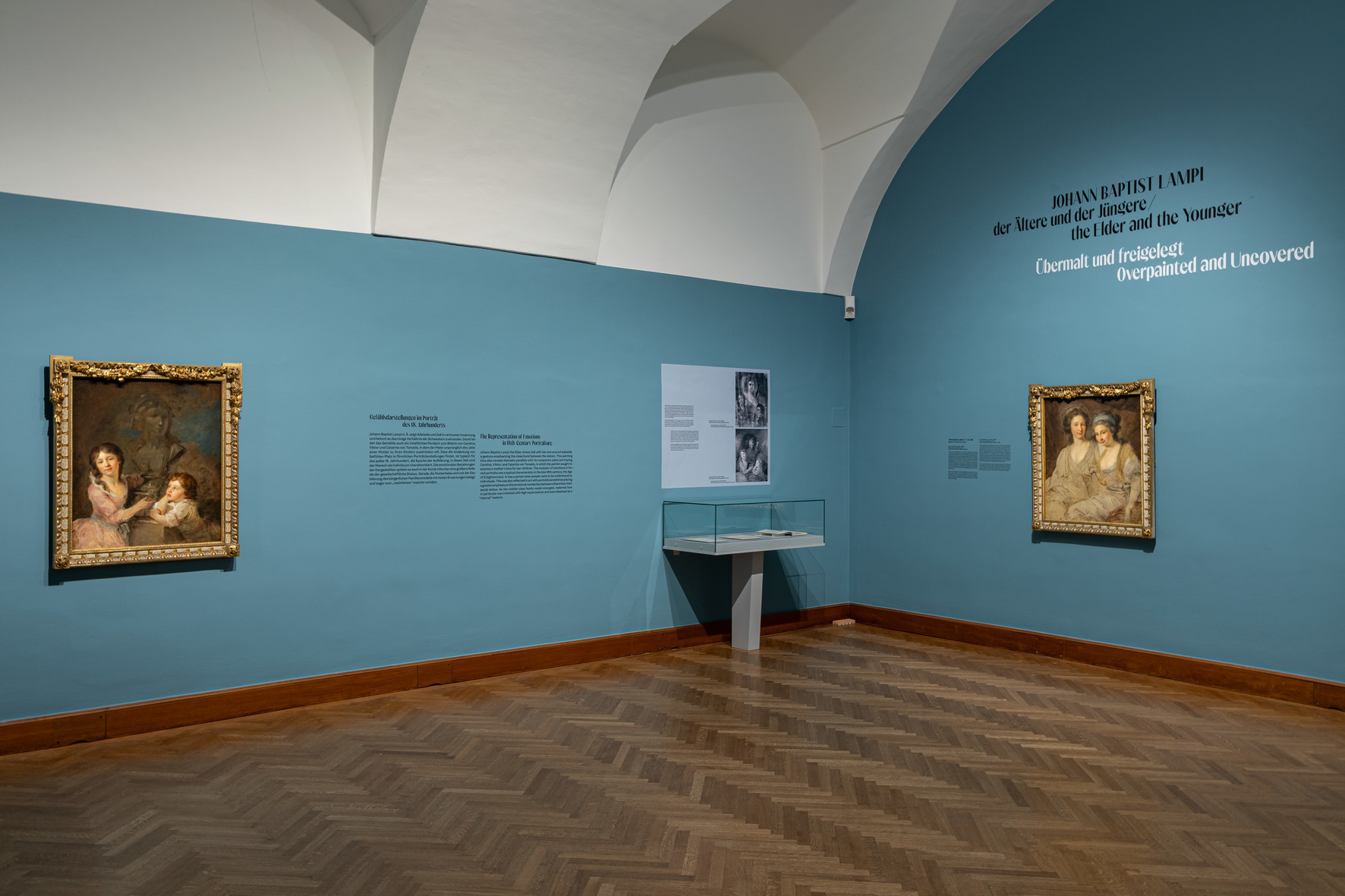
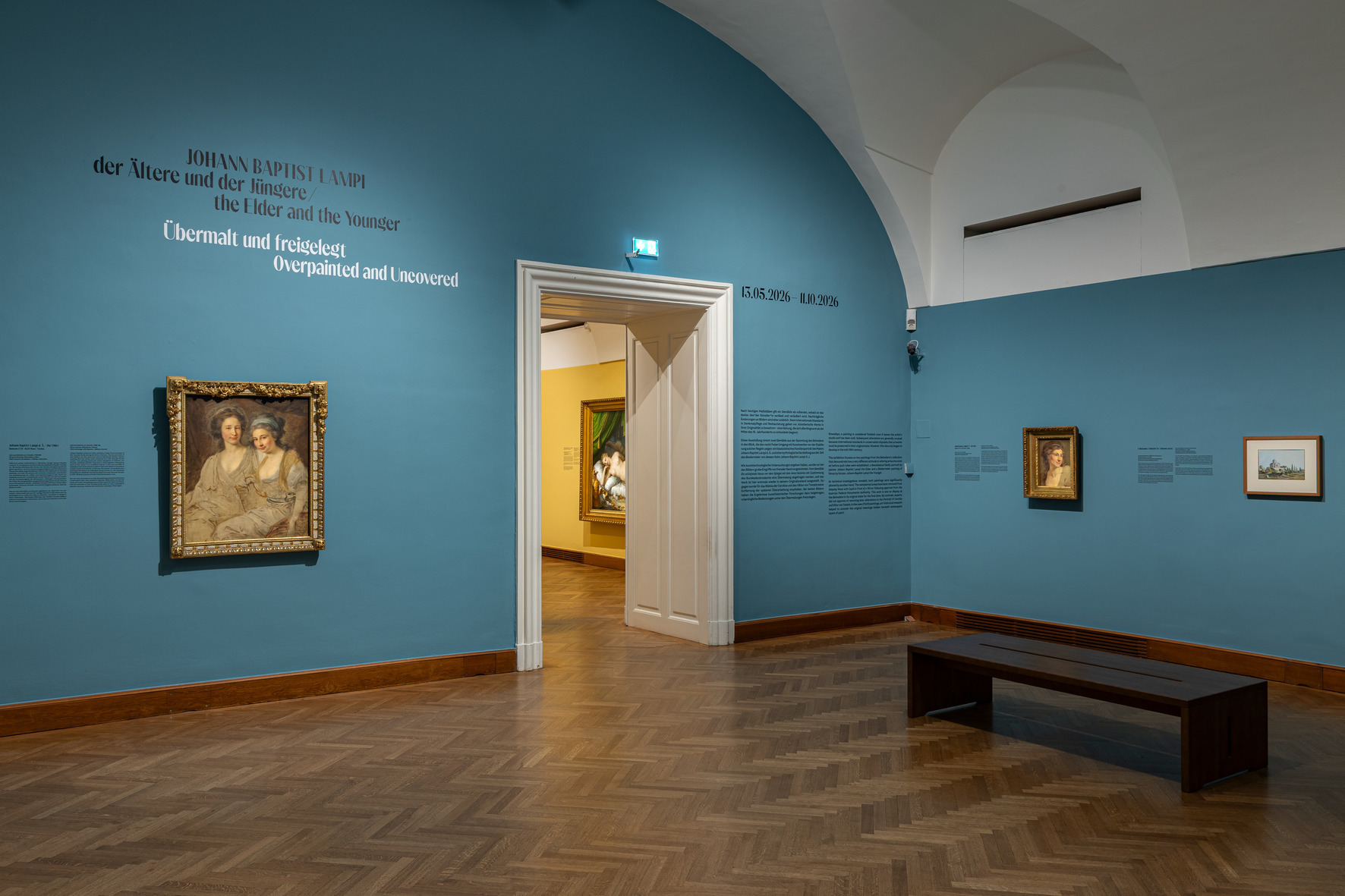
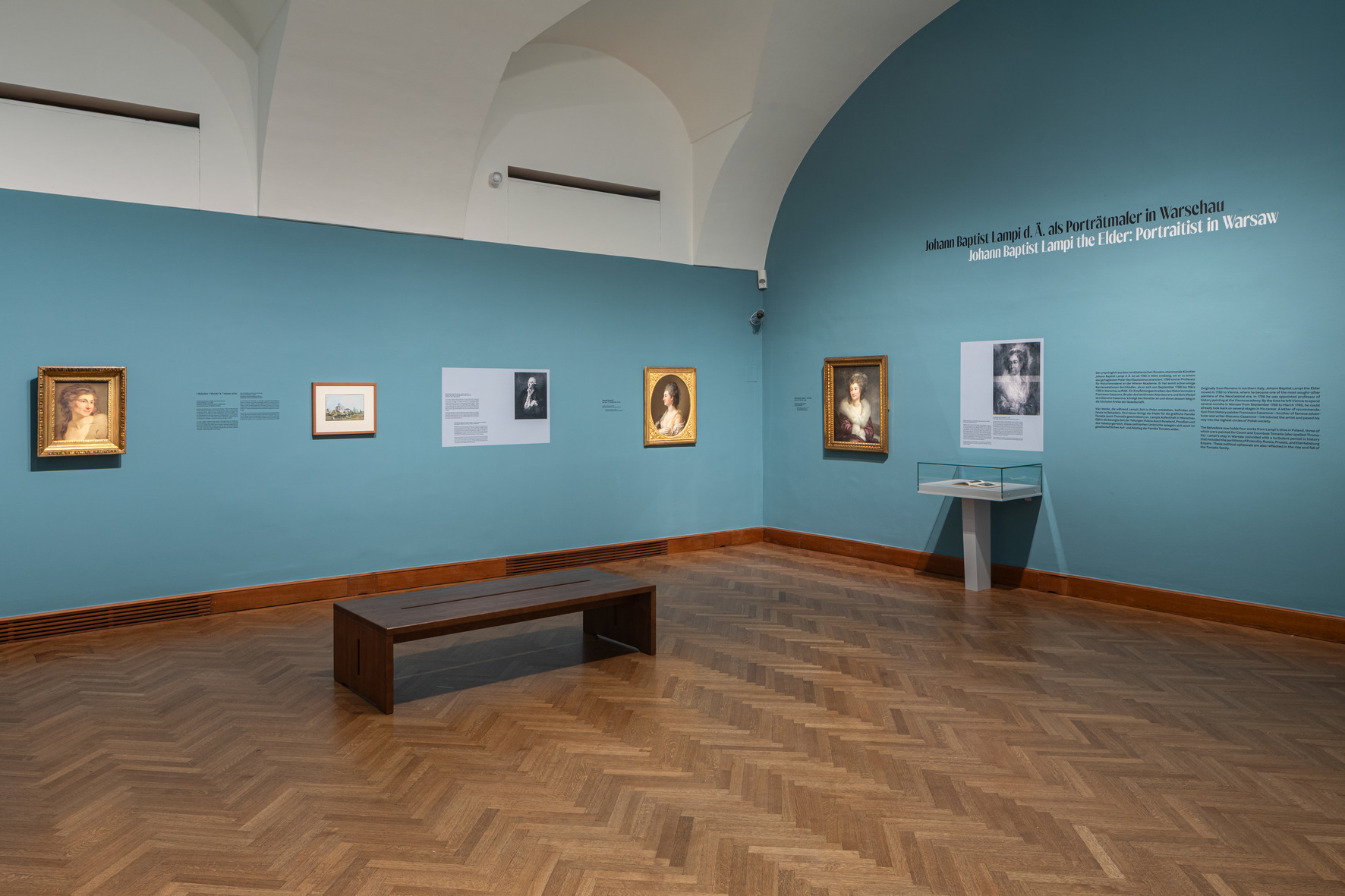
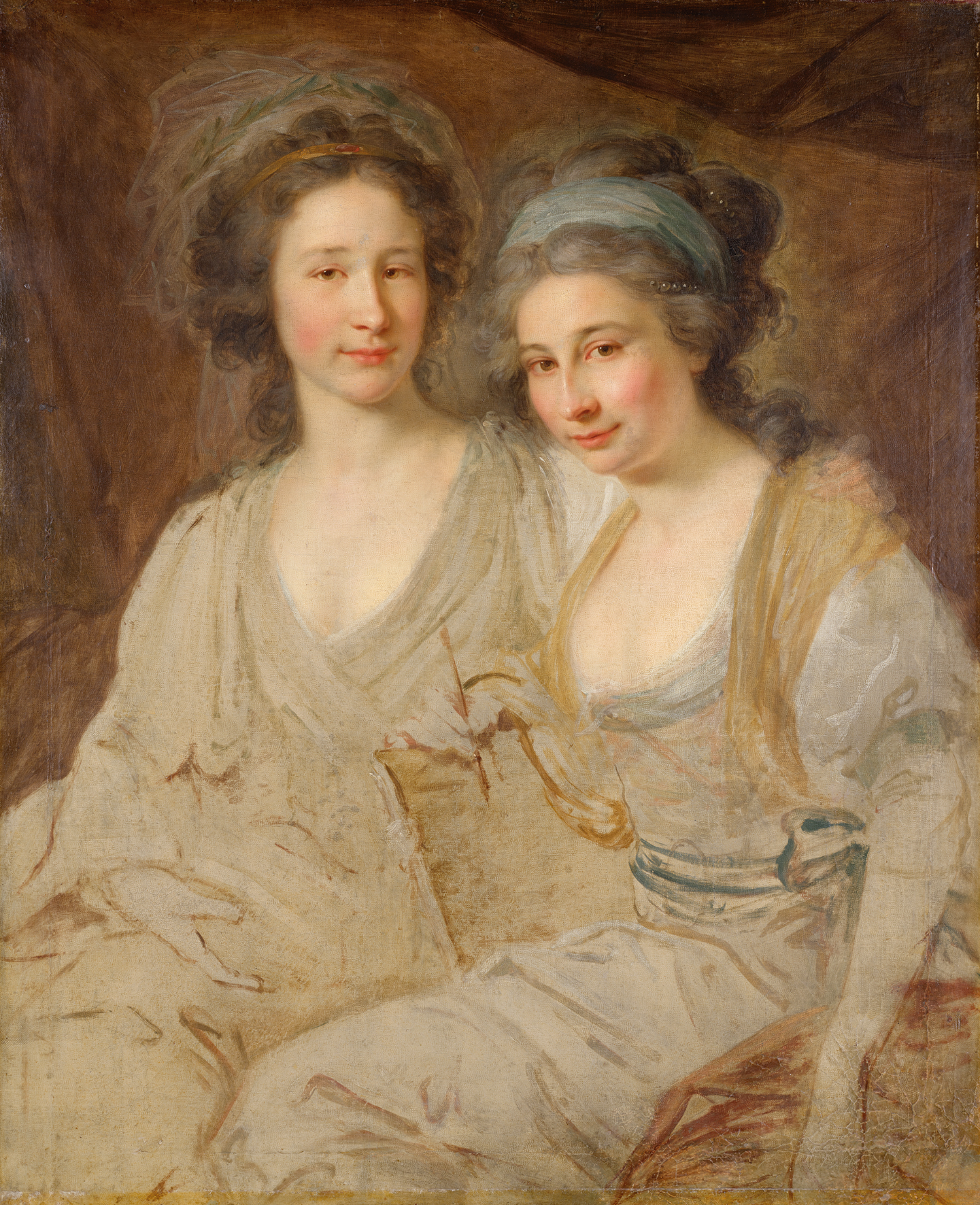
During his time in Warsaw in 1788/89, Johann Baptist Lampi the Elder painted several portraits of the Tomatis family. Milanese dancer Catarina, née Filipazzi, had moved to Warsaw with entrepreneur Carlo Tomatis in 1765. One of the three portraits of the family by Lampi shows two of their children, Caroline and Viktor, standing either side of a bust. X-ray and infrared imaging from 2016 revealed this bust to be an overpainting: hidden beneath the layers of paint is a portrait of their mother, Catarina, embracing her children. This exhibition tells the story of the Tomatis family based on this work, further portraits, and archival material.
In 2022 Johann Baptist Lampi the Younger’s painting Venus Sleeping on a Day Bed was also analyzed using X-ray and infrared imaging. In this case, the figure of Cupid emerged, concealed beneath a black surface. By erasing the god of love, the mythological content of this work had faded into the background. This helps explain why the painting was later interpreted as a portrait of Emilie Victoria Kraus, one of Napoleon’s lovers, in two twentieth-century novels set in Salzburg. It was precisely this false interpretation that paved the way to the painting’s popularity—reaching even as far as Paraguay. Now, for the first time since the revealing of Cupid in 2024, the painting will be shown to the public under its original title.
This exhibition uncovers the layers of meaning contained within two paintings, which had been hidden by overpainting. It shows that the meaning of artworks can be significantly altered once they leave the artist’s studio: A family portrait expressing a mother’s love for her children was transformed into a memorial, an idealized Venus became the portrait of a local Salzburg celebrity.
Johann Baptist Lampi the Elder
Johann Baptist Lampi the Elder was born in 1751 in Romeno, the youngest child of painter Matthias Lamp and Chiara Margherita née Lorenzoni. Lampi was first taught by his father before continuing his training in 1768 with his uncle Pietro Lorenzoni in Salzburg and Bressanone/Brixen. In 1772 he married Anna Maria Franchi and moved to Verona. Two of their seven children would later become painters: Johann Baptist Lampi the Younger and Franz Xaver Lampi (1782 Klagenfurt – 1852 Warsaw).
In 1773 Lampi was made an honorary member of the academy in Verona. He lived in Trento before moving in 1779 to Innsbruck and later to Klagenfurt. From then on, he worked as a portraitist for the affluent bourgeoisie, the nobility, and the imperial family. On occasion he also produced history paintings. In 1783 Lampi moved to Vienna. Only two years later, he was made a member of the Vienna Academy of Fine Arts, before being appointed professor of history painting in 1786.
Lampi stayed in Warsaw from September 1788 to March 1789 in order to paint a portrait of the Polish king Stanisław II August Poniatowski. In 1791 the artist traveled to Iași/Jassy (now in Romania) before moving to St. Petersburg on January 20, 1792, where he portrayed members of the Russian court and Czarina Catherine II.
On February 11, 1795, his wife, who had remained in Vienna, died of lung disease. In 1797 Lampi returned to Vienna and was knighted the following year. He married his second wife, Julia Rigin, in 1807. In 1819 Lampi sponsored a prize for life drawing at the Vienna academy; he retired on full pay in 1822. In his last years the artist went on several health cures at the spa resort Baden near Vienna. In 1830, following several strokes, the artist died aged seventy-eight in Leopoldstadt, then a suburb of Vienna and now its second district.
Johann Baptist Lampi the Younger
Johann Baptist Lampi the Younger studied at the Academy of Fine Arts in Vienna from 1786 to 1794 under Hubert Maurer and Heinrich Friedrich Füger. He was also taught by his father. In 1796 the artist traveled to join him in St. Petersburg, where he married Anna Drawin (Travin) that same year. In 1797 Lampi the Younger was awarded honorary membership of the St. Petersburg academy. He followed in his father’s footsteps to become a portraitist of the Russian aristocracy. In 1804 he returned to Vienna, and here, too, he was in great demand as a portrait painter while also working in his father’s studio. In 1813 he became a member of the Academy of Fine Arts and contributed regularly to exhibitions. He painted four portraits of Emperor Francis I, including a portrayal of the monarch in the regalia of the Order of the Golden Fleece from around 1820, which is now in the Kunsthistorisches Museum, Vienna. In 1825 Lampi completed the altarpiece depicting the Assumption of the Virgin for the parish church in Romeno based on a sketch by his father, whose poor health had prevented him from completing the work. That year, Lampi the Younger also painted a life-sized Fortune, which was reproduced as a copperplate engraving in an almanac. The painting was acquired by Prince Johann I of Liechtenstein. In 1828 Lampi presented his work Resting Venus with Cupid in Front of the Mirror at the annual exhibition of the Academy of Fine Arts in Vienna, where it was acquired for the Imperial Picture Gallery. In 1837 the artist died of tuberculosis in Vienna at the age of sixty-one.
Videos
Catalogue
Editors: Stella Rollig, Katharina Lovecky
Authors: Katharina Lovecky, Roberto Pancheri, Stella Rollig, Ana Stefaner
Graphic design: Andreas Wesle
Publishing year: 2026
Number of pages: 112 pages, 66 images
Format: 16,5 × 23,5 cm, Softcover
ISBN: 978-3-903327-75-7 (DE)
€ 19 (incl. VAT)