


-
Moritz von Schwind
The Power of Myths
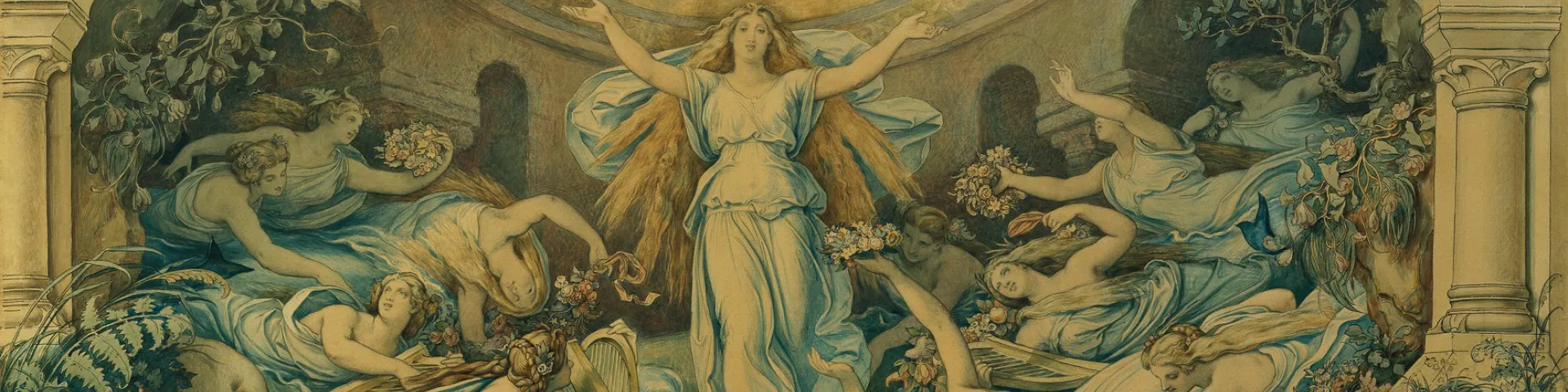
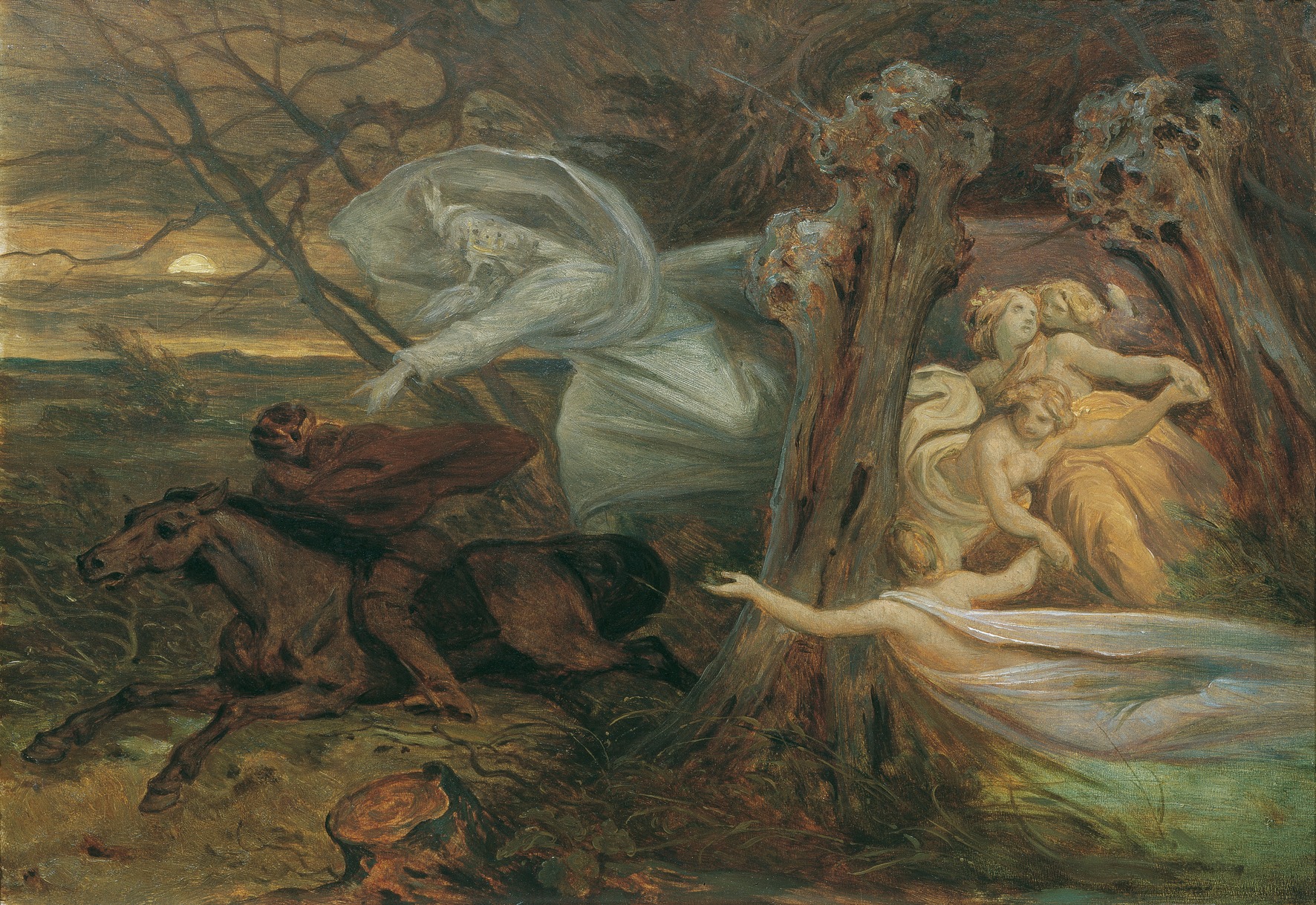
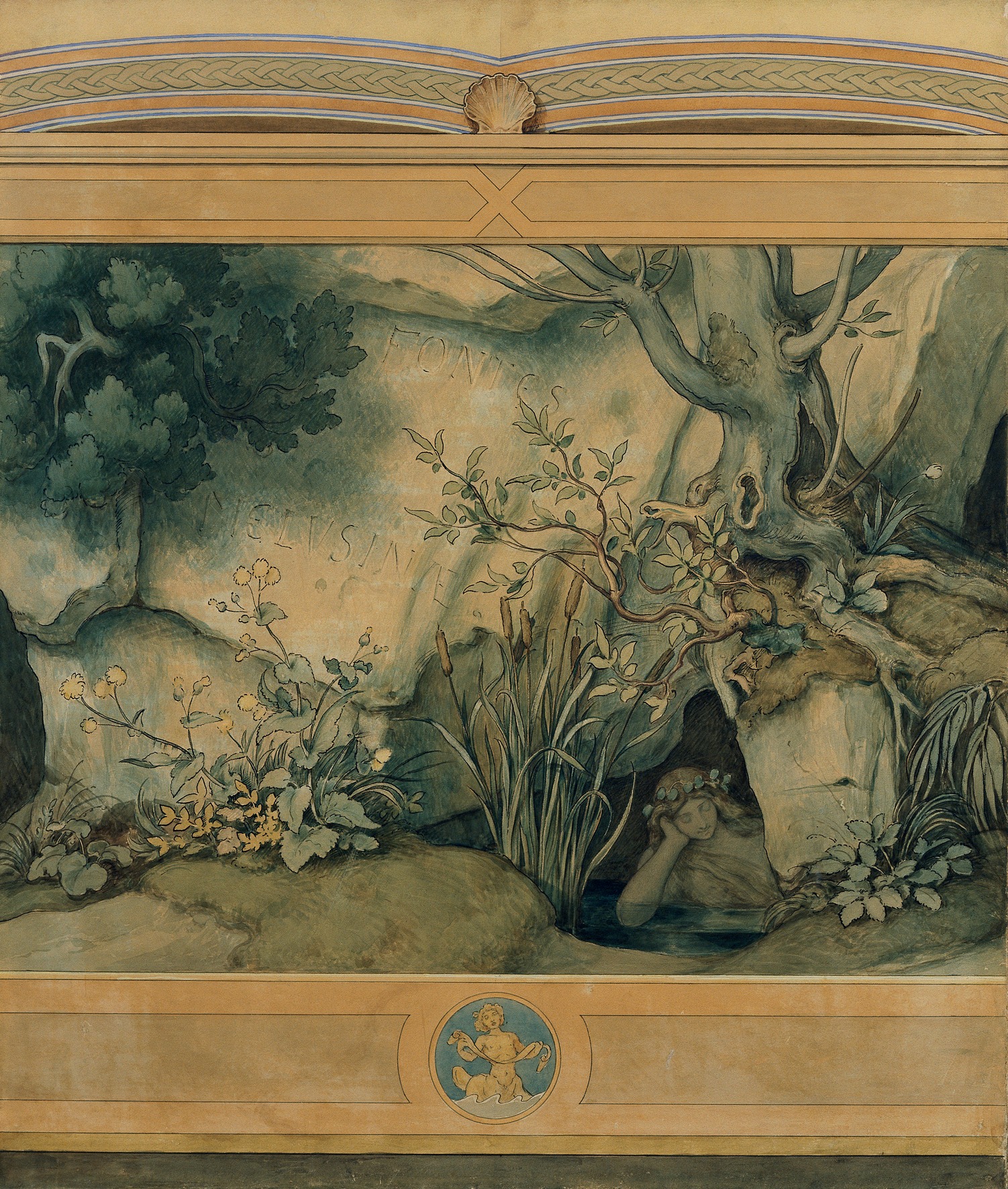
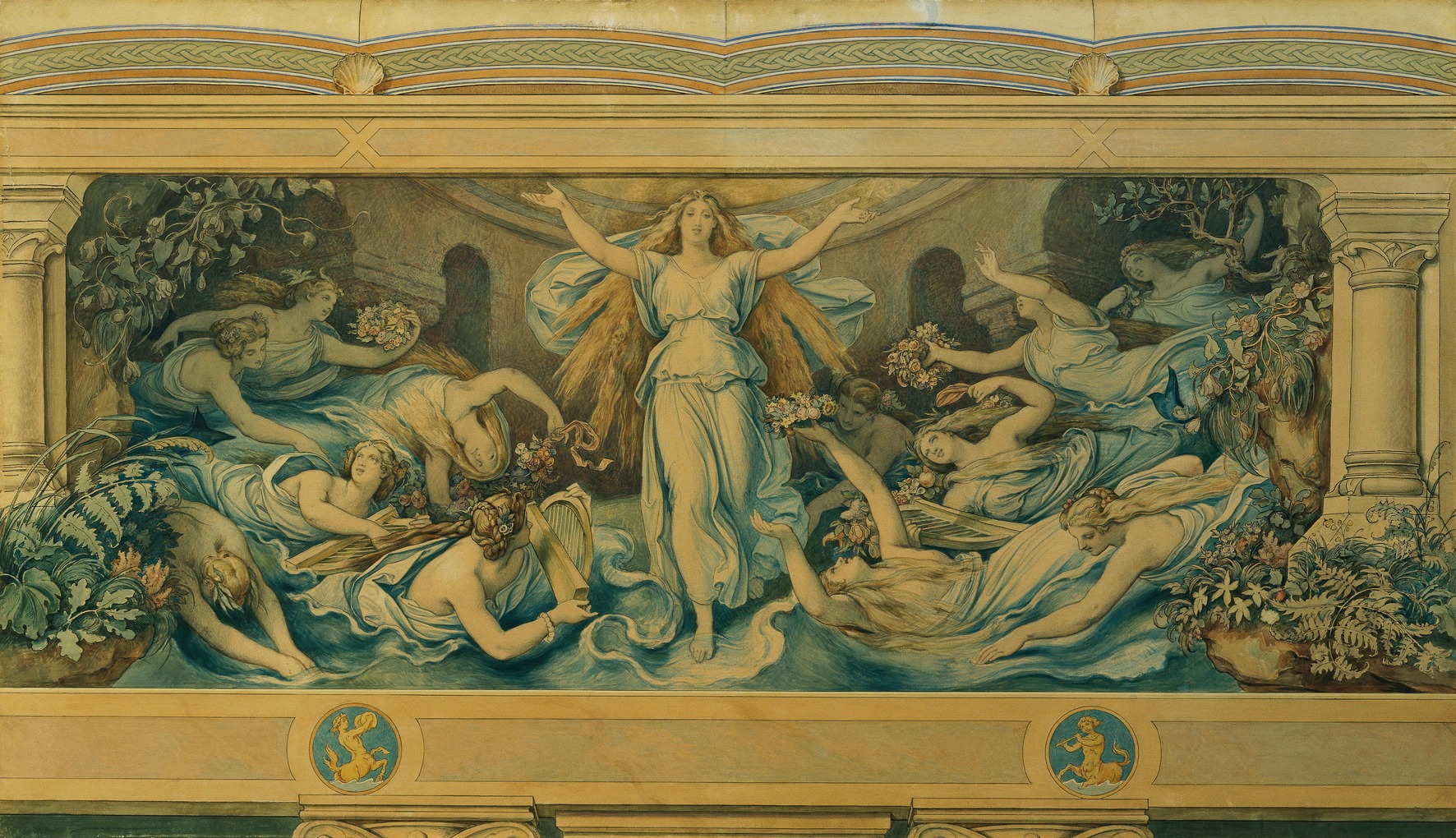
In 1869, Moritz von Schwind completed The Beautiful Melusine, a monumental watercolor cycle that would become a major work of late Romanticism. Conceived as a circular frieze, the drawings illustrating the tragic tale of the water nymph Melusine form the centerpiece of the exhibition. The exhibition explores how the artist developed, reworked, and gave form to visual ideas drawn from literary sources across different media. It also examines the reception of his work up to the present day.
Curated by Ursula Drahoss (Kunsthalle Mannheim) and Katharina Lovecky
Assistant Curator: Kati Renner
Impressions
The Exhibition
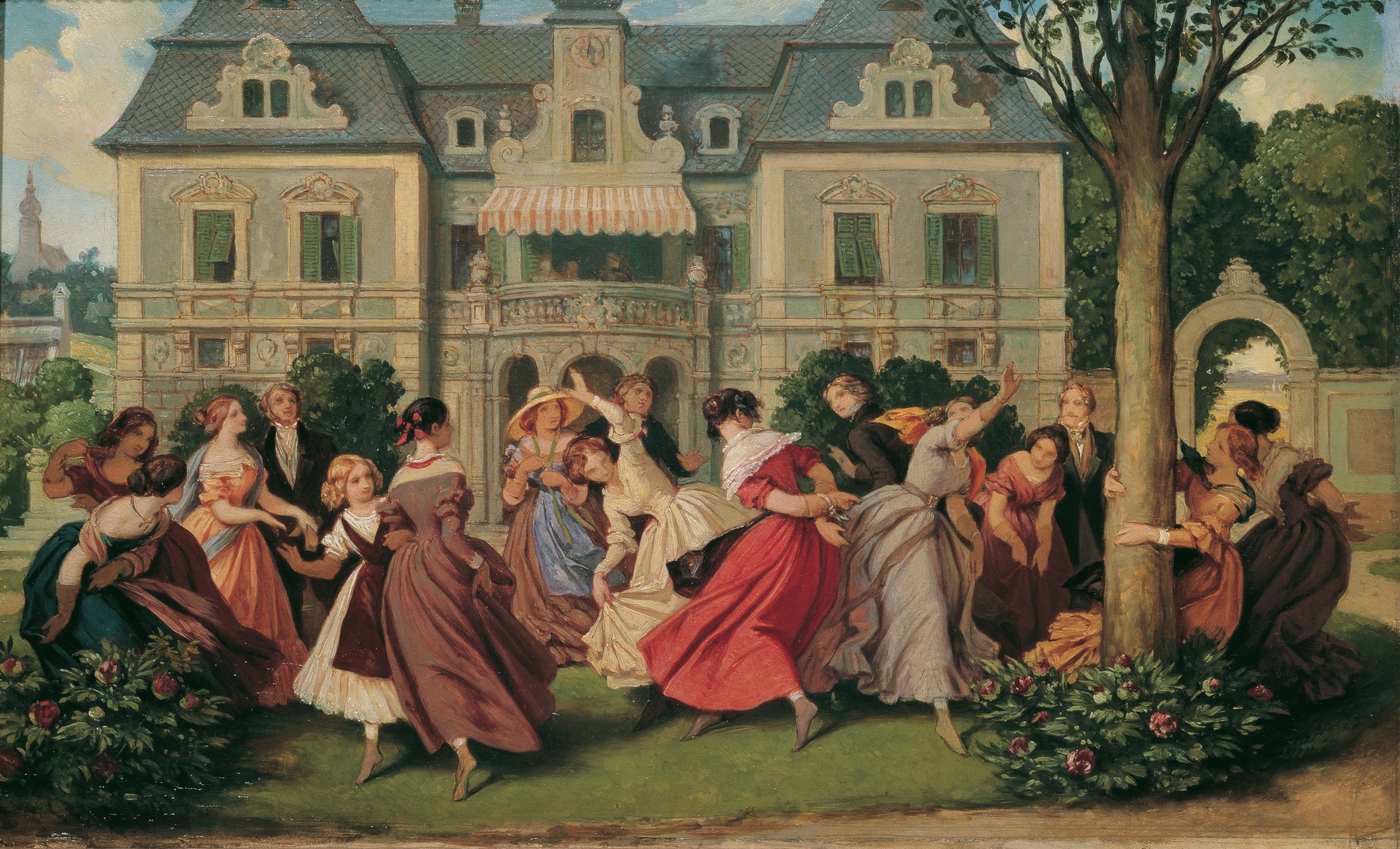
Moritz von Schwind’s fondness for literary subjects and his ability to translate them into striking imagery are apparent even in his early works, reflecting the sensibilities of his time. Under the influence of Romanticism, with its renewed appreciation of traditional European fairy tales and myths, literature became an important source of inspiration for the visual arts. It offered a poetic and mythical dimension as a counterpoint to the increasingly rational worldview of the Enlightenment. At the same time, these narratives were perceived as expressions of cultural origins and used to promote nationalist ideas in the nineteenth century. The ideological appropriation of Romantic art under National Socialism had a lasting impact on its reception and complicated an unbiased assessment of these works after 1945.
In his watercolor cycle The Beautiful Melusine, Schwind recounts the tragic story of the eponymous water nymph in eleven seamlessly flowing sections, combining elements from several literary sources. The cycle, purchased in 1874 for the Imperial Picture Gallery, contributed to the posthumous popularization of the work in Schwind’s birthplace, Vienna. Its influence is reflected not only in paintings but also in musical interpretations, stage designs, and tableaux vivants.
The visual language of Romanticism lives on in twentieth century and contemporary popular culture. In particular, its appropriation by the American film and entertainment industry, especially Walt Disney, has shaped the enduring image of a fairy-tale Middle Ages.
Modern literary and cinematic adaptations, such as those by Ingeborg Bachmann, Christian Petzold, and Franziska Pflaum, in turn reinterpret fairy-tale themes outside their historical contexts. In these works, water-women emerge as figures of self-determination, challenging contemporary notions of gender roles and exploring relations of power and powerlessness in society.
Biography
Moritz von Schwind was born in Vienna on January 21, 1804. While attending the Schottengymnasium, he befriended the future poets Eduard Bauernfeld and Nikolaus Lenau. He also maintained close ties with Franz Schubert and his circle.
Schwind began studying philosophy at the University of Vienna in 1818, then enrolled at the Academy of Fine Arts in 1821. However, the Academy’s classicist orientation did not align with his artistic vision. Instead, he was influenced by the romanticized depictions of the Middle Ages by Karl Russ and Ferdinand Schnorr von Carolsfeld. In 1827, he abandoned his studies and moved to Munich the following year. There, he studied fresco painting under Peter von Cornelius and received his first commissions to paint frescoes depicting scenes from Ludwig Tieck’s fairy tales at the Munich Residenz. Over the following decades, he completed several significant decorative commissions.
In 1842, he married Luise Sachs in Karlsruhe. The couple had six children, four of whom reached adulthood. A professorship in history painting at the Städel Art Institute brought him to Frankfurt am Main in 1844. Two years later, Schwind returned to Munich to teach history painting at the Munich Academy. Faced with a shortage of painting commissions, he produced illustrations for Fliegende Blätter and Münchener Bilderbogen. From 1853 to 1855, he decorated the Wartburg in Thuringia with frescoes. He later designed stained-glass windows for Glasgow and London, as well as the decorative program for the foyer and loggia of the Vienna Court Opera, which he completed in 1867. In 1870, Schwind was named an honorary member of the French Academy. The artist died on February 8, 1871, in Niederpöcking, Bavaria.


