General Director Stella Rollig: Is it even possible to find new aspects to spotlight in Waldmüller’s work? It is indeed! Waldmüller’s popularity and the Belvedere’s extensive holdings of his paintings make him one of the key artists in the museum’s collection. By juxtaposing his landscapes with works by other European artists, this exhibition promises fresh perspectives—even for enthusiasts and experts.
In the first half of the nineteenth century, progressive artists across Europe issued a clarion call for art to be true to nature. At the same time, they increasingly concentrated on their native landscapes. Accompanying this was a more general trend of people wanting to spend more time in the natural world, to learn about it, and to bring nature into their homes in the form of pictures. Political upheavals, social change, and advancing industrialization were the forces behind this cultural shift in the nineteenth century.
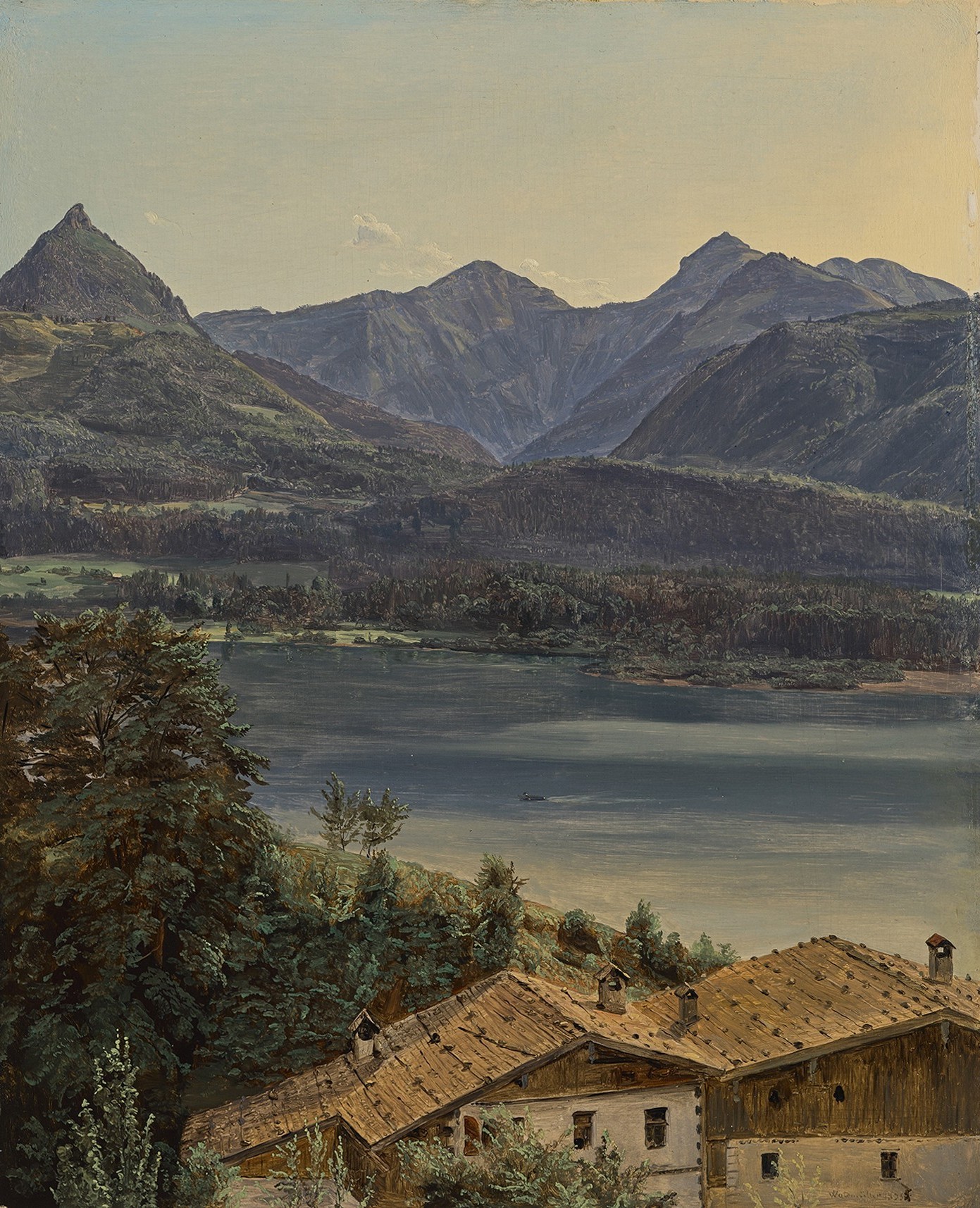
Ferdinand Georg Waldmüller, a major Austrian painter from the Biedermeier period, made it his goal to paint “the nature that surrounds us, our time, our customs.” His true-to-life portraits, genre scenes, and landscapes polarized opinion. Waldmüller was—and still is—best known for his realistic portraits and scenes from everyday life. Real, observed landscapes only appear as backgrounds early on in his career. This changed in the 1830s, and Waldmüller began placing the natural world at the forefront of his work, producing numerous views with striking naturalism. From that point onward, landscape assumed a decisive role in his art—an interest that remained with him until the end of his life.
Waldmüller was one of the few artists of his time to be equally successful in portraiture, genre painting, and landscape. His naturalistic landscapes—appearing both as backgrounds and as independent images—reflect a broader interest in the natural world in Europe. By placing Waldmüller’s landscapes in the context of works by his European contemporaries, new perspectives on his oeuvre unfold, positioning it as a distinctive example of naturalism in Europe, said curator Arnika Groenewald-Schmidt.
Although rooted in a shared ideology, distinct strands of naturalism emerged in different countries, and these were partly interconnected and partly parallel developments. Significant variations in style and approaches to representing the natural world reflect differing methods of training, cultural backgrounds, and topographies. The exhibition offers the chance to explore Waldmüller’s engagement with landscape in his views from the Prater in Vienna and the Vienna Woods, the region around Salzburg, and from Italy. Meanwhile, works by European greats, such as John Constable, Johann Christian Dahl, and Jean-Baptiste Camille Corot, place Waldmüller in the context of his time.
In summer 2026 the National Gallery will present the first ever UK exhibition of paintings by Ferdinand Georg Waldmüller. Waldmüller: Landscapes (2 July – 20 September 2026), additionally the first devoted solely to his work as a landscape painter, is a collaboration between the National Gallery and the Belvedere, which is lending most of the works on display.