

-
Ferdinand Georg Waldmüller
True to Nature
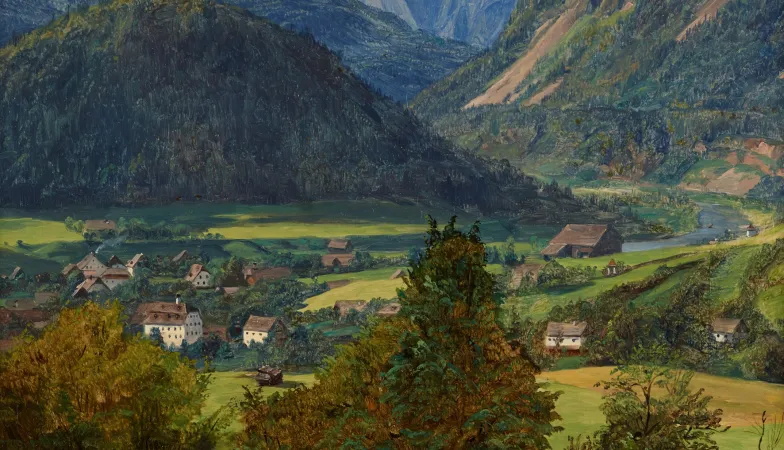
Landscape painting experienced a heyday across Europe during the nineteenth century. Ferdinand Georg Waldmüller was part of this development, capturing people’s yearning for the natural world in his intimate portraits of trees, sweeping landscapes from the Vienna Woods, and iconic views of the Salzkammergut. This exhibition sheds light on Waldmüller’s landscapes in the context of his time. Trailblazing contemporaries, such as John Constable and Jean-Baptiste Camille Corot, inspire us to explore Waldmüller’s depictions of nature against the backdrop of wider European developments.
An exhibition organized by the Belvedere, Vienna, in collaboration with the National Gallery, London.
With loans from the Princely Collections Liechtenstein.
Curated by Arnika Groenewald-Schmidt.
Assistant Curator: Kati Renner
In cooperation with


Impressions


The Exhibition

In the first half of the nineteenth century, many progressive artists across Europe issued a clarion call that art should be true to life. Artists increasingly turned their attention to their native landscapes because, in the age of industrialization, people wanted to spend more time in the natural world, to learn about it, and to bring nature into their homes in the form of pictures.
Ferdinand Georg Waldmüller (1793–1865), a pivotal Austrian painter from the Biedermeier period, made it his goal to paint “nature that surrounds us, our time, our customs.” His true-to-life portraits, genre scenes, and landscapes polarized opinion. Landscape was key in his art—as a background, a subject in its own right, and as an expression of the connection between humanity and nature. It was an interest that endured until the end of his life.
The exhibition offers the chance to explore Waldmüller’s engagement with landscape, taking viewers to the Prater meadows in Vienna and the Vienna Woods, the lakes and mountains of the Salzkammergut, and south to Italy. Selected works by European greats, such as John Constable, Johann Christian Dahl, and Théodore Rousseau, inspire us to see Waldmüller in the context of his time.
Biography
![The man in the picture is seated in a slightly turned position. He is wearing a suit with a vest and an overcoat. His face has a friendly expression, and he has curly hair. In his right hand, he holds a hat, while his left hand rests on his leg. In the background, there is a landscape with trees and hills, as well as a cloudy sky. A flower is placed in the foreground. [AI-generated with ChatGPT]](/sites/default/files/2025-08/Ferdinand%20Georg%20Waldm%C3%BCller_Selbstportr%C3%A4t%20in%20jungen%20Jahren_1828.jpg)
Ferdinand Georg Waldmüller (1793–1865) is one of the leading Austrian painters from the Biedermeier period. After training at the Academy of Fine Arts in Vienna, he first worked as an art teacher and a painter of miniatures and theater scenery before turning his attention to copying Old Masters and to portraits. From the 1830s he expanded this scope to include landscape in addition to portraiture; in the 1840s genre painting came to the fore. Waldmüller was an astute observer of the world around him and of everyday life. His works are characterized by their attention to detail, naturalistic lighting, and realistic style of representation. His scenes of rural life in Austria became particularly popular.
In 1829 Waldmüller was appointed custodian of the collection of paintings at the Academy of Fine Arts, which came with the rank and title of professor. He wanted to introduce reforms at the academy, publishing his proposals for the first time in 1846. However, his criticism of academic teaching methods was rejected and ultimately led to his dismissal in 1857. He was only reinstated shortly before he died.
Waldmüller’s travels took him to Italy, France, Germany, and Britain, where he studied the Old Masters and contemporary artists, and successfully presented his own artworks at exhibitions.
Videos
Catalogue
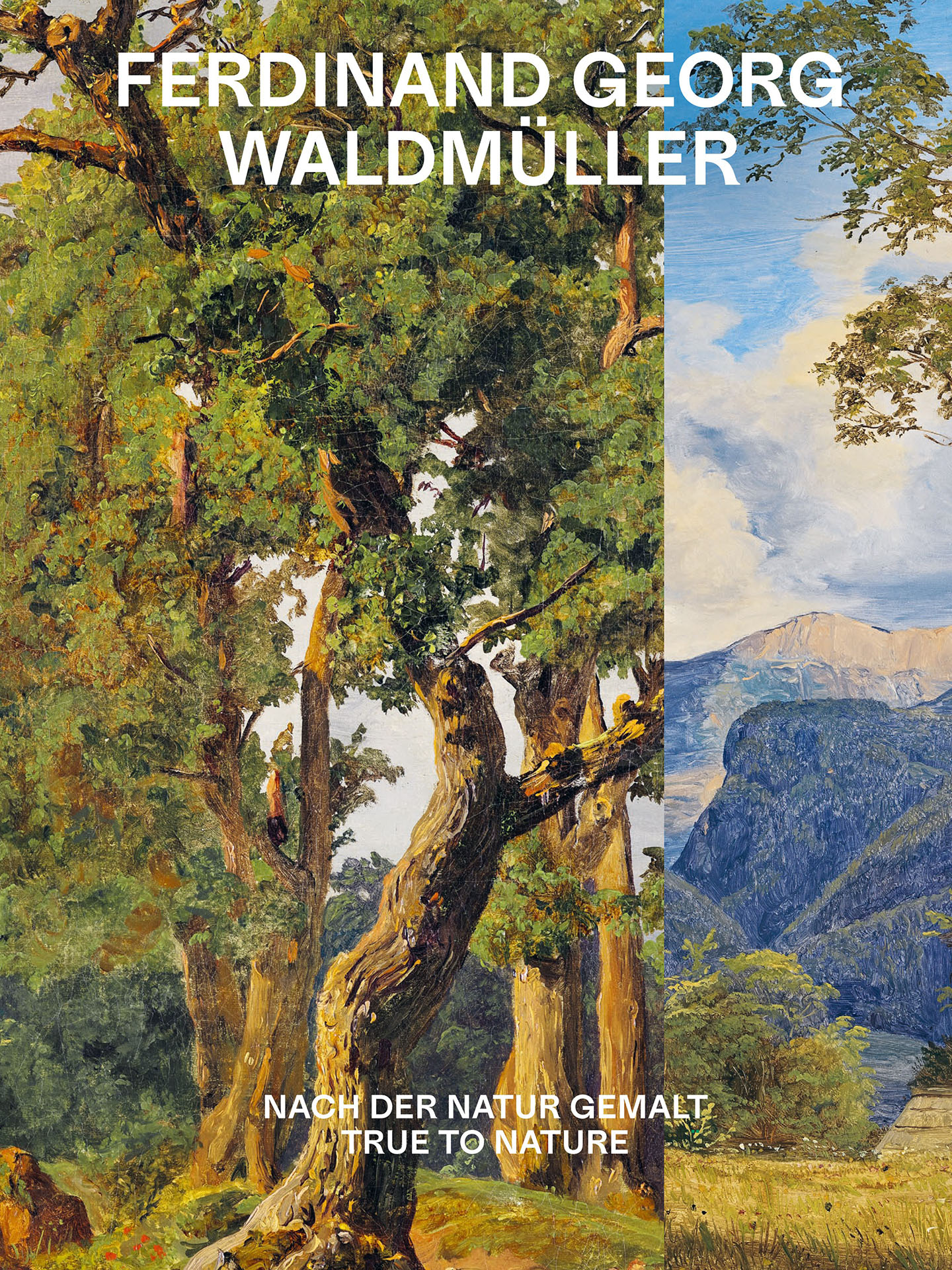
Editors: Stella Rollig, Arnika Groenewald-Schmidt
Authors: Anna Frasca-Rath, Arnika Groenewald-Schmidt, Sarah Herring, Christian Huemer, Kati Renner, Stella Rollig
Graphic design: grafisches Büro
Publishing year: 2026
Publisher: Verlag Buchhandlung Walther und Franz König, Köln
Number of pages: 224 pages, 144 images
Format: 21 × 28 cm, Softcover with dust jacket
ISBN: 978-3-7533-0968-2 (DE & EN)
€ 34,90 (incl. VAT) Available on site.