


-
Cézanne, Monet, Renoir
French Impressionism from the Museum Langmatt
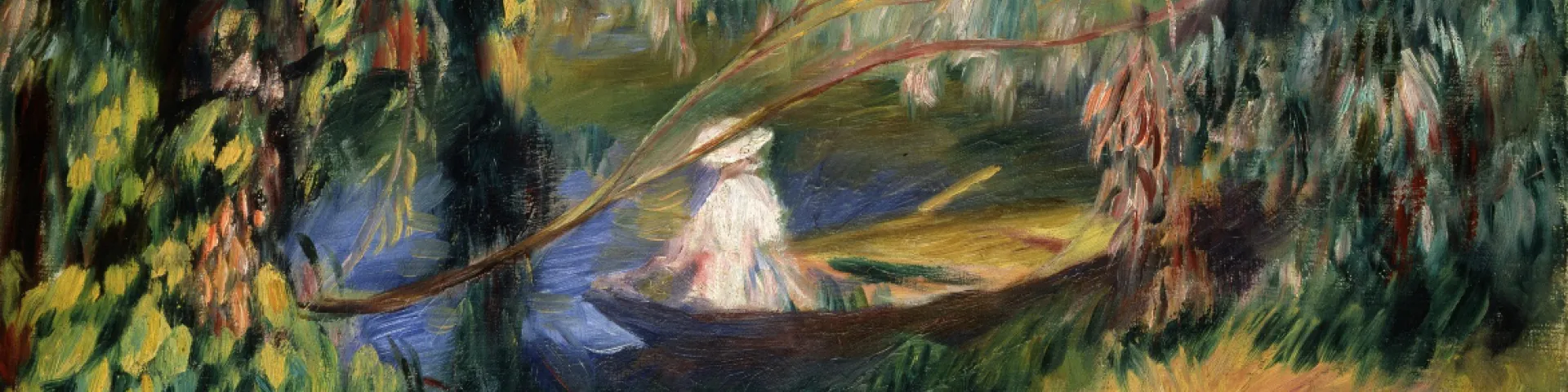
The Belvedere is presenting selected works from the Museum Langmatt collection, one of the earliest and most extensive private collections of French Impressionism in Switzerland.
Curated by Alexander Klee.
In cooperation with


Impressions


The Exhibition


The Art Nouveau Villa Langmatt was not only the residence of Jenny and Sidney Brown but also a space dedicated to their passion for art. The Browns started focusing on French art in around 1907, first acquiring an oil painting by Paul Cézanne, a painting by Claude Monet, and several pictures among others by Mary Cassat, Camille Pissaro and Auguste Renoir. The couple were particularly interested in the artist Pierre-Auguste Renoir and collected an extensive selection of his paintings. The quality of this collection is also demonstrated by a group of outstanding works by Camille Corot.
Over many years, the Browns systematically built up a collection of French Impressionism and its forerunners that is representative in its scope whilst at the same time reflecting their personal tastes. The couple’s collecting was not only a private passion but can also be seen in the context of the altered, modernized self-image of the Swiss industrial bourgeoisie.
The Museum Langmatt

In 1899 Jenny and Sidney Brown commissioned Swiss architect Karl Moser to design a villa on the site known as the “lange Matte” (long meadow) above River Limmat in Baden near Zurich. This magnificent Art Nouveau building surrounded by a park became the family home for the couple and their three sons, Sidney Hamlet (1898–1970), John Alfred (1900–1987), and Harry Frank (1905–1972). In 1979 John Alfred bequeathed the villa and art collection to the city of Baden, stipulating that the ensemble was to be preserved as a museum. The property was adapted after his death and has been open to the public as the Museum Langmatt since 1990.
In the same period as the creation of the Langmatt Collection, Impressionist works were also being acquired for the Modern Gallery in Vienna—now the Belvedere—and these form part of its core collection today.


