

Fall at the Belvedere
6 Things to See and Do on Golden and Gray Days
As fall arrives in Vienna, the leaves begin to change color and the low sun bathes the palace and gardens in warm light, a particularly atmospheric season begins at the Belvedere. Mild days still invite you to take a stroll, while cooler temperatures and the occasional rain shower offer the perfect excuse to spend a little more time in the museum.
Here are six things you shouldn’t miss on a fall day at the Belvedere.
Lisa Ebner-Kollmann
Belvedere, Wien
Olga Wisinger-Florian, "Falling Leaves" (1899)
Stroll through the Baroque Gardens
Golden yellow, orange, red, and brown: In fall, the gardens surrounding the Belvedere change almost daily. Colorful foliage adds new accents among Baroque pathways, fountains, and historic palace façades, while the low autumn sun casts long shadows across paths and terraces.
Strolling through the Belvedere Gardens has a long tradition. As early as the 18th century, the grounds were a place for leisurely walks and conversation. With their symmetrical layout of terraces, reflecting pools, staircases, and parterres, the gardens provided a magnificent setting. Today, the autumn foliage creates a striking contrast with the formal geometry of the Baroque garden.
Spend a Rainy Day with Art
Not every fall day shows its golden side – and that’s perfectly fine. When it’s raining outside and temperatures drop, a museum visit is the perfect opportunity to slow down and linger a little longer. Instead of heading straight for the best-known highlights, take your time exploring the collection, discovering lesser-known works, or making a detour to the Lower Belvedere.
A gray day doesn’t have to put a damper on your plans in Vienna. Sometimes bad weather is the perfect excuse to spend a little more time with art.
Discover Fall in Art
Fall at the Belvedere isn’t limited to the gardens. It can also be found in the permanent collection. In her 1899 painting "Falling Leaves", Olga Wisinger-Florian takes us deep into the Vienna Woods in fall. Dense, colorful foliage surrounds a solitary woman out for a walk on almost every side, making the distinctive atmosphere of a fall day the true subject of the painting.
Wisinger-Florian is considered one of the most important landscape and flower painters of the fin de siècle. By the late 19th century, the Vienna Woods had already become a popular destination for day trips. When Falling Leaves was first shown at the Pisko Art Salon in Vienna, it was immediately acquired for the Imperial Picture Gallery.

Tip: Before setting out to find "Falling Leaves", it’s worth taking a quick look at our online collection, where you can check whether the painting is currently on display. And why not keep exploring? Search terms such as “fall” or “leaves” will lead you to more seasonal discoveries from the Belvedere collection.
Visit the Orangery at the Lower Belvedere
The Lower Belvedere is always worth a visit. Today, its Orangery serves as an exhibition space. From the outside, however, its long façade with large windows still hints at its original purpose: providing shelter for Prince Eugene’s cold-sensitive orange trees during the Viennese winter. In the Baroque era, exotic plants like these were not only precious, but also prestigious status symbols. And apparently, you could never have too many of them.
As winter approached, however, there was a practical problem: What to do with the cold-sensitive plants? At the Belvedere, the orange trees were planted directly in the ground during the warmer months. In fall, the decorative rear wall was enclosed with a wooden structure and large windows, creating a sheltered space that could be heated during the cold season. In spring, the structure was removed again. An etching by Salomon Kleiner from 1737 captures this unusual seasonal transformation.

Soak Up Some Color in the Gold Cabinet
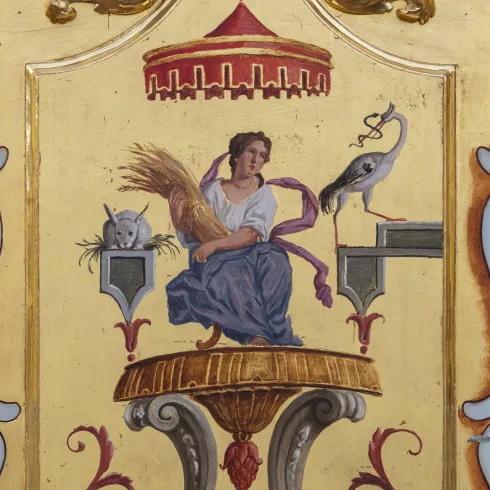
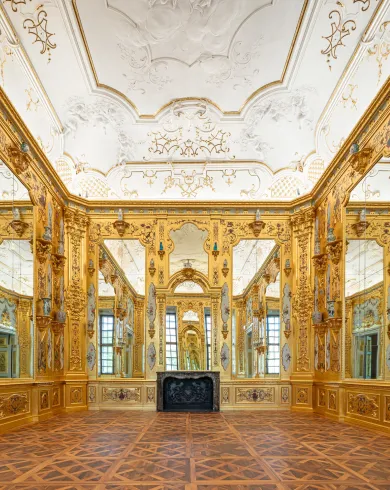
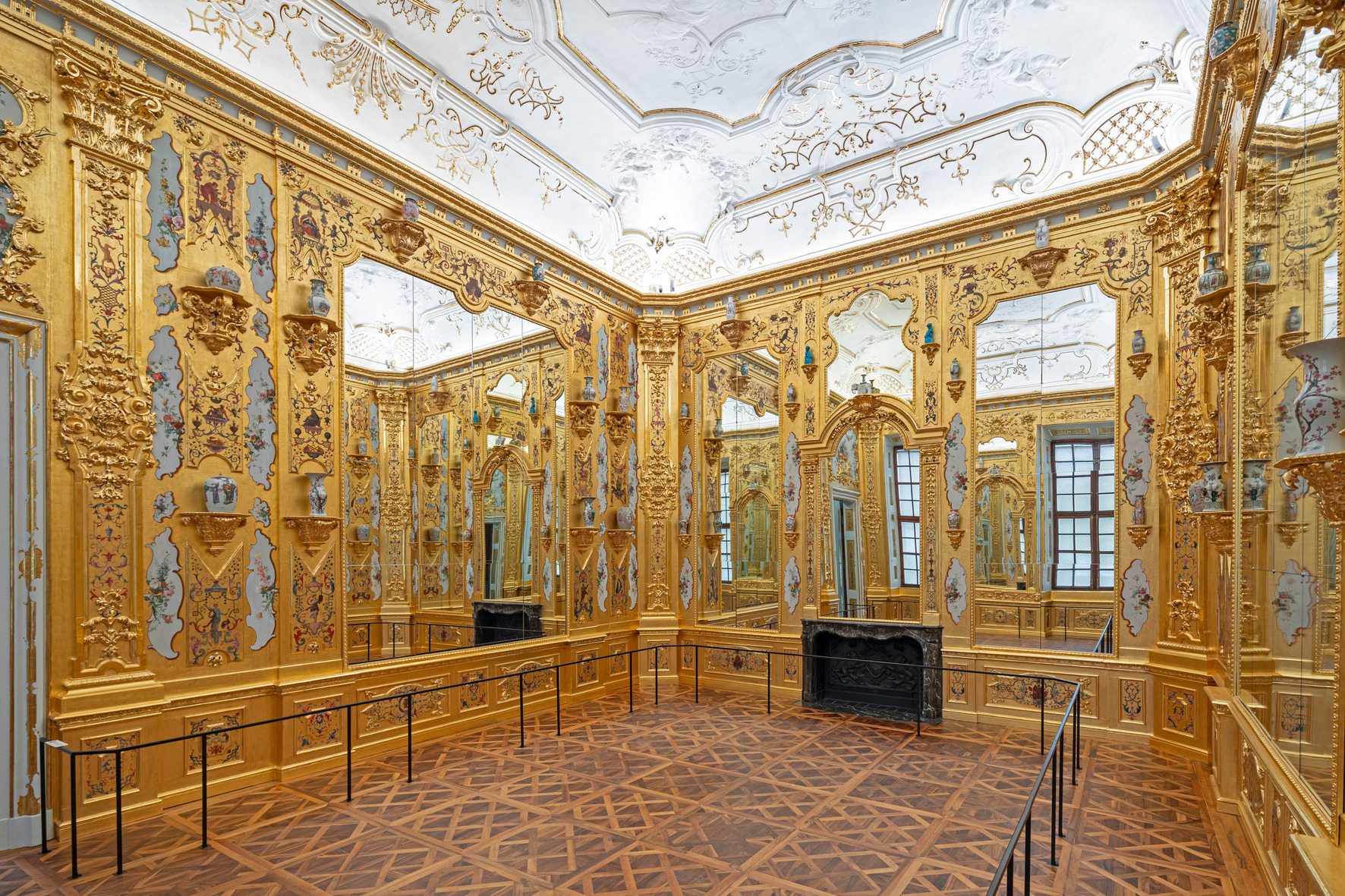
As the days outside grow grayer, there’s all the more reason to seek out some splendor indoors. Tucked away in the Lower Belvedere, the Gold Cabinet is one of the palace’s most striking historic interiors. Mirrors, gilded walls, and vibrantly colored paintings come together to create a Gesamtkunstwerk, with a surprising wealth of details to discover.
The walls and ceiling are filled with allegorical depictions referring, among other things, to the seasons, the elements, and the senses – offering something new to discover in the details with every visit.
Tip: If you’d like to take a closer look at the Gold Cabinet, explore our Stories series "A Room of Gold" and discover the stories behind its many allegorical depictions.

Tip: "Wild Cube" is worth a visit in every season and is also a popular photo spot. See for yourself how its vegetation changes in fall.
Discover Wild Nature in the Sculpture Garden
In the Belvedere 21 Sculpture Garden, it’s also worth taking a closer look at the vegetation in fall, because in one of its most striking works, nature is actually part of the art. For his 2011 work "Wild Cube", Lois Weinberger allowed plants such as elms, birches, white poplars, and Norway maples to grow freely inside a twelve-meter-long iron cage. Branches and twigs make their way through the bars, changing the appearance of the work with the seasons.
Weinberger explored so-called ruderal vegetation – plants that colonize areas altered or abandoned by humans. He conceived "Wild Cube" as a counterpoint to the “White Cube,” the neutral white exhibition space of the traditional museum. Here, nature literally gets a space of its own.
Fall at the Belvedere unfolds both outdoors and indoors: between colorful foliage and golden interiors, strolls through the gardens and leisurely hours spent with art. And if the Viennese fall weather doesn’t cooperate, there’s more than enough to discover behind the palace doors.