

The four Seasons
A Room of Gold: The Gold Cabinet in the Lower Belvedere
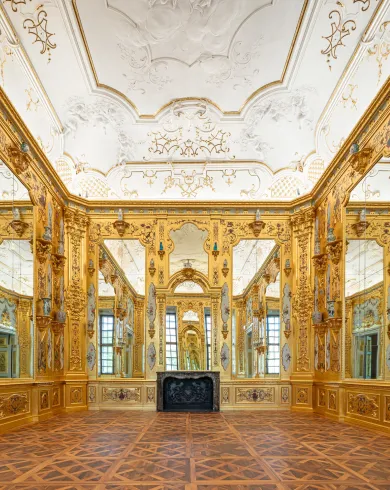
Between gilded splendor and mirrors, they adorn the walls of the Gold Cabinet in the Lower Belvedere: the four seasons. At first glance, they appear to us as entertaining, almost whimsical figures – yet these depictions are more than mere decorative embellishments. They offer insight into the Baroque worldview and the ancient doctrine of the four elements.
The series “A Room of Gold” is dedicated to the allegorical sets of four in the Gold Cabinet at the Lower Belvedere – the seasons, elements, temperaments, continents, hours of the day, and senses.
Philipp-Reichel-Neuwirth
Johannes Stoll / Belvedere, Wien
The European Four
Quartier Belvedere, Sonnwendviertel, Quattro Stagioni, in the next quarter, in a quarter of an hour – space, time, and pizza are often divided into quarters.
The idea of organizing the world into groups of four has shaped European thought for centuries: cities were often divided into four quarters, and according to the European conception of the time, the Earth consisted of four continents. Humans orient themselves by the four cardinal directions. Even the division of the year into four seasons, which we take for granted, is part of this tradition – and by no means universal. In subtropical regions, for example, different temporal orders prevail, often determined by rainy and dry seasons or weather phenomena such as the monsoon.
The Four Seasons in European Art and Culture
While the division of the year into four seasons is linked to the European climate, what we associate with spring, summer, fall, and winter is also culturally shaped. Classical music fans, for instance, think of Antonio Vivaldi’s Four Seasons, which bring the respective weather conditions to life through sound. Many Central Europeans are also familiar with the stereotypical kindergarten drawings: winter with a snowman, autumn with colorful leaves, summer with a smiling sun, or spring with an Easter bunny under green trees.
Long before snowmen and Easter bunnies came to embody the seasons, European art depicted them in human form. A Roman circular altar from the 1st century CE features child figures: spring with blossoms and the first fruits, summer with a sickle and grain, autumn with grapes, and winter in warm clothing.
The Four Seasons in the Lower Belvedere
On the ceiling of the Grotesque Hall in the Lower Belvedere (built 1712–1717), the four seasons appear as ancient deities. Flora embodies spring with garlands of flowers and a small Cupid, Ceres stands with sheaves of grain representing the summer harvest, and Bacchus drinks wine as a symbol of autumn. Saturn, on the other hand, the god of time, contemplates the end of the annual cycle in winter with a touch of melancholy.
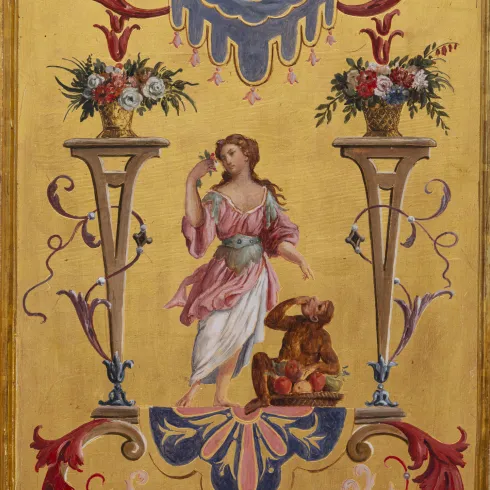
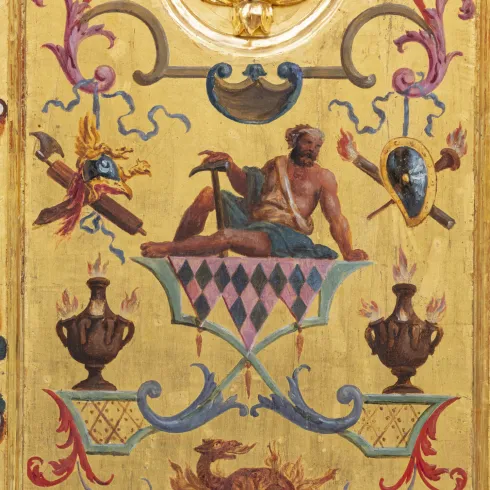
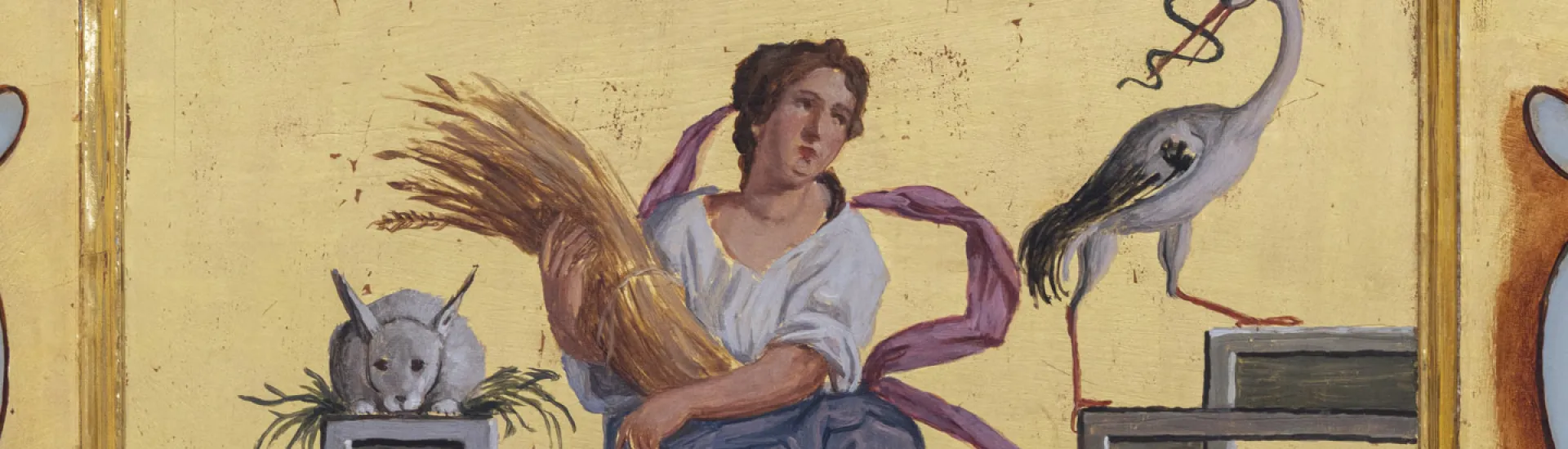
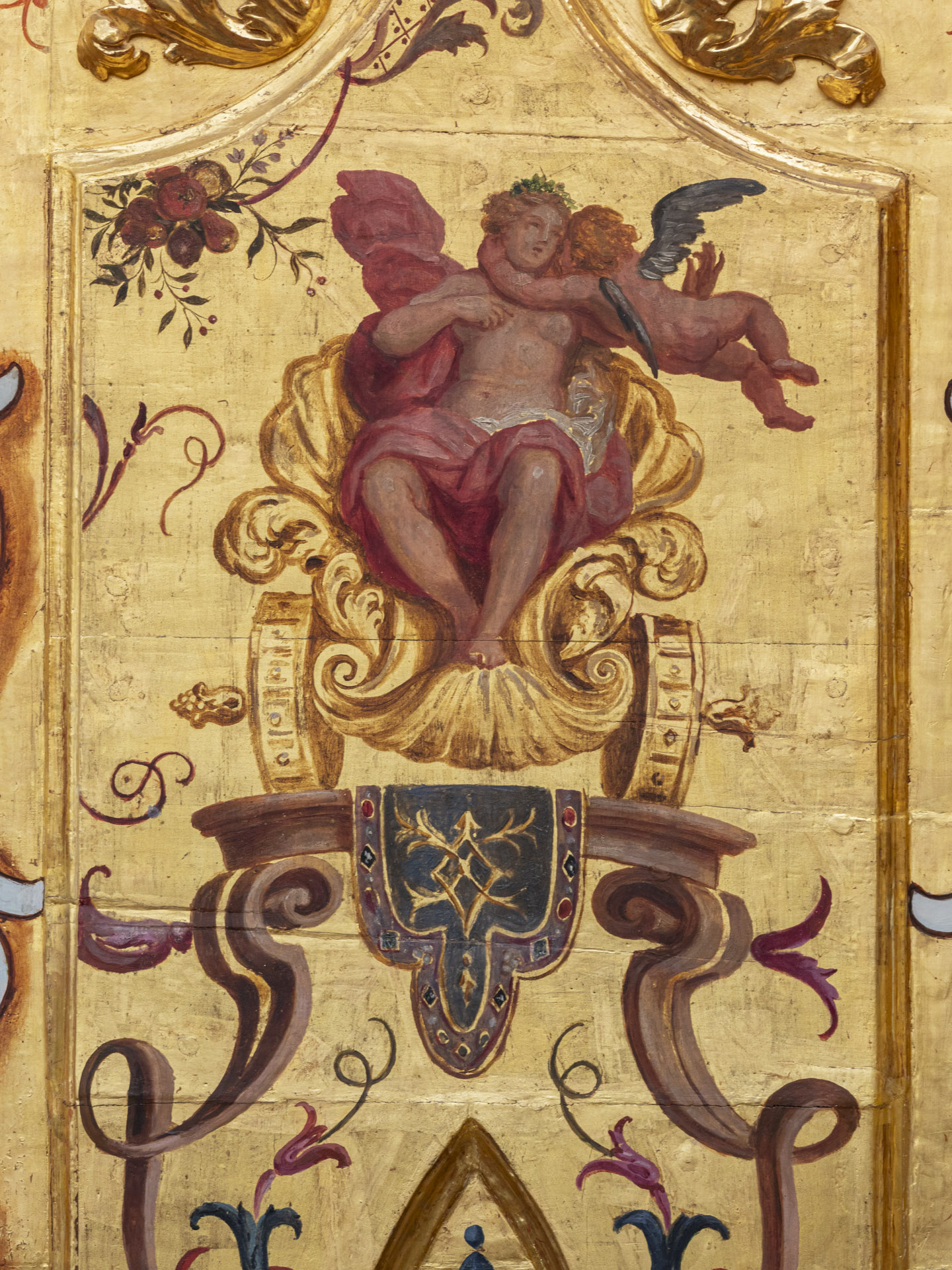
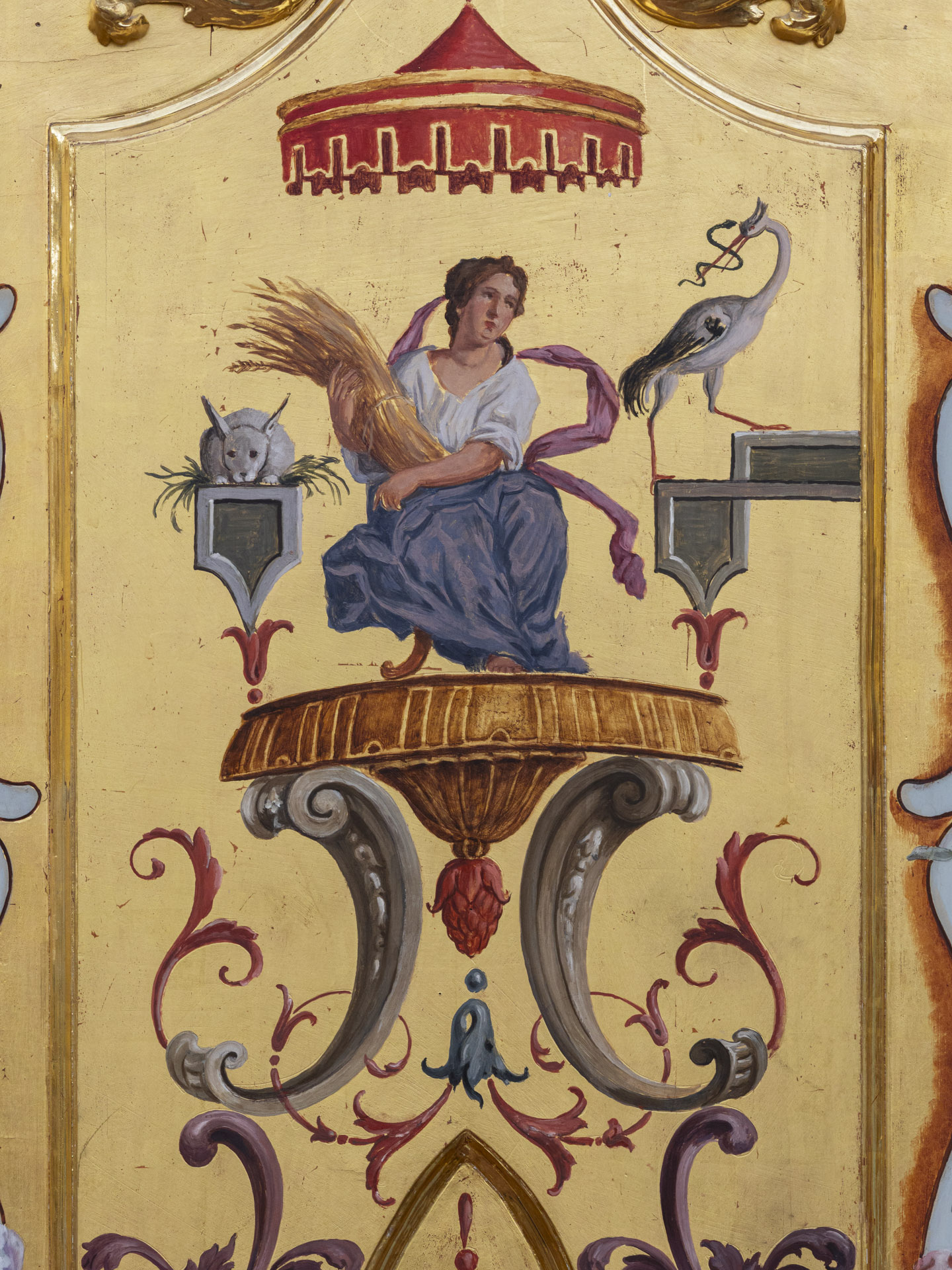
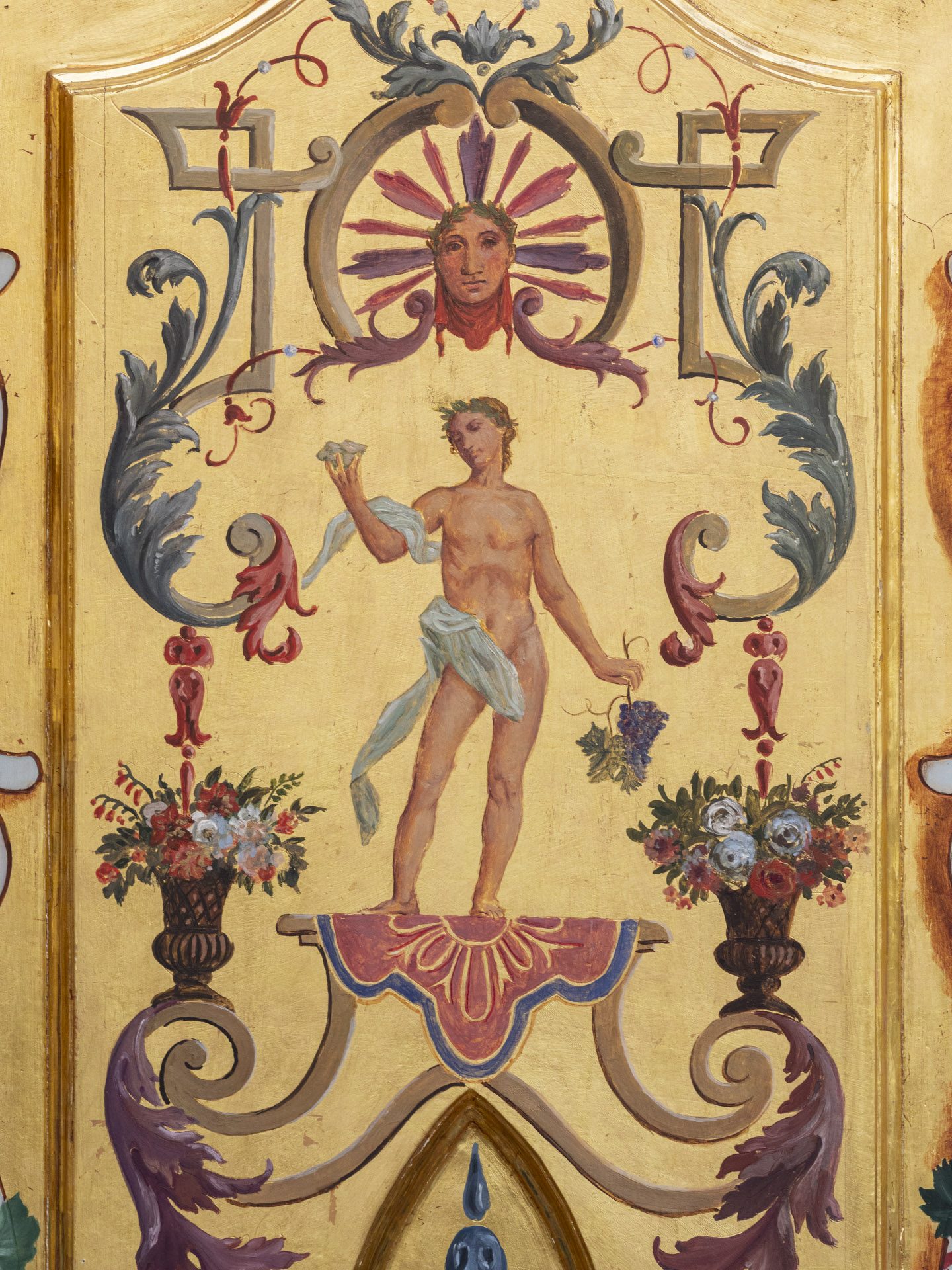
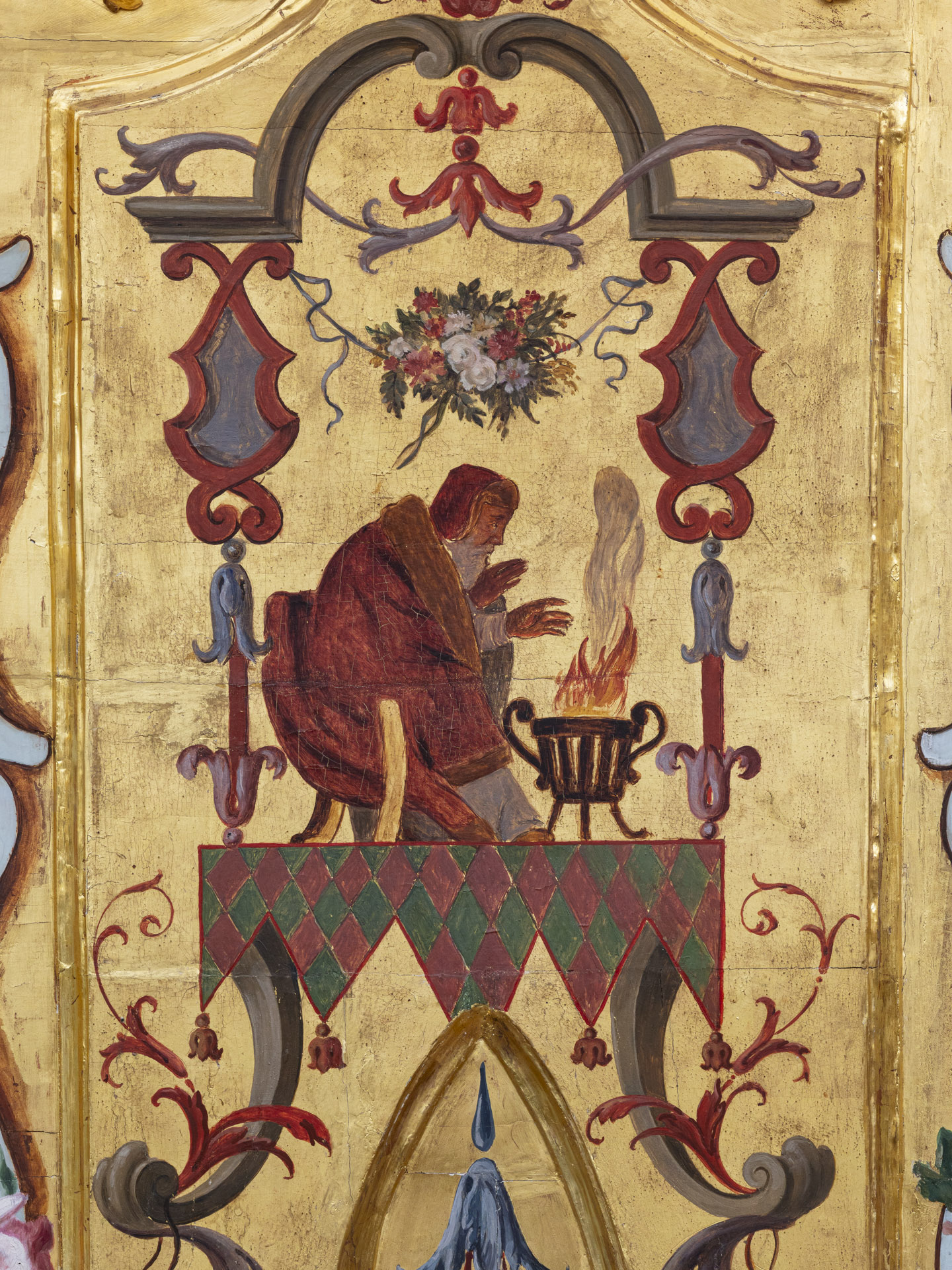
In the Gold Cabinet, the seasons appear in a slightly different form. Bacchus poses here as a young man, while Summer – similar to Ceres in the Grotesque Hall – holds a bundle of ears of grain in her arms. Spring is not represented by Flora and the blossoming of nature, but by Venus on a conch shell chariot together with Cupid, dedicated to human love. Winter stands apart: He possesses no divine attributes but appears as an old man warming himself by a brazier.
Transport and Overpaintings
The gilded and painted wooden panels originally came from the cabinet in Prince Eugene’s city palace and were transferred to the Lower Belvedere in 1752. The current depictions of the seasons likely emerged from a repainting of the original representations.
A drawing by Salomon Kleiner documents these changes: While the figure of Summer remains recognizable, the other three were significantly redesigned. In the City Palace, Autumn still appeared as a corpulent Bacchus on a wine barrel and was made slimmer for the Gold Cabinet. Winter was originally depicted as a standing bear; only the fire bowl made it to the Lower Belvedere.
Spring underwent particularly significant changes. In the Gold Cabinet, it appears as a winged embrace between Venus and Cupid. In Kleiner’s drawing, however, the chariot is not occupied by a goddess of love, but by a commander leaning on a staff – possibly a scepter or a marshal’s baton.
Spring as a Season of War
This depiction can likely be explained by the house’s master. Prince Eugene is frequently depicted in portraits and frescoes as a commander-in-chief holding a marshal’s baton. Spring was traditionally the season of war, the time when military offensives began. The spring months were crucial for the major battles of the summer: armies were mobilized, supplies organized, troops positioned, and military confrontations prepared. It is therefore not surprising that visitors to the Stadtpalais were presented with “Spring” as a military commander on a war chariot. This symbolism of power associated with the supposedly lovely season also has art-historical precedents independent of Prince Eugene the warlord – in numerous paintings, Spring appears on a triumphal chariot, with which he victoriously claims the year as his own.
More than just decoration
In scholarly circles, the depictions of the seasons in the Lower Belvedere are often linked to the surrounding gardens, where Prince Eugene could experience the changing seasons firsthand. After 35 years of military campaigns, he settled permanently in Vienna around 1718 and frequently spent the warmer months in his “Garden,” as he himself referred to the entire Belvedere complex just outside the city gates. However, the additional significance of spring as the prelude to the war season – as suggested by the earlier depiction in the City Palace – lend the seasonal symbolism a dimension that goes beyond purely decorative functions.
In conjunction with other sets of four in the Gold Cabinet – the elements, temperaments, continents, times of day, and senses – a comprehensive context of meaning emerges that clearly transcends the notion of mere pleasure palace ornamentation. We will explore this in the following articles.
The four seasons in the Gold Cabinet in detail