

The four Elements
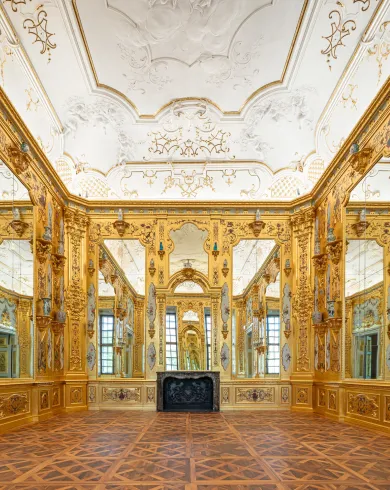
A Room of Gold: The Gold Cabinet in the Lower Belvedere
In school, we learn that the world consists of far more than four elements. And yet, fire, water, earth, and air still appear as a seemingly complete quartet of elements: in movies and fantasy worlds, in song lyrics, symbols, and horoscopes. The idea of explaining chemical and physical reality through these four elements is much older than modern science – and continues to shape our culture to this day. The four elements also play a central role in the Gold Cabinet of the Lower Belvedere.
The series “A Room of Gold” is dedicated to the allegorical sets of four in the Gold Cabinet at the Lower Belvedere – the seasons, elements, temperaments, continents, hours of the day, and senses.
Philipp-Reichel-Neuwirth
Johannes Stoll / Belvedere, Wien
The four Elements in the Gold Cabinet and the Grotesque Hall
In the Gold Cabinet, the four elements – like all other groups of four – appear in human form and can be identified as ancient deities.
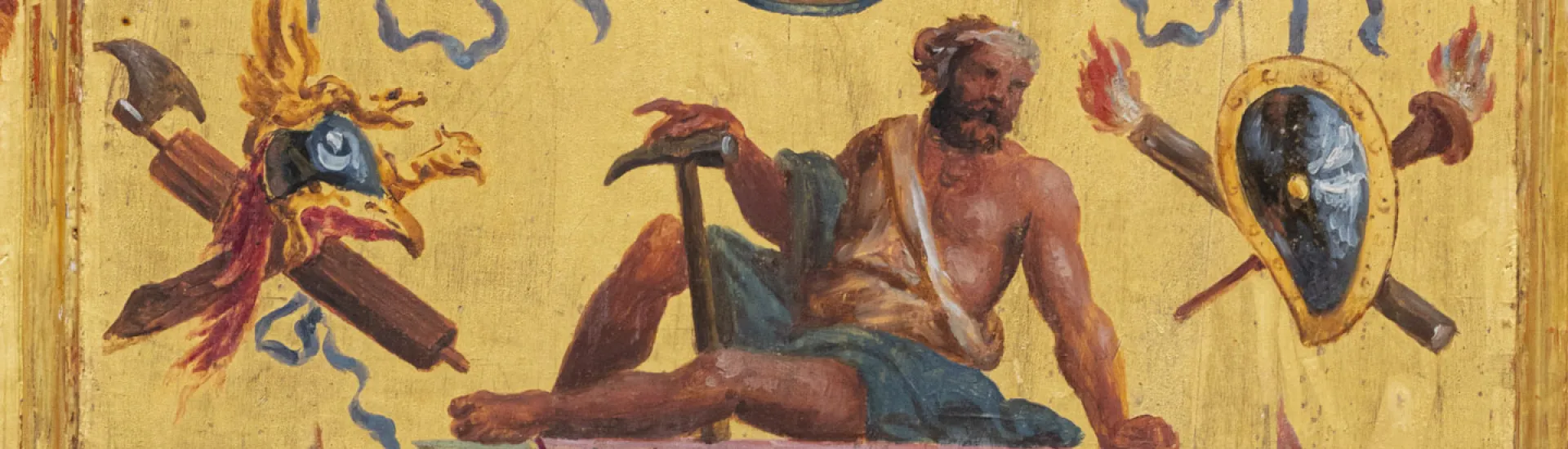
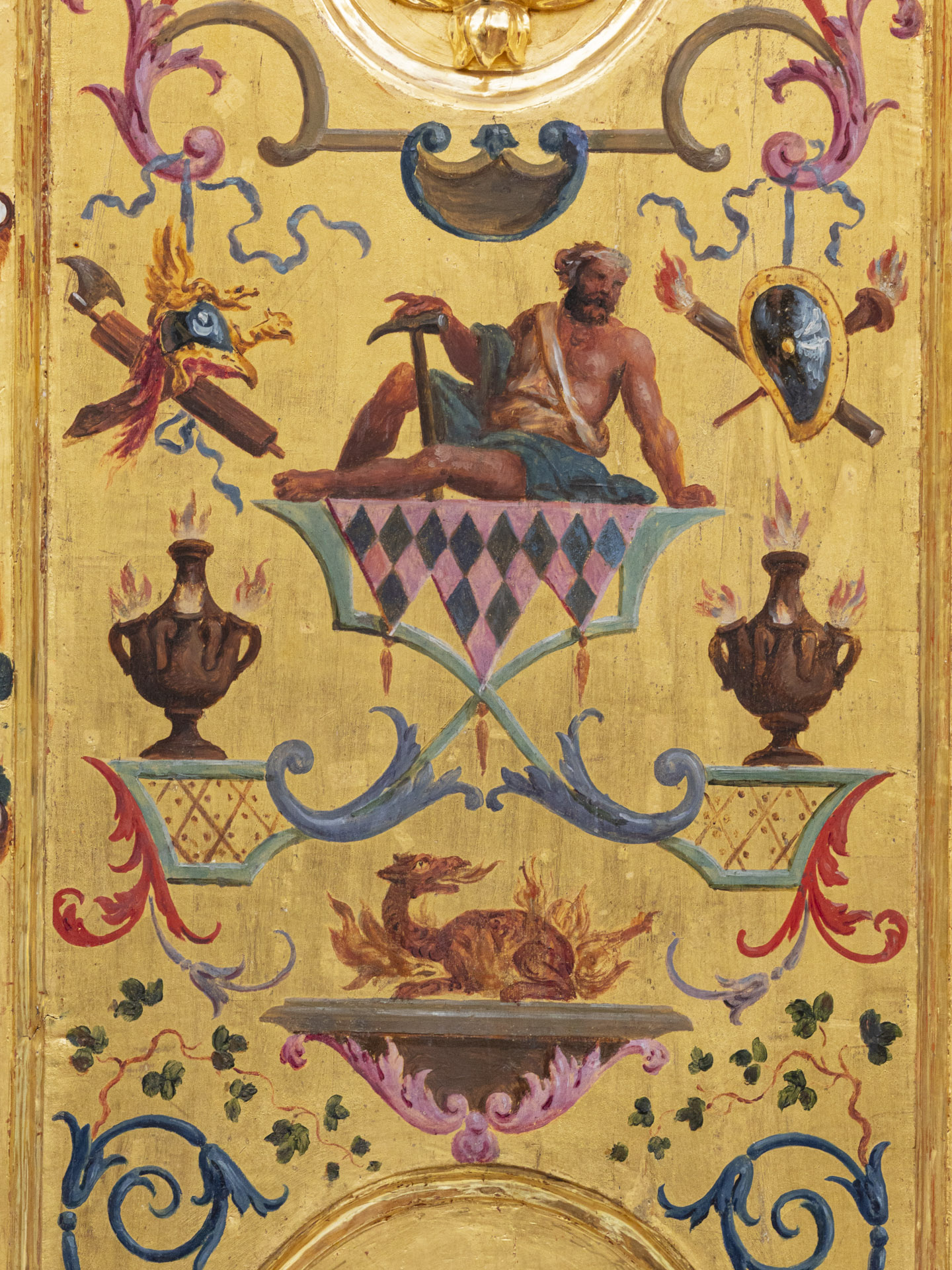
Fire is embodied by the god and blacksmith Vulcan, who sits casually with his hand resting on a hammer.
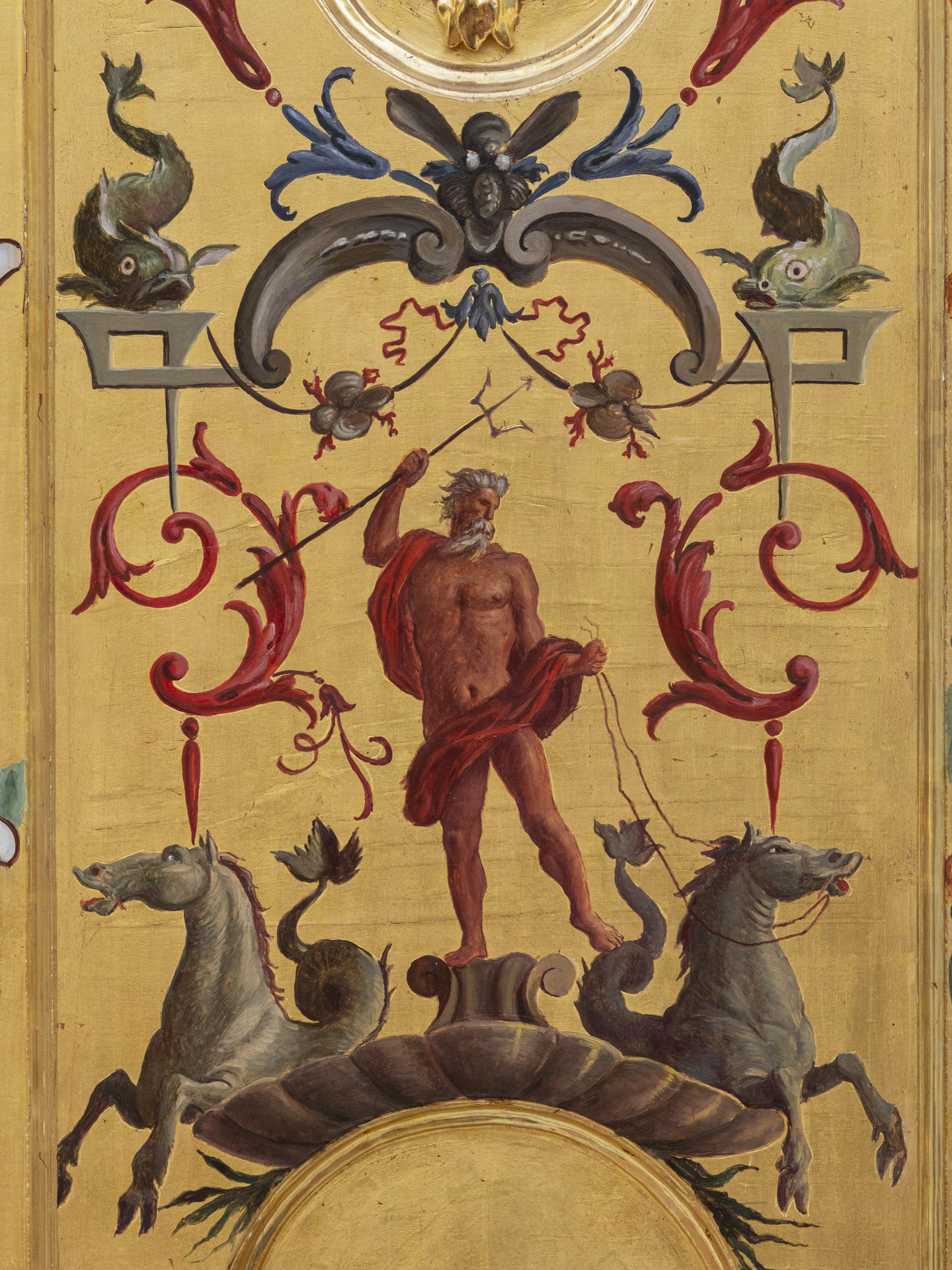
Water is represented by the sea god Neptune, holding a trident and the reins of his water horses in his hands.
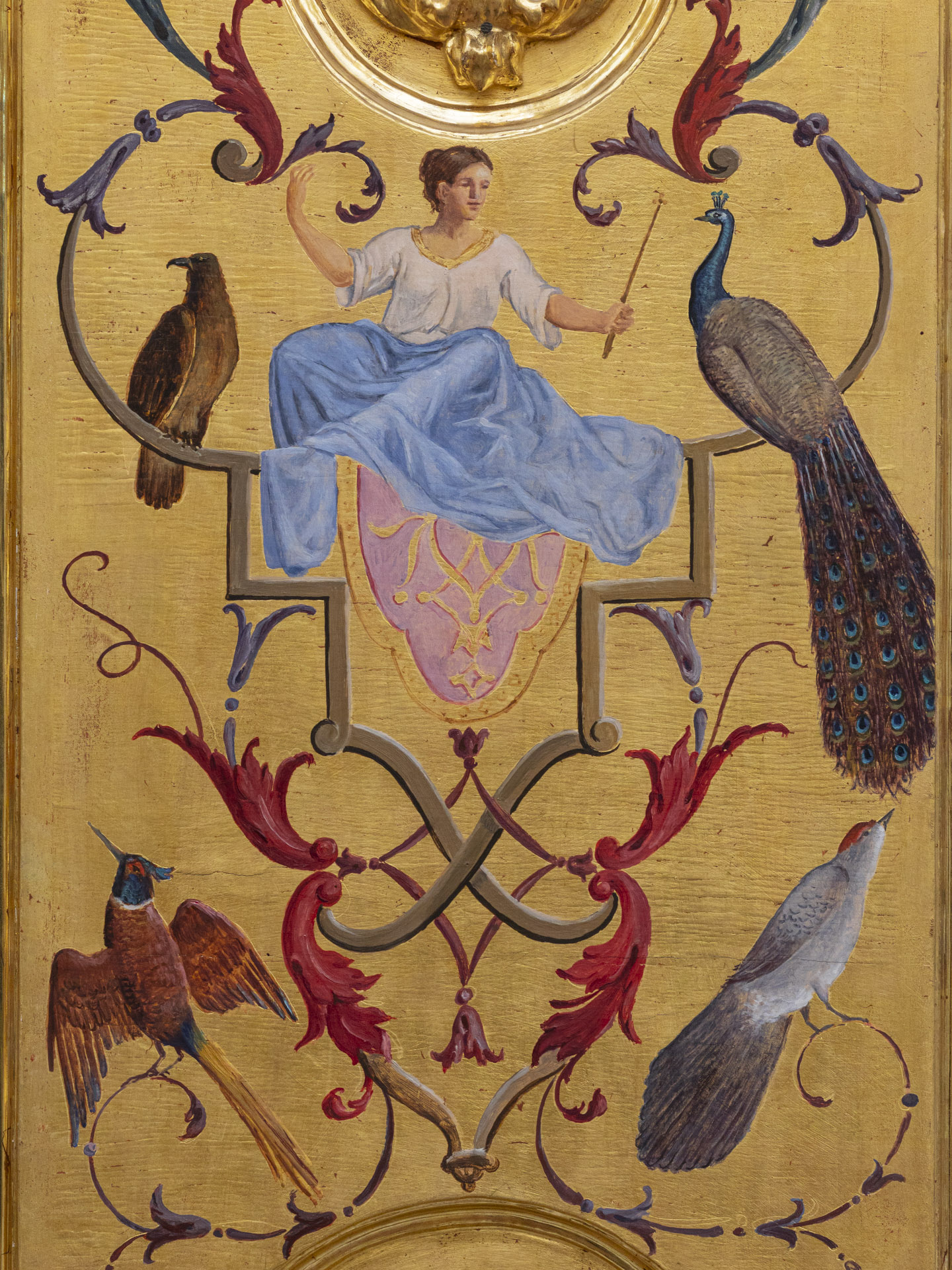
Air is depicted as the goddess Juno: she wears a blue skirt, is surrounded by birds, holds a delicate scepter, and turns toward a peacock.
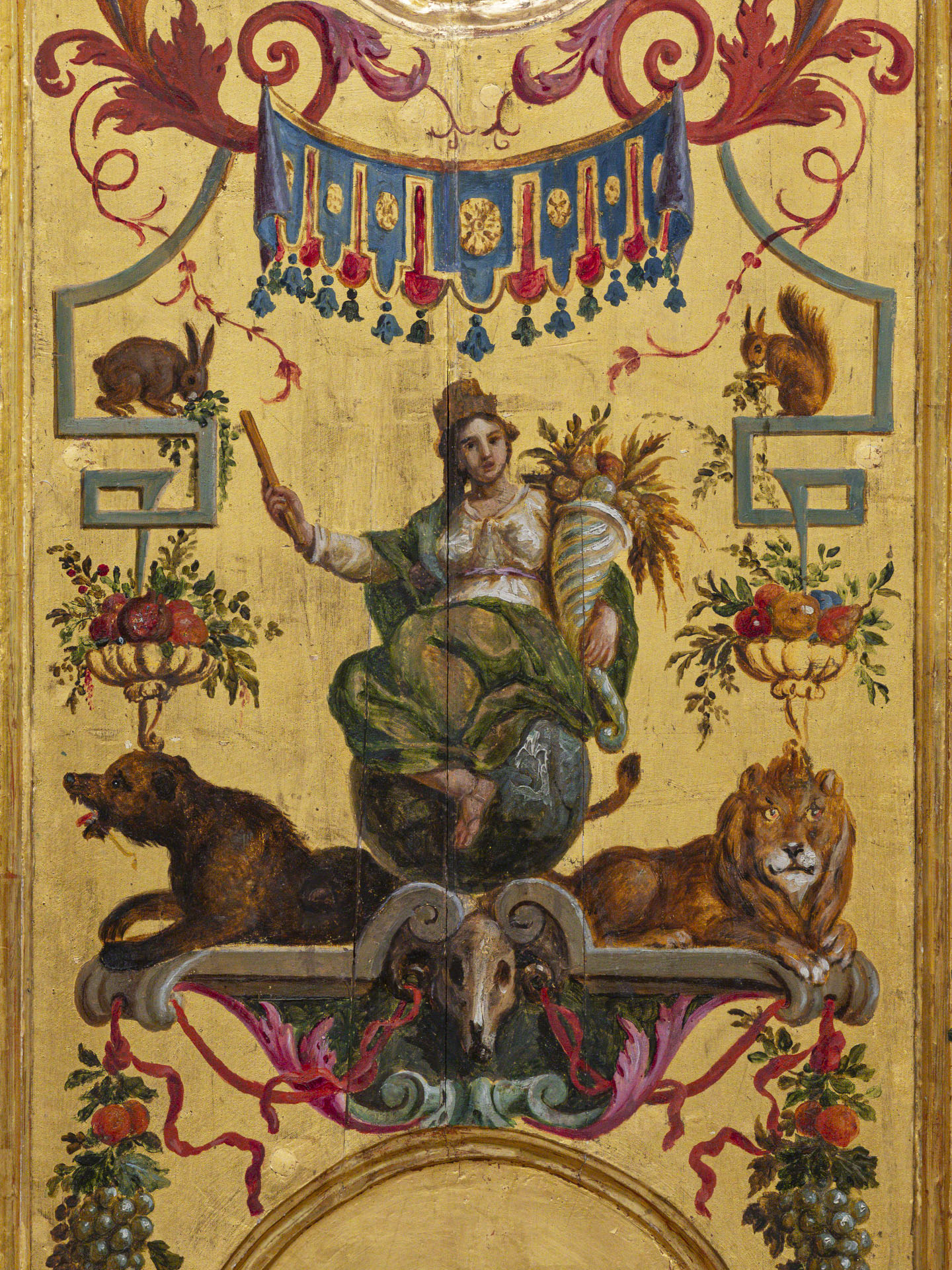
Earth is recognizable as Cybele, the ancient mother goddess of nature, with a mural crown and a cornucopia. At her feet rest her companion animal, the lion, as well as a bear, which is often associated with the element of earth.
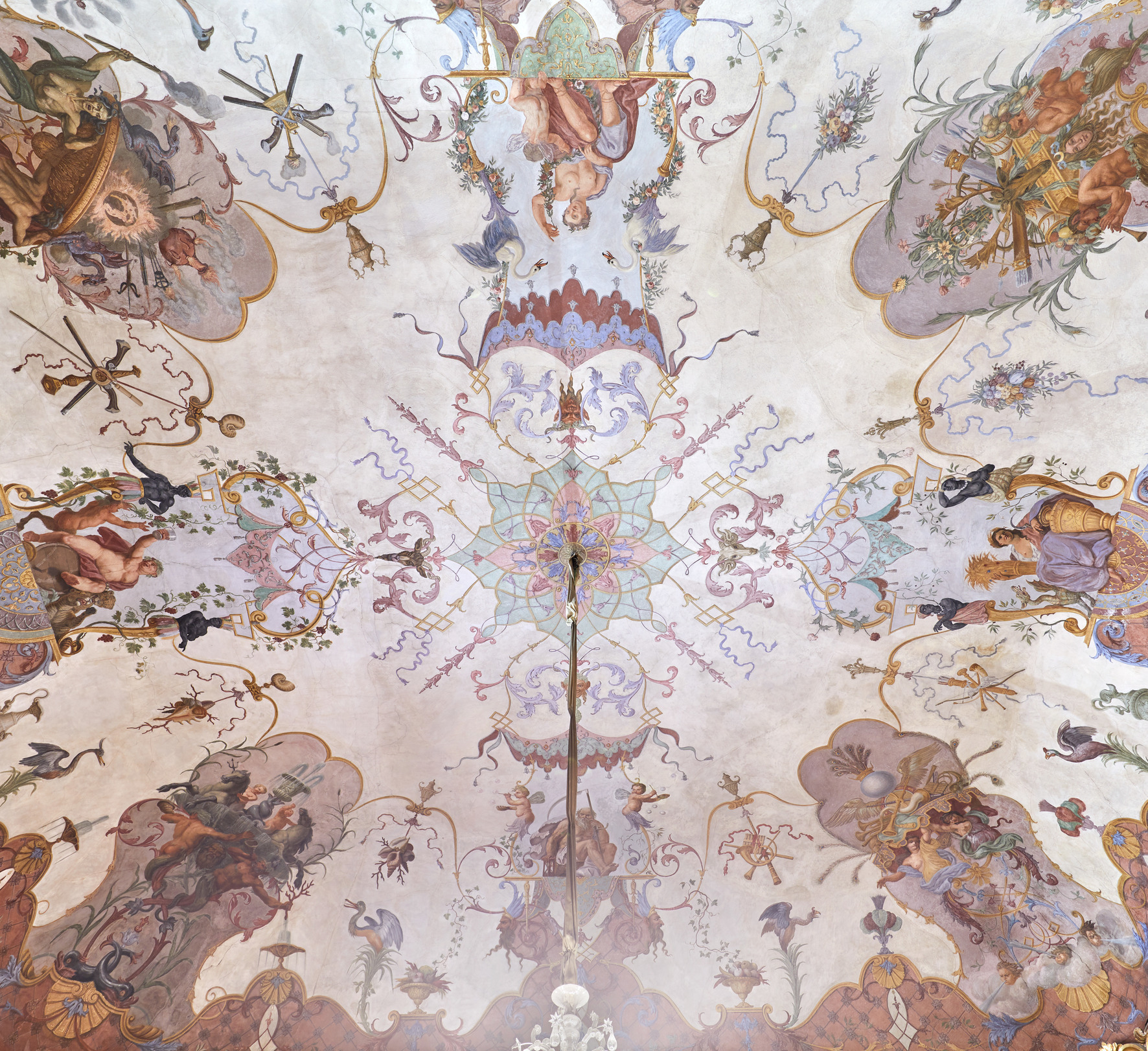
Just as with the four seasons, the four elements also reappear on the frescoed ceiling of the nearby Grotesque Hall in the Lower Belvedere. There, we find motifs familiar from the Gold Cabinet: Neptune’s water horses, peacock feathers representing air, and plants symbolizing earth. At the same time, interesting differences and additions can be discovered: The element of fire appears significantly more martial here than in the Gold Cabinet and is symbolized by firearms. A figure accompanying fire is half-woman, half-snake, and carries a torch. Her depiction is reminiscent of early modern images of witches and thus alludes to contemporary notions of “female menace.” The god Vulcan can also be recognized in the Grotesque Hall, specifically in a fresco on a side wall, though not in connection with the allegory of fire on the ceiling.
Empedocles’ ancient theory of the four elements
The depiction of these natural phenomena as deities in human form is not a Baroque whim, but follows an ancient tradition. The Greek philosopher Empedocles (5th century BCE) is considered the most influential founder of the theory of the four elements; he calls the four elements “the fourfold root of the universe” and equates them with deities:
“Zeus, high in splendor, Hera, the mother of life, the god of the earth, and Nestis, who pours forth the source of mortality from her tears.”
Of these four deities, only Hera (or Juno in Roman mythology) is represented in the Gold Cabinet of the Lower Belvedere as the representative of the element of air – even though Empedocles does not explicitly associate her with this element. This conclusion arises solely from the characteristics of the other divine figures and from knowledge of an iconographic tradition in which Hera/Juno usually symbolizes the element of air.
It was not so much the observation of nature that identified exactly four elements, but rather the theory of the Greek philosopher Pythagoras (6th century BCE) from ancient Greece, who established the number four as the basis of the world’s order. The theory of the four elements, developed somewhat later by Empedocles, was therefore adapted to this pre-existing number. A closer examination of material reality, however, could have yielded other elements and numerical systems. For example, the millennia-old traditional Chinese philosophy and medicine is based on five elements: fire, water, earth, wood, and metal.
The Fifth Element
Empedocles understood this quartet as the building blocks of the world, whose elements continually combine and separate in the course of cosmic change. According to him, two additional forces are responsible for these processes: Love and Strife.
The phenomenon of conflict need not, therefore, be understood as something destructive, but rather as a prerequisite for life. We also find echoes of this in the opening lines of the Bible, where the elements or their qualities are separated from one another (light, darkness, water, the firmament, heaven, earth…) to drive “creation” forward. The idea of a complementary fifth principle that connects or orders the four elements remained influential far beyond antiquity and can still be found today in literature, film, and pop culture.
In the 1997 science fiction classic "The Fifth Element", “Love” – in the form of a young woman named Leeloo – saves the world. In the 1990s animated series “Captain Planet,” the fifth element also plays a key role: As a girl named “Heart”, she helps summon Captain Planet, who fights environmental crimes.
The fifth element also plays a key role in the Disney film “Frozen II” (2019), specifically as Queen Elsa herself, who confronts earth giants, water horses, fire salamanders, and wind spirits. Although her ice powers can be closely associated with the element “water,” she is also interpreted as a link between nature and humanity – that is, like love, a unifying element.
“Elements don’t mix” is the catchphrase in the animated film “Elemental” (2023), in which the elements – like different ethnic groups in a city (Element City) – must learn to coexist and ultimately find common ground through a young couple: a fire woman and a water man.
Rain and Sun – The Elements in the (Palace) Garden
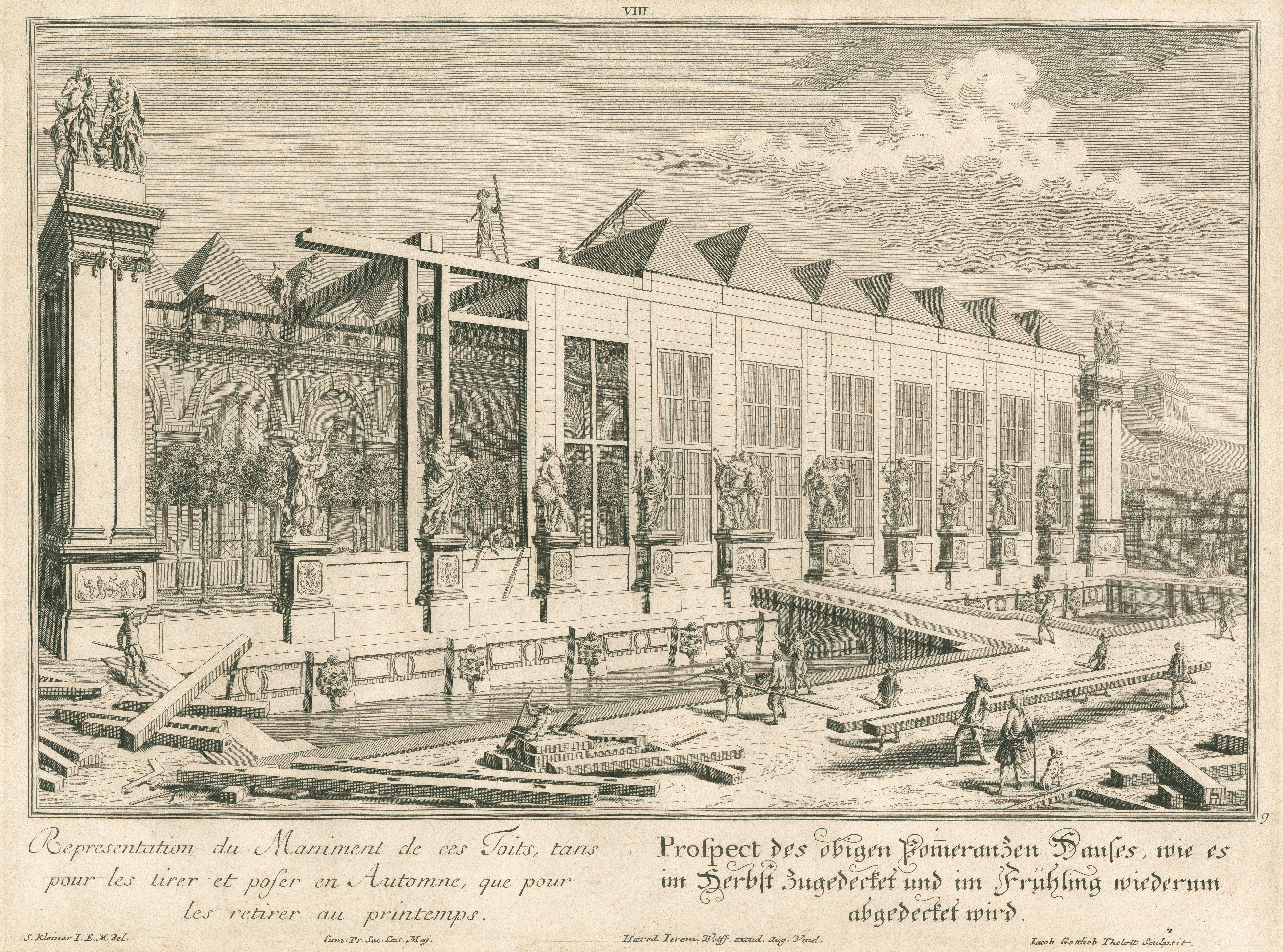
These two contrasting elements also had to work together in the form of sun and rain for the plants in Prince Eugene’s palace gardens. To support their growth, the roof of the building that housed the orange trees (the Pomeranzenhaus, today’s Orangery) could be opened depending on the season. It is therefore no coincidence that two sculptural groups symbolizing “Rain” and “Sun” – the latter represented by the god Apollo – were placed on the two corners of the roof facing the garden. During the redesign of the Belvedere gardens in the mid-nineteenth century, the sculptures were moved to the lowest parterre near the central fountain and installed on new pedestals.
The four elements were far more than mere chemical properties used to explain nature. In the Gold Cabinet, together with the seasons, temperaments, continents, times of day, and senses, they form a system of order that conceives of the world as a cosmological whole – a system we will explore further in the coming articles.
Gallery

![The image depicts a couple embracing. The figures are surrounded by a shiny golden background that is richly adorned. The one figure appears to be wrapped in a magnificent garment decorated with various patterns and floral motifs. Their faces are close together, and their eyes are closed, conveying an intimate and deep connection. The lower part of the image is filled with a lush vegetative depiction. [AI-generated with ChatGPT]](/sites/default/files/styles/stories_teaser/public/2025-08/Gustav%20Klimt_Kuss_Belvedere.jpg.webp?itok=80o-732N)