

A Room of Gold
A Closer Look: The Golden Cabinet in the Lower Belvedere
Sheet by sheet, wafer-thin gold is applied. Using fine brushes, conservators work on gilded wooden panels, securing fragile layers of paint and restoring the luster of a Baroque interior.
Lisa Ebner-Kollmann
Belvedere, Wien
The Golden Cabinet in the Lower Belvedere underwent extensive restoration from 2024 through fall 2025. Over approximately 6,000 working hours, the ceiling, wall paneling, paintings, and parquet flooring were refurbished – a process that required some 10,500 sheets of double-sided gold leaf.
The restoration work provides an opportunity to take a closer look at this room, which is among the palace’s most precious interiors, and to learn more about its significance.
A Room for Prince Eugene
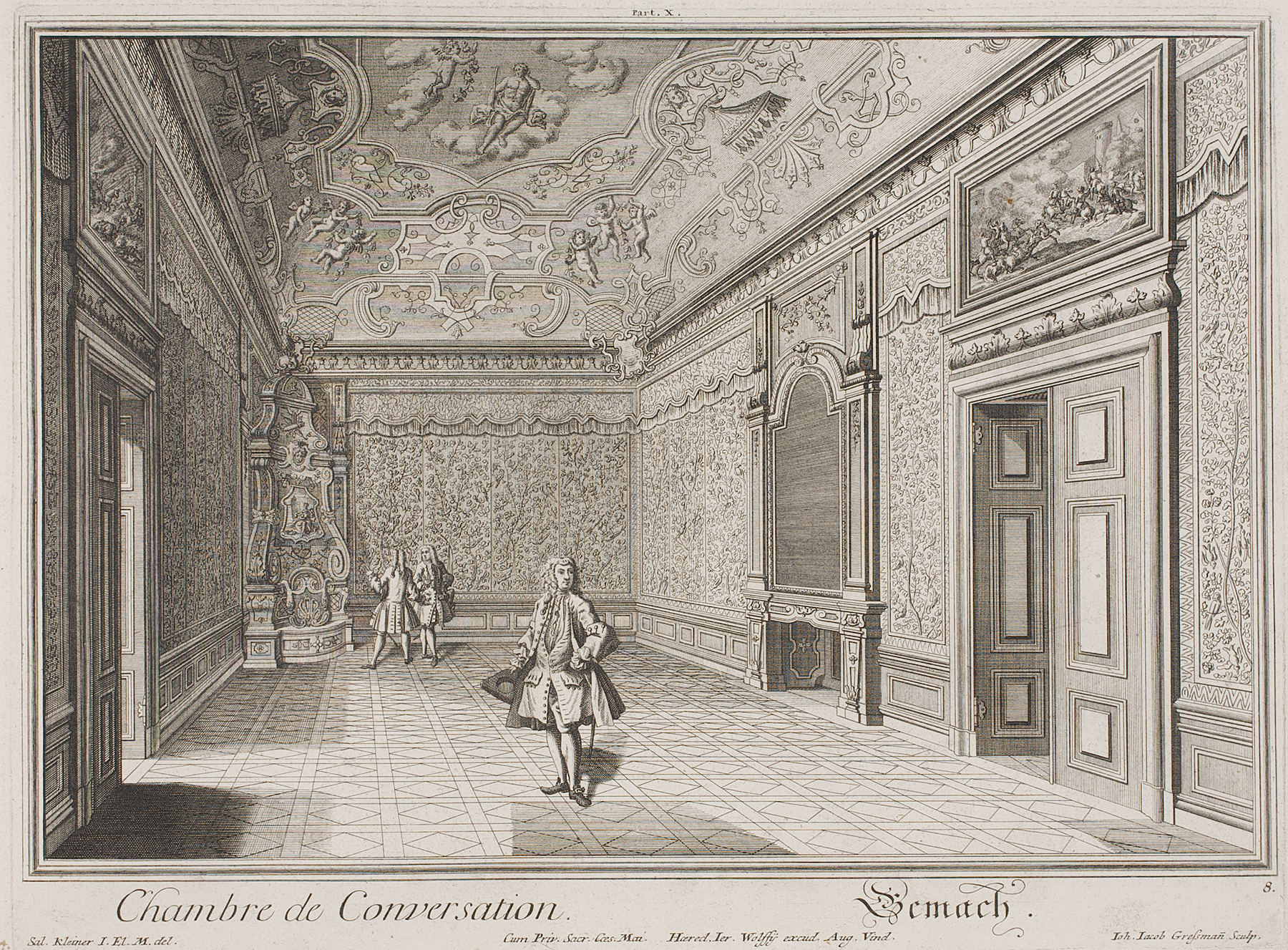
Originally, today’s Gold Cabinet was part of Prince Eugene of Savoy’s private quarters. The room initially served as a bedroom – a fact still evoked today by the ceiling relief depicting the moon goddess Luna and the sleeping Endymion. Later, the room was converted into a drawing room.
Under the reign of Maria Theresa, the Gold Cabinet finally took on its current form: gilded elements from Prince Eugene’s former Winter Palace were reused and complemented by newly created panels featuring floral paintings. This is how the room acquired its present splendor and a new purpose.
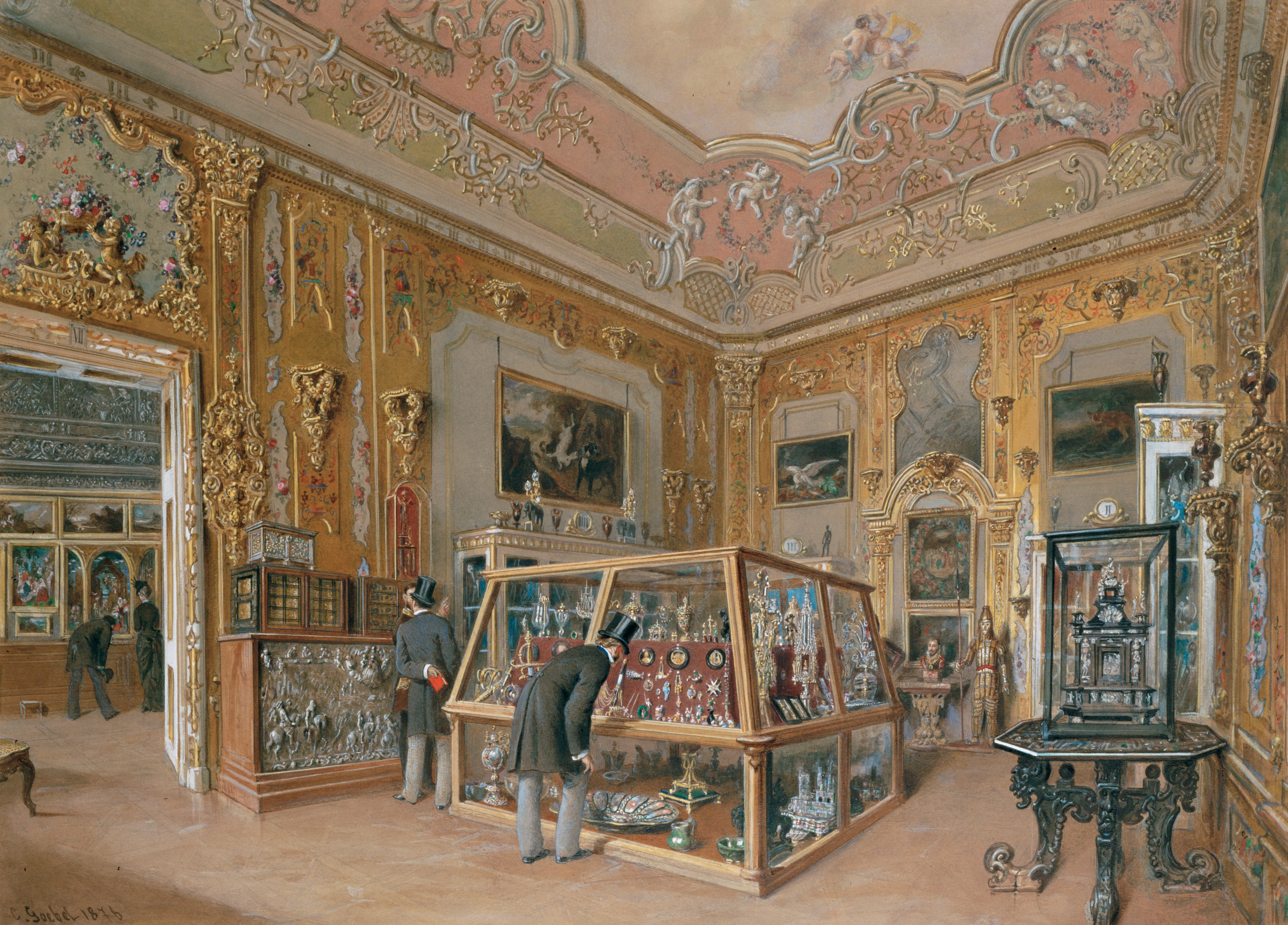
The Gold Cabinet was also used as a museum space early on – for example, in the early 19th century to display the Ambras Collection before it moved to the Kunsthistorisches Museum.
Thus, the Golden Cabinet is not only a historical room but also part of the Belvedere’s museum history.
A Baroque Gesamtkunstwerk
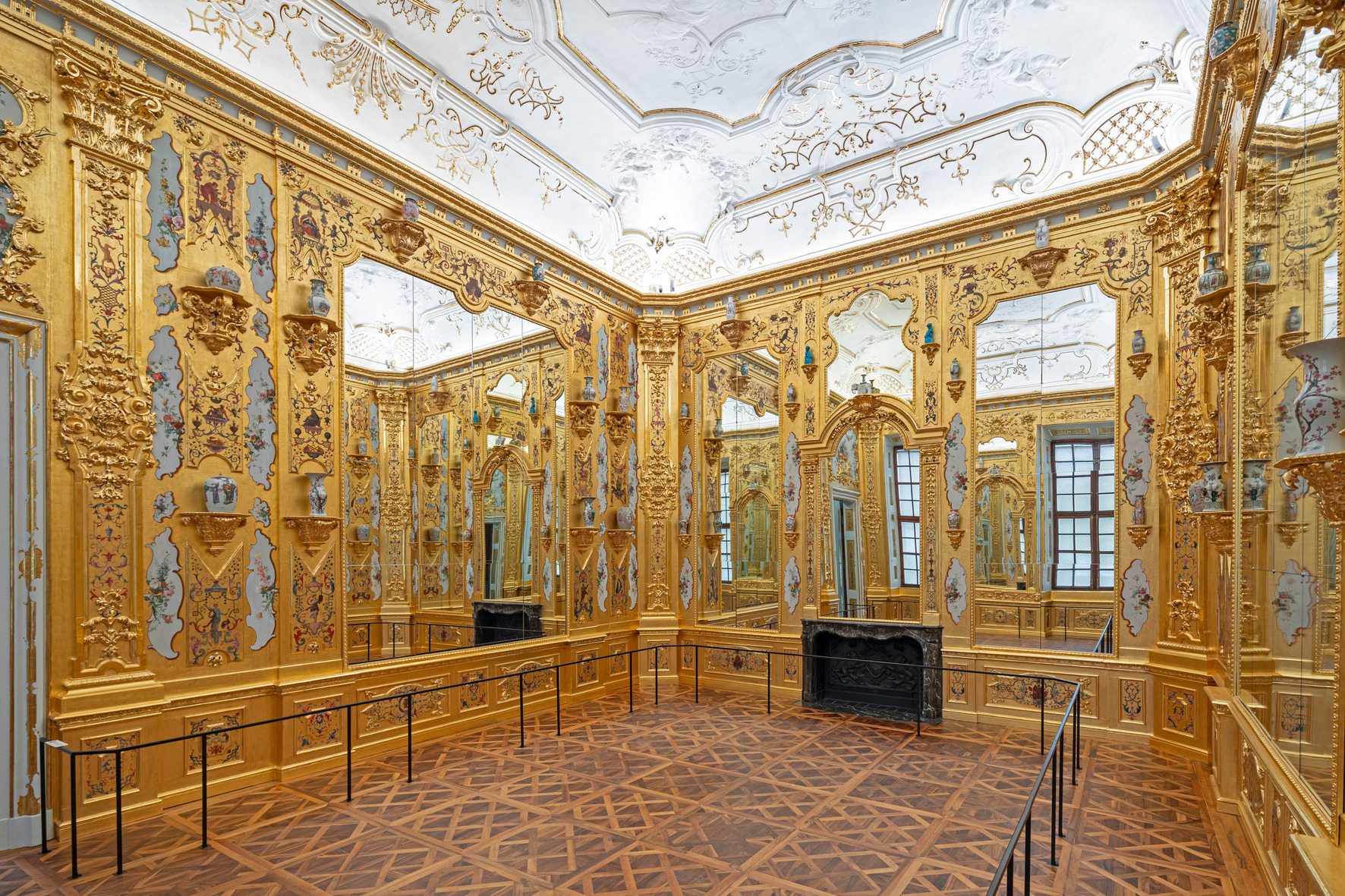
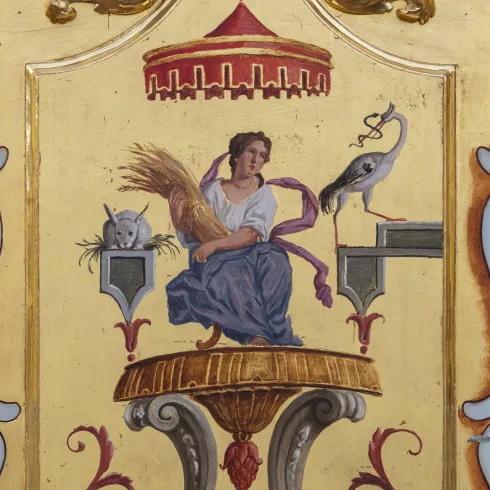
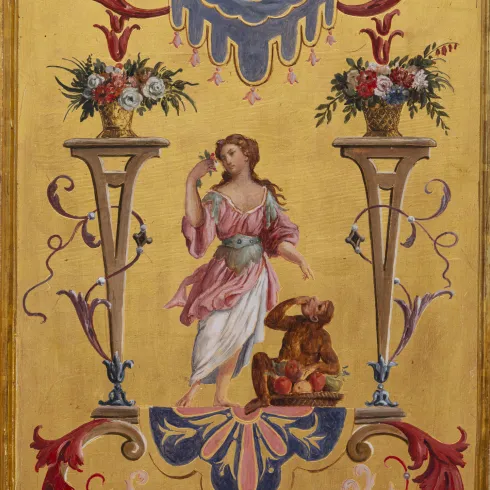
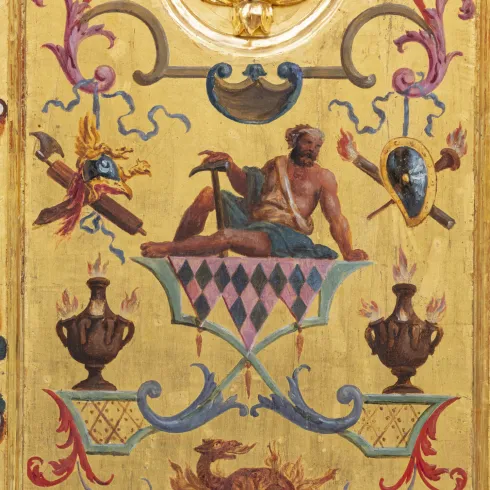
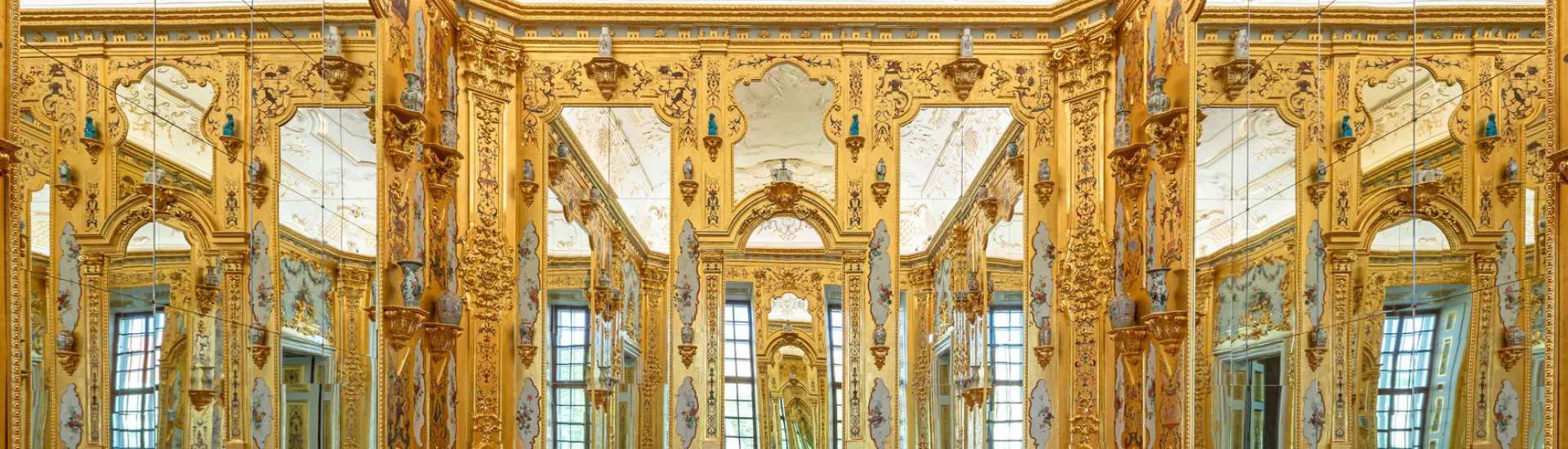
Anyone entering the room today encounters a densely composed ensemble: gilded wooden panels, mirrors, delicate grotesque and floral paintings, and an allegorical pictorial program that invites closer inspection.
The walls consist of a wooden cladding of linden wood panels set in front of the masonry, most of which are covered with gold leaf.
This gold, however, is not a solid layer but wafer-thin – so thin, in fact, that it reflects light while allowing the underlying surface to still shine through. The gold leaf is applied to prepared surfaces, creating the characteristic radiant luster that defines the room.
The combination of gilded surfaces, mirrors, and paintings creates a visual dynamic: light is refracted, reflected, and multiplied. As a result, the room does not appear static, but almost as if it were in motion. Typically, cabinets like this one were additionally furnished with étagères on which expensive or exotic porcelain was displayed. These gleaming surfaces also enhance the room’s effect.
What is original and what is not?
Much of the room’s current appearance is based on historical elements – yet the Golden Cabinet is also a prime example of how deeply such rooms are shaped by restoration work.
Parts of the gilding no longer date back to the 18th century, but stem from later restoration work. Due to substantial war and fire damage, large sections had to be reconstructed in the past.
The room we see today is thus the result of a long history of use, alteration, and conservation efforts.
How do you restore a room made of gold?
The most recent restoration demonstrates just how complex the preservation of such an interior is.
Not only were the wall surfaces treated, but also the ceiling, doors, shutters, and parquet flooring. The work took place while the museum remained open – that is, as part of what is known as a “live restoration.”
Working with gold leaf is particularly challenging. It is extremely delicate: even the slightest changes to the surface can alter the impression of the entire room.
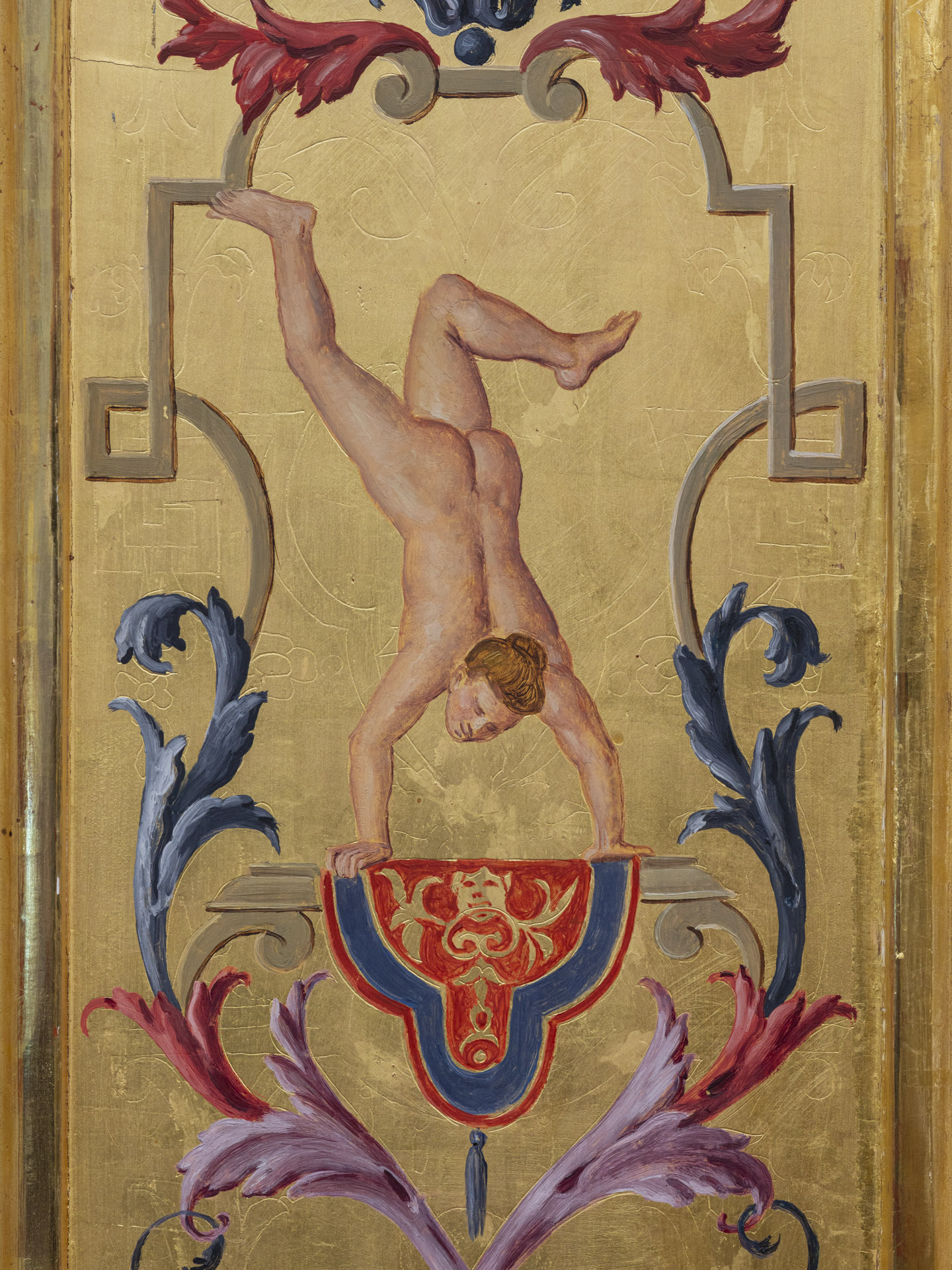
At the same time, the technique itself has remained remarkably consistent for centuries.
Gold is hammered into wafer-thin sheets and applied to specially prepared surfaces – a process that has remained largely unchanged since ancient times.
Restoration thus constantly navigates the tension between preservation, restoration, and historical accuracy.
A room full of meaning
Beyond its material and historical dimensions, the Gold Cabinet holds yet another layer: its pictorial programs.
Grotesques, floral motifs, and allegorical representations adorn the walls, pointing to a complex system of meanings that was as decorative as it was rich in content in the 18th century. A closer look reveals far more than just a magnificent interior in the Gold Cabinet.
The upcoming editions of Belvedere Stories will focus precisely on this pictorial program. In them, Philipp Reichel-Neuwirth examines the various groups of motifs in the Gold Cabinet’s pictorial program: their traditions, backgrounds, and what they reveal about Baroque conceptions of the world and humanity.