

The Future is Ours to Make
Art, Climate and How Change Happens
The planet, art, and climate:
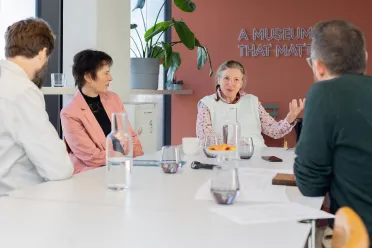
A roundtable discussion with Katrin Vohland, Claudius Schulze, and Christiane Erharter on the occasion of Klima Bienale Wien 2024.
Katrin Vohland
Claudius Schulze
Christiane Erharter
Simon Hadler
Ouriel Morgensztern
eSeL.at
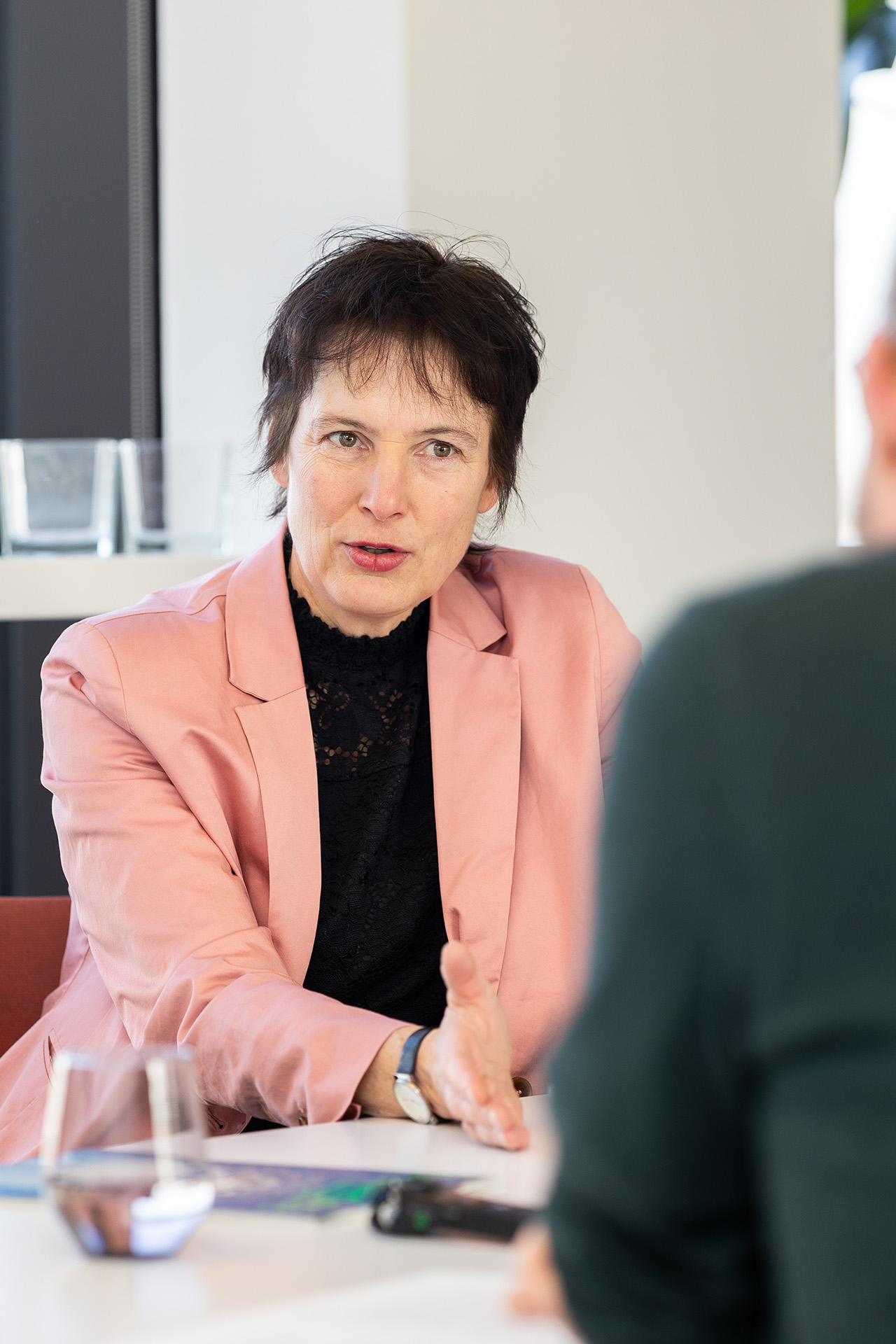
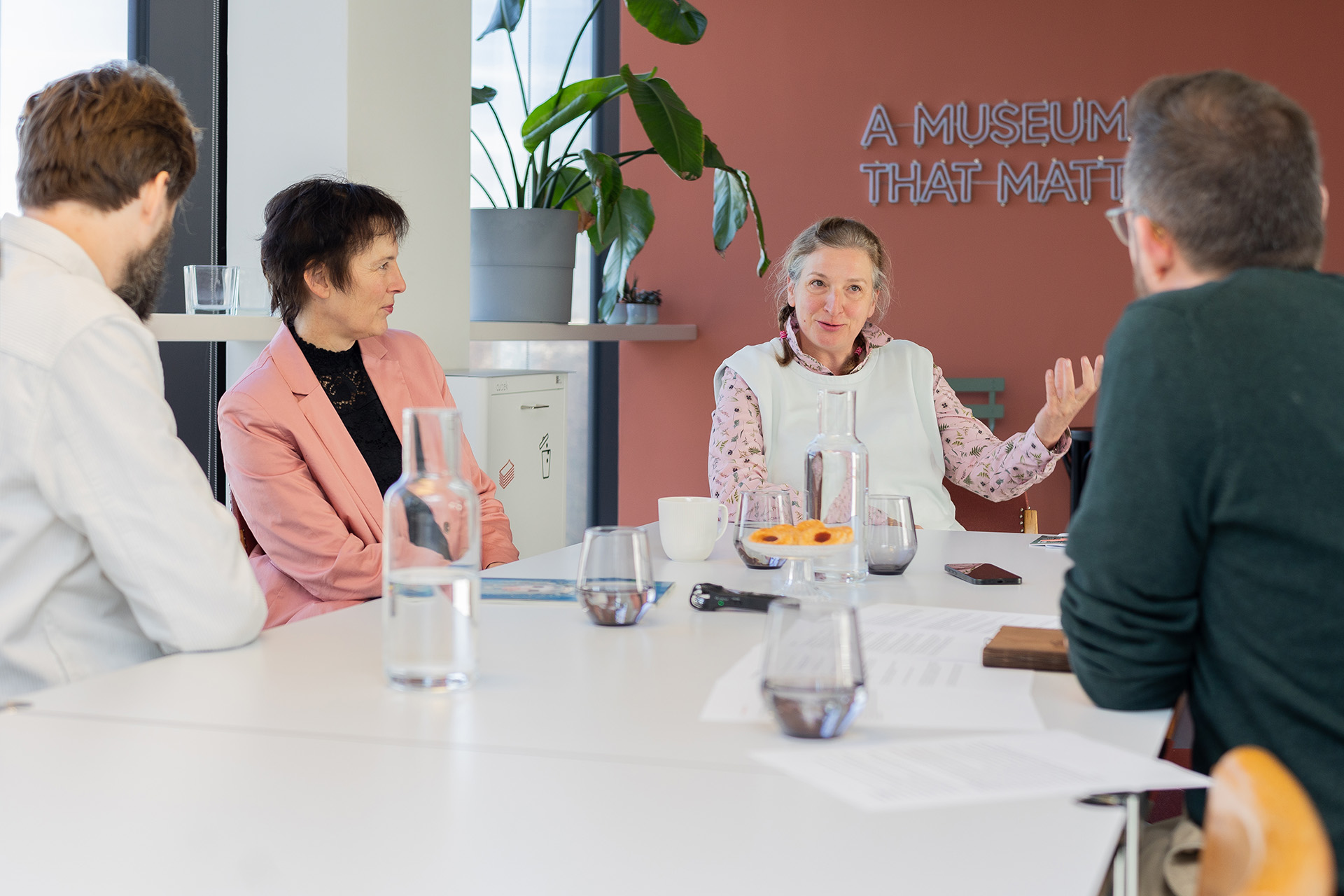
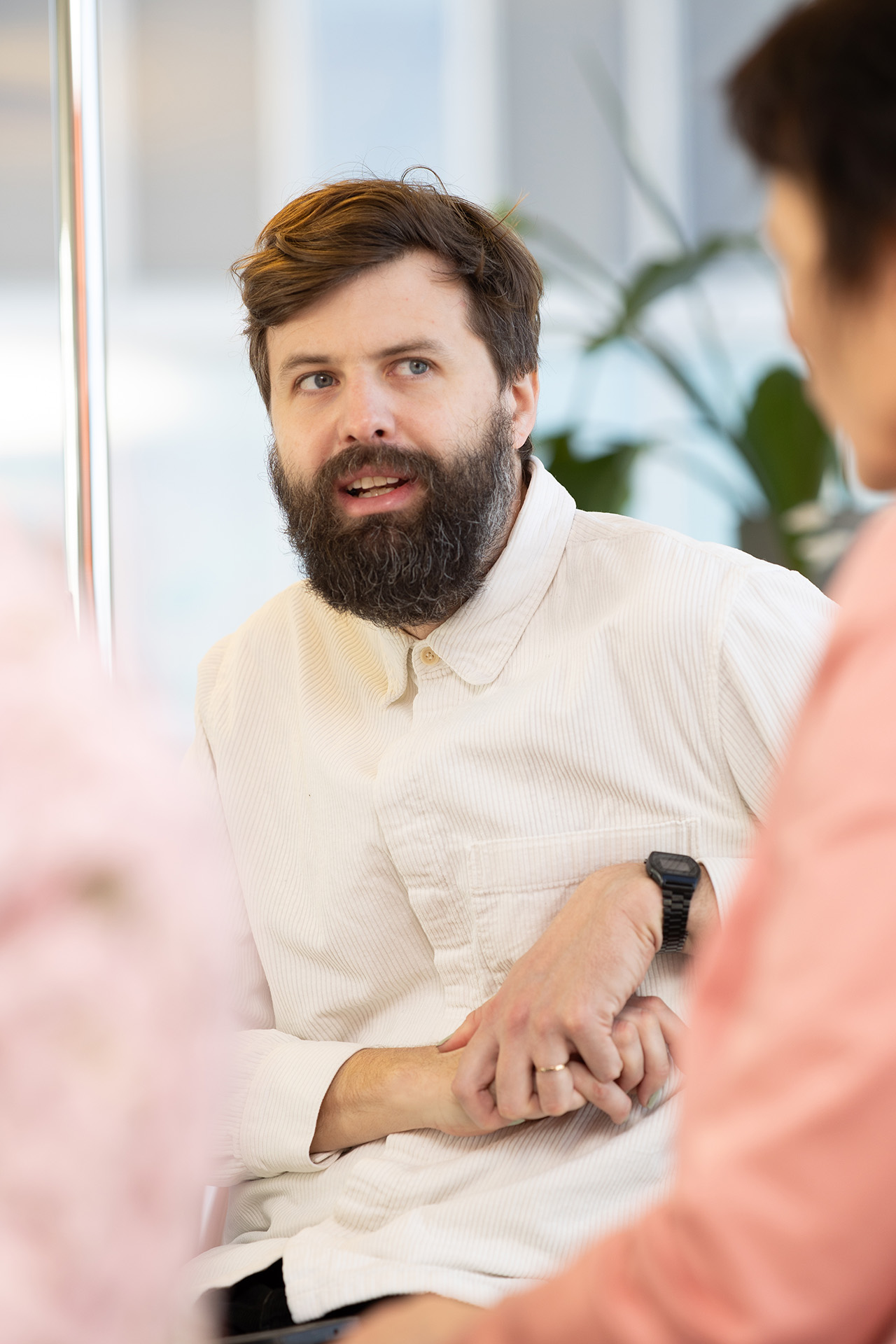
Although accurate in content, the discourse on disaster is strategically self-defeating and increasingly giving way to a spirit of resistance and renewal. Taking up this theme are Katrin Vohland, biologist and leading advocate of Citizen Science in Europe, and since 2020 Director General of the Natural History Museum Vienna; Claudius Schulze, artist-researcher and Artistic Director of the Klima Biennale Wien; and Christiane Erharter, Curator for Community Outreach and the Public Program at the Belvedere, which addresses themes such as biodiversity, ecofeminism, and neighborhood networks.
“The question that affects me the most is how we define ourselves as humanity in the face of climate change.”
Katrin Vohland
Simon Hadler
The mission statement of the Klima Biennale Wien talks a lot about a multi-perspective approach—about thinking holistically.
Claudius Schulze
This approach is not so much about ecological and scientific questions—those have, in essence, been answered; only the details remain. Ever since the Club of Rome’s 1972 report, The Limits to Growth, we have known that natural resources are finite and are nearing exhaustion. What concerns us now are the far more difficult social and political questions—above all, how to envision a sustainable future and the steps we need to take to get there.
Katrin Vohland
The question that affects me the most is how we define ourselves as humanity in the face of climate change. Rising sea levels will force people to abandon their homes, as many major cities lie along the coastlines. Migration flows will move across the globe, yet here we are building Fortress Europe—a deeply troubling thought for me. Ultimately, what is it that unites us as humankind?
Simon Hadler
Thinking about possible future scenarios brings me to the Belvedere’s Public Program. One of your virtual guests, for instance, was Donna Haraway, with her vision of the Chthulucene—a proposed epoch of humanity that, unlike the Anthropocene, which refers to human-caused climate change, isn’t a negative concept but already carries within it a spirit of transformation. What’s behind that idea?
Christiane Erharter
Donna Haraway has been an influential feminist theorist and thinker for decades, receiving international recognition since the release of her work A Cyborg Manifesto. A biologist by training, she wrote a remarkable book, The Companion Species Manifesto, which explores the coexistence of species. In her latest book, Staying with the Trouble: Making Kin in the Chthulucene, Haraway explains how all species are interconnected and interwoven. She urges us not to respond to the climate crisis with fatalism—saying, “everything’s going down the drain anyway”—but instead to take responsibility and work toward solutions. Even in the face of the human-made mess we find ourselves in.
In Public Program—a series of free events that I have been curating for more than five years—we focus on the urgent questions and challenges of our time, seen through the lens of art. We have explored everything from imagining alternatives to capitalism, to defining its limits, and asking how we might build more sustainable forms of coexistence. Ecofeminism, after all, has long called for an end to the profit-driven exploitation of nature—reminding us of the need for degrowth and subsistence economies, ecological forms of production that aim at meeting our own needs.
Katrin Vohland
I also find the ecofeminist perspective really compelling. The kind of work women do in care and reproduction is generally undervalued, or valued far less than, say, stock market speculation. Money can easily be turned into power. But what women do often goes unpaid. Nature is treated the same way—and can therefore be exploited at will. Because nature has no power of its own, the UN’s climate and biodiversity conventions end up receiving far less funding than those dealing with other political or economic issues.
Claudius Schulze
When we talk about care work, we are also talking about the care and stewardship we owe to the entire system—and that is really what the Klima Biennale Wien is about. We have to treat the whole system with care, ultimately for the same reasons that the female care work Ms. Vohland mentioned is so vital: to preserve our own species. It is a deeply paradoxical situation. Homo sapiens is, without a doubt, the first species on this planet that must consciously perform care work for its own survival—for rational reasons—because it is also the first to have put itself in a position to wipe itself out.
Simon Hadler
This leads us from visions to strategies, from Haraway’s reference to the kinship among species, to care work for species conservation, and the renovation of the Natural History Museum in Vienna. Ms. Vohland, evolution will play a major role in the new permanent exhibition, particularly with respect to ecological issues. Why is this topic important right now?
Katrin Vohland
When people think about evolution, the idea that usually comes to mind is “the survival of the fittest.” But if we take a closer look at humans, why have we been so incredibly successful as a species? It is not because we kill each other off, but because we cooperate. We are born defenseless. If women had to raise infants alone in nature, humanity would have died out long ago. They simply would not have been able to get the calories they needed. So, cooperation plays a huge role in human evolution—it is even one of the reasons why language developed in the first place.
Simon Hadler
Ultimately, biological diversity can be found in the earth itself—to which you are dedicating a special exhibition at the Natural History Museum.
Katrin Vohland
In 2020/21, the Architekturzentrum Wien presented the exhibition Land for Us All, which showed soil profiles—cross-sections of the ground—displayed beneath parking lots. Once soil is sealed, it completely loses its function, because at that point, it is no longer soil. And reversing that process takes an enormous amount of time. Soil takes a long time to truly become soil again. So what good is a biodiversity strategy if every single municipality keeps building its own parking lots, shopping centers, or new townhouse developments?
Simon Hadler
So, in the end, can we agree that it is mainly about getting people excited about social, political, economic, and ecological renewal—instead of just focusing on the catastrophe?
Claudius Schulze
Yes, we need to highlight the emotional bond between people and nature. Words that I react quite sensitively to include "sacrifice" and "degrowth." I always prefer to say “post-growth.” And I also wouldn’t say that we have give something up, because we will gain something else in return. It’s about change. And change always comes with a bit of fear, which we need to ease.
We need to see change in a positive light and as an opportunity for creative action. That way, we can step out of the role of victims and see ourselves as people who can make a difference, who have agency. We can push back climate change as much as possible, but we also have to learn to live in harmony with its effects. In that sense, we are actors, not victims. We are in an active, shaping role—and that is a positive, solution-oriented way of looking at things.
Christiane Erharter
All of us here are actors. Museums have a responsibility to communicate content and ideas. That means institutions need to present facts in ways that different audiences can understand—without oversimplifying them.
Katrin Vohland
Exactly. The task of museums is to make knowledge accessible. We need a process of change that moves toward positive visions. To strengthen positive action for a sustainable future, we also need a positive connection with people. At some point, the Earth will be gone because the sun will expand—and long before that, humanity will no longer exist. But until then, we still have time, and life will go on. We still have a lot of future ahead of us. When people are doing well, they feel empowered, they take things into their own hands, and they help shape the future. The future is ours to make!
Article first published in "Belvedere Kunstmagazin" no. 1-2024.
Gallery