

Hidden Treasures
A Look Inside the Belvedere’s Storage Facilities
Preserving objects has been one of the core responsibilities of museums since their earliest beginnings. But safeguarding collections requires much more than secure, climate-controlled rooms. A visit to three of the Belvedere’s storage facilities offers insight into a complex operation shaped by questions of space, digitization, and—above all—a sensitive touch.
Paula Pfoser
Ouriel Morgensztern
Johannes Stoll
Art on earthen floors
A large, unadorned, windowless building on the outskirts of Vienna. Industrial parks and warehouses dominate the surroundings; from the outside, nothing gives aware the treasures inside the cube. In 2021/22 the Belvedere relocated its largest storage facility here. Over the course of a year-long, highly intricate process, around 12,000 objects found a spacious, new, state-of-the-art depot.
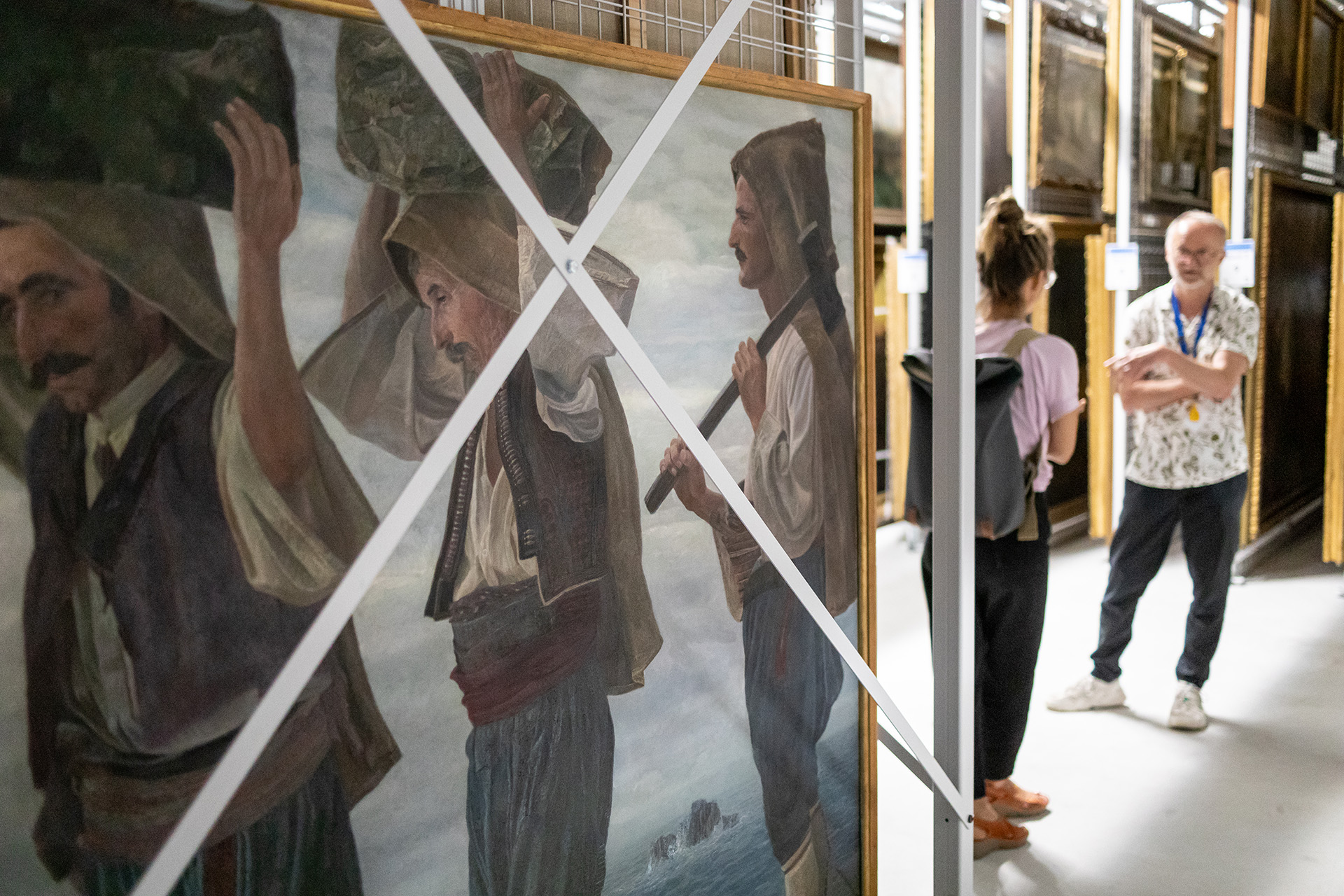
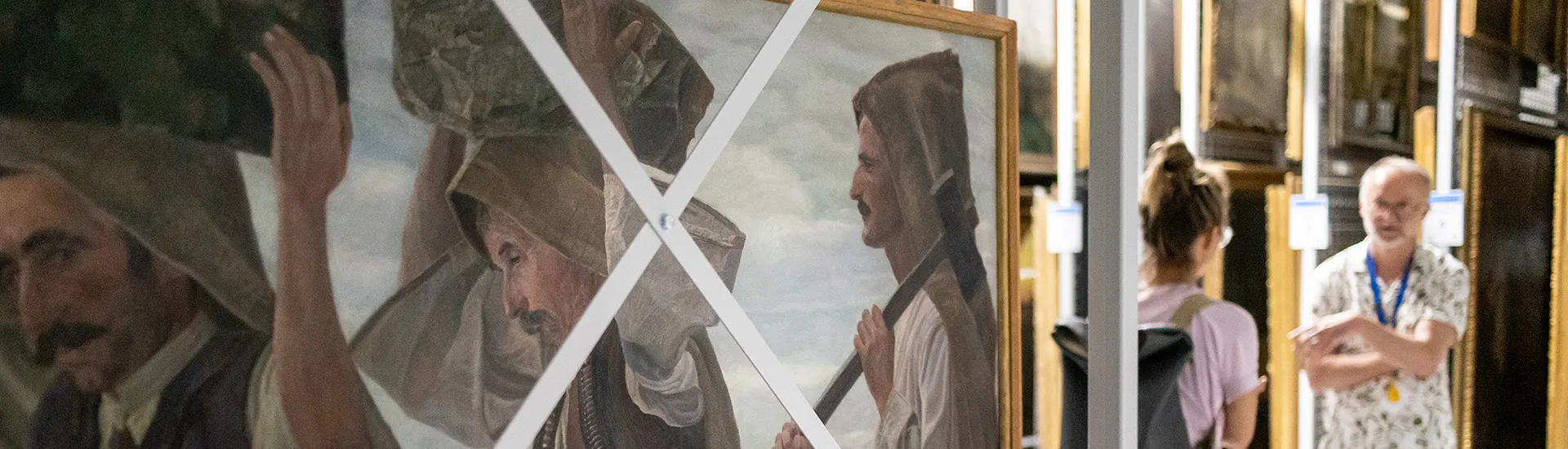
“I don’t have access to the storage myself,” says Stephan Pumberger, Head of Exhibition Management, as we take the large freight elevator to the third floor. Access is reserved exclusively for the six members of the depot team. Security is paramount—even in this new, rented building, where the Belvedere occupies two floors of 1,4000 square meters each. To cite just one example: the alarm system has a direct line to the police.
The story of this relocation is “multi-layered,” Pumberger notes as he guides us through the halls—echoing the various stages and profound shifts in the institution’s storage history. Using external depots is a relatively recent development. Until the 1990s, in-house spaces were routinely co-opted for storage use.
The former stables of the Lower Belvedere—today home to medieval and Renaissance art—once held large portions of the collection, as did the spaces now used by the Research Center and curatorial offices.
Looking back highlights just how dramatically standards have changed. In the 1980s, the ornate Baroque stables still had a rammed-earth floor. There was just one alarm system and “no climate control as we know it today,” Pumberger explains.
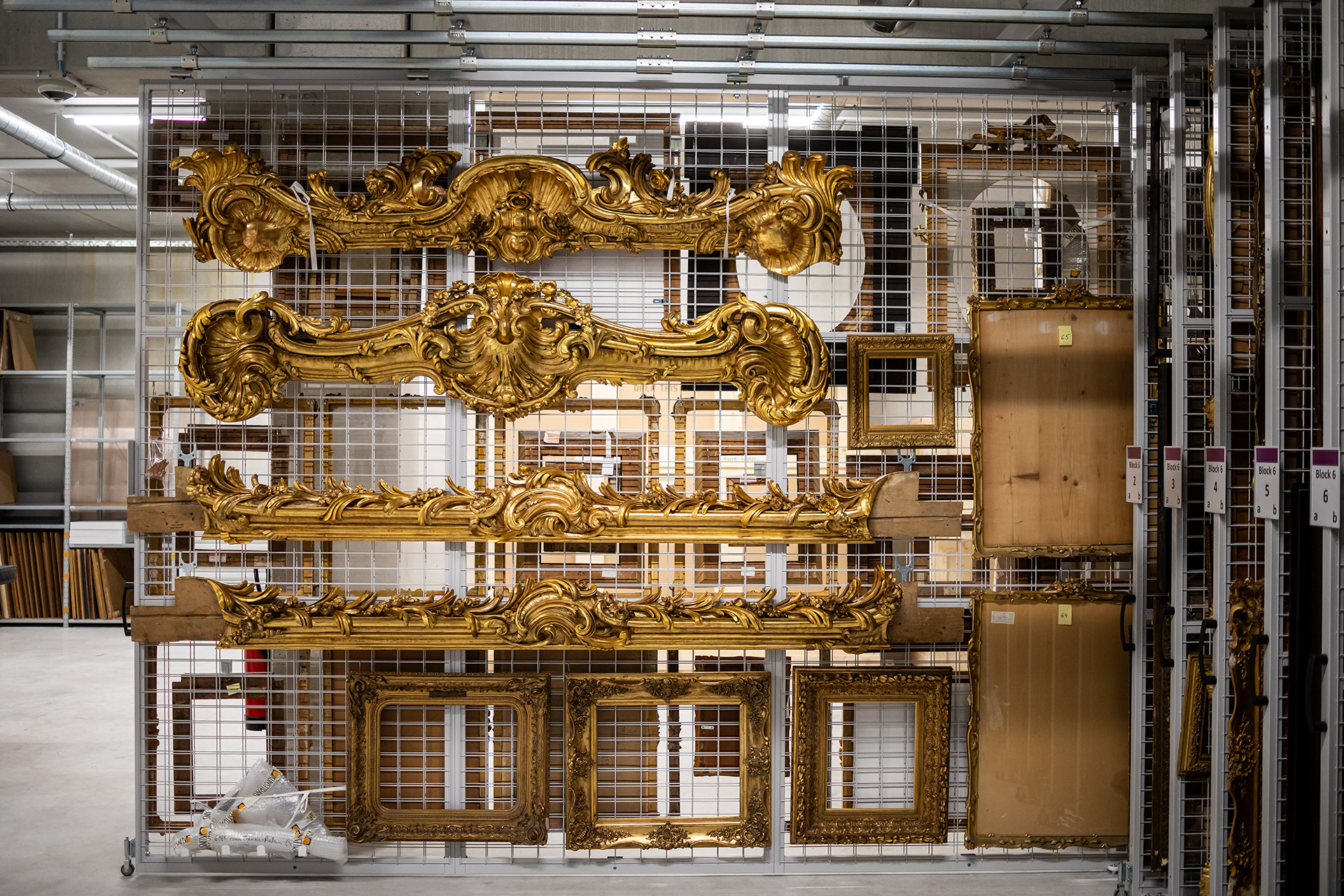
Today, “climate requirements allow virtually no margin for fluctuation,” he says. A monitoring device meticulously records the climate conditions: 20°C and around 50% humidity have become the norm—“not too humid to avoid mold, not to dry to prevent wooden frames from cracking.” These long-established but once difficult-to-achieve standards are now met with sustainability in mind: a photovoltaic system has been installed on the roof, and regular energy-efficiency checks are part of daily operations.
Space: a permanent challenge
The Belvedere’s collection now numbers more than 24,000 artworks—up to 97% of which remain in storage until they are called up for exhibition.
And expansion is guaranteed: the museum’s legal mandate explicitly requires continued collecting. Space remains a constant concern, even if the new facility offers some breathing room for now: the modern grid-rack system on the third floor is still rather sparsely stocked with paintings, as are the large heavy-duty racks on the second floor, where three-dimensional works are neatly arranged. A ten-year plan outlines future needs, though—as Werner Sommer, Head of Depot Management points out—acquisition strategies, donations, and large-format contemporary works make precise forecasts difficult.
Gironcoli in a custome crate
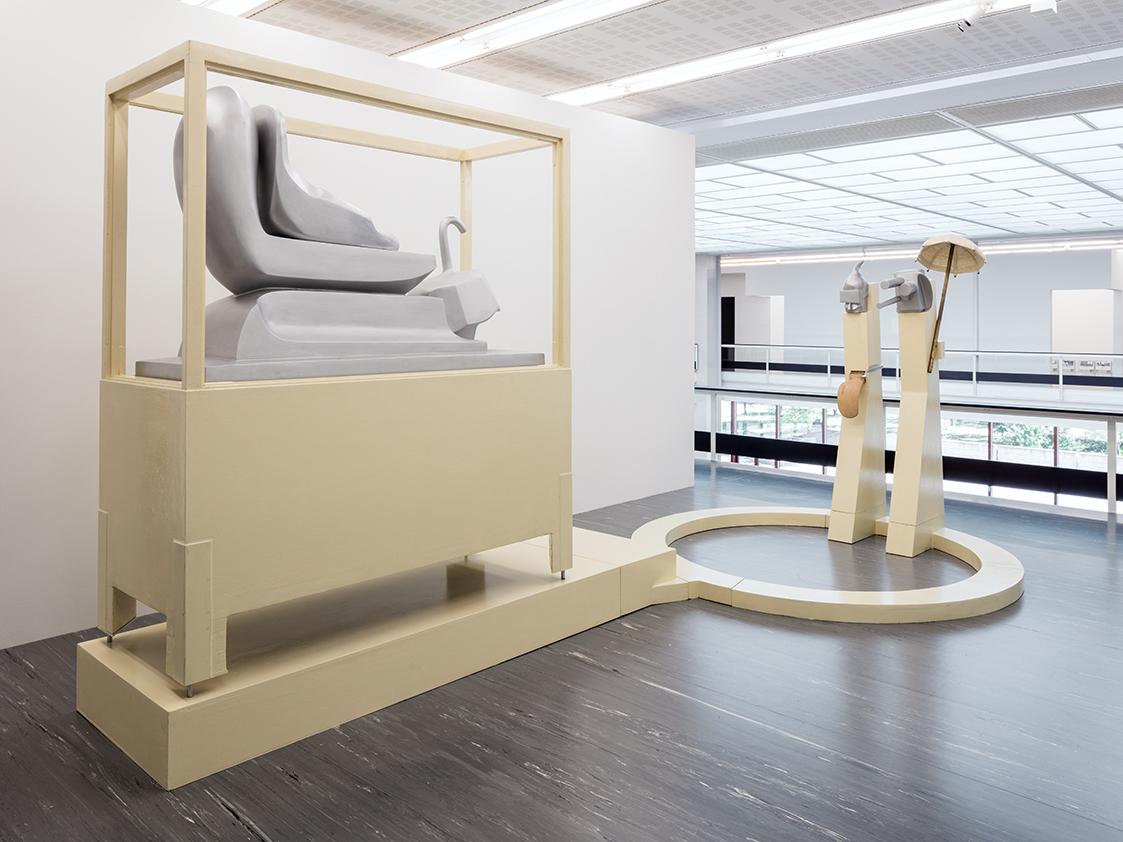
Contemporary artworks exceed standard dimensions far more often than modern works, Sommer explains. Peter Weibel’s 2014 readymade involving the body of a VW Beetle consumes substantial space, as does Bruno Gironcoli’s monumental installation Mütterliches Väterliches (1968–72), stored across several cubic-meter-sized crates.
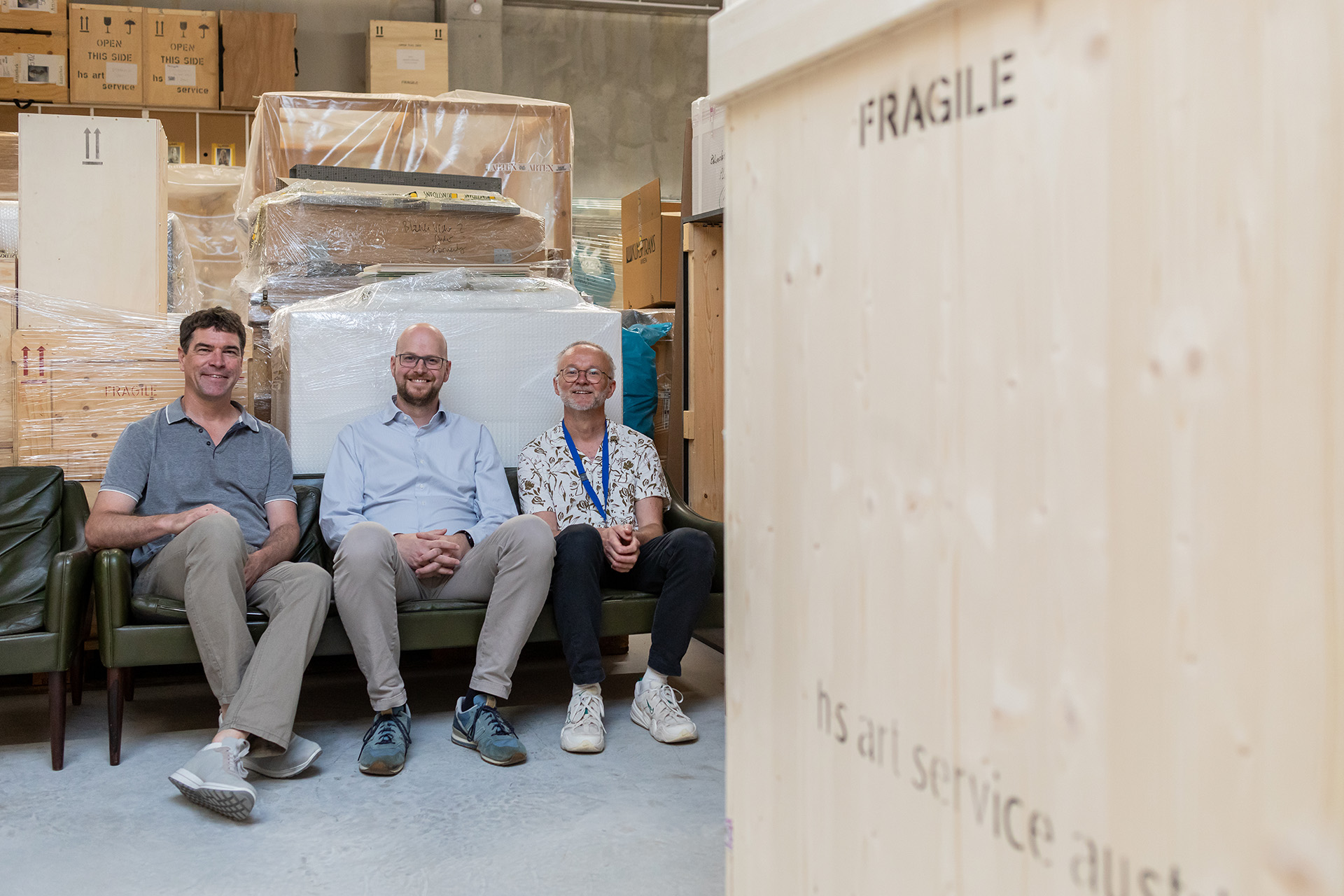
At the depot many works remain in their custom transport boxes, designed for optimal protection. These crates help stabilize climate levels over longer periods; in exhibitions, they can be opened only after 24 hours so the works can gradually acclimate. Around 200 objects are loaned internationally each year, in addition to numerous collaborations with Austrian institutions and around 15 in-house special exhibitions—all coordinated simultaneously by the depot team.
“The risk of damage is highest whenever a work is moved or manipulated.”
Werner Sommer
Lagerung als „dreidimensionales Puzzle“
Lagerbedingungen sind eine der zentralen Herausforderungen in der Depotarbeit, das digitale Ordnungssystem eine weitere. Auch hier gibt es Standards. Damit Objekte rasch gefunden werden, sind sie mit Nummern versehen. Die Inventarisierung und die Datenbank sind gerade deshalb so wichtig, weil im Depot allein der Platz – und nicht die thematische Sortierung – über die Zuordnung entscheidet. Ein „dreidimensionales Puzzle“ nennt Sommer die Hängung im Kunstdepot liebevoll, der zuständige Kollege habe versucht, „wirklich jeden Millimeter auszunutzen“.
Art handling: “A particularly delicate moment“
A crucial part of depot work, Werner Sommer stresses, is a “sensitive touch.” Art handling, he says, is “a particularly delicate moment. The risk of damage is highest whenever a work is moved or manipulated.” And something can always happen, he adds, “because we don’t have X-ray vision—we can’t see what’s going on inside a work’s structure.”
Personalkonstanz sei daher wichtig und in seiner Abteilung zum Glück gegeben, so Sommer, der selbst seit 17 Jahren in der Sammlungsverwaltung arbeitet. Was es bei der Arbeit brauche? „Liebe zur Kunst und das Talent, vorsichtig und überlegt damit umzugehen.“ Ganz gleich ob es sich um millionenschwere Kunst handelt oder um eine hundertfach reproduzierte Grafik, man müsse „jedes Mal überlegen, wie man ein Werk am besten angreift“.
The Wotruba Depot: open to the curious
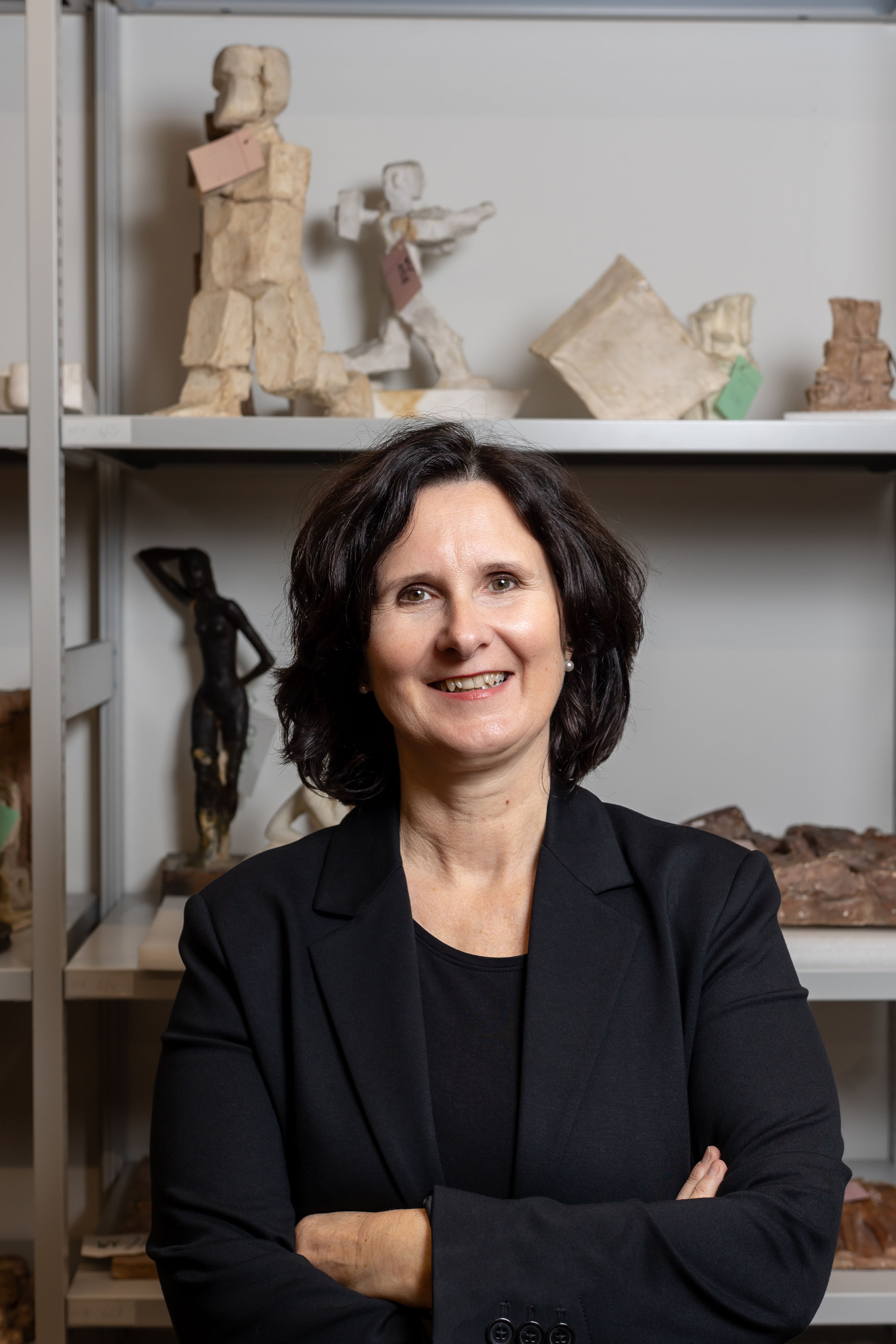
Beyond the main site on the city limits, the Belvedere maintains additional storage locations—including an underground depot (its address undisclosed for security reasons) and a facility dedicated to the Fritz Wotruba estate at the Belvedere 21. Visitors can peer into this space through the glass door of the adjacent study hall on the museum’s bottom floor.
Three years ago, the Belvedere assumed stewardship of the Wotruba estate—500 carved or modeled sculptures which even in this storage setting—with its black-and-red shelving—offer an impressive picture of the artist’s oeuvre. Several large plaster figures were reassembled at the request of curator Gabriele Stöger-Spevak, the custodian of the estate. “Visibility is a major concern for me—including for a broad public,” she emphasizes, pointing to guided tours (for example during Belvedere events) and the option of arranging individual appointments—not only for specialists or artists, but for anyone interested.
Since the depot and the estate are combined in the Wotruba holdings, traditional storage work and scholarly research go hand in hand. Alongside ongoing detailed indexing of his oeuvre, preparations are underway for an exhibition marking the 50th anniversary of Wotruba’s death in 2025, situating the artist within the context of international sculpture between 1945 and 1975. Contrary to his reputation as a strictly Austrian artist, Wotruba was in fact well connected internationally: “we want to restore that sense of internationalism to him,” the curator explains.
The Artothek beneath the Belvedere 21
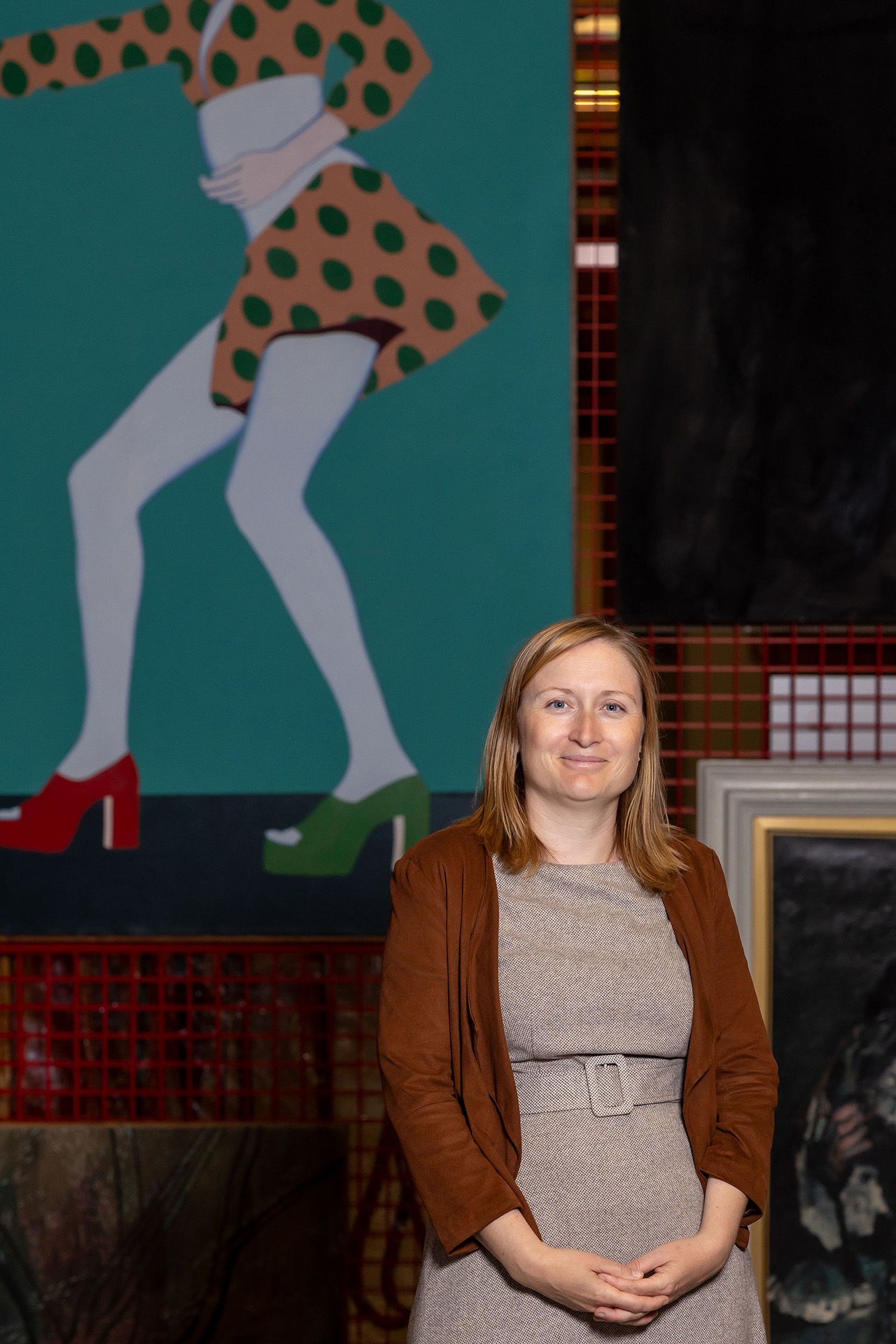
This „chaotic storage system”—an unflattering technical term—is nonetheless the most practical approach, as Claudia Baumann and her team very well know. They oversee yet another storage site under the Belvedere umbrella. In 2012, the extensive holdings of the Federal Artothek—more than 38,000 artworks acquired since 1948 through federal art funding—came under their administrative care, including early works by Maria Lassnig and Kiki Kogelnik.
To accommodate them, the team moved into a specially adapted deep-storage facility beneath the Belvedere 21. Conditions are excellent—though one drawback remains: the team works entirely under artificial light. Daylight lamps, originally acquired for conservation work—a major focus of the department—help compensate for the absence of natural light. The Artothek lends works to all non-profit federal institutions—universities, ministries, embassies, and more. Any damage is documented immediately upon return and repaired either internally or externally, depending on its extent. Minor dents and scratched frames are to be expected: “we’re not lending within a museum context,” Baumann notes. For corridor displays, the team now lends only glazed works to prevent people with bags or ring binders from brushing against the pictures.
A significant part of their work focuses on newly acquired pieces—works by contemporary artists living in Austria. To fulfill their preservation mandate, conservators document, for instance, the materials used in each work. Contemporary art can be challenging, Baumann explains, because of the wide variety of media involved. She points to a large work made of silver threads by Austrian-Swedish artist, Elisabeth Kihlström. These threads will oxidize over time as Kihlström intended, which is then noted accordingly.
Article first published in "Belvedere Kunstmagazin" no. 2-2024.
Gallery