

“As Long as That Feeling Is There, That’s Enough”
Oskar Haag on Gustav Klimt’s “The Kiss,” Music, and the Power of Art
How do art, music, and acting inspire one another? Oskar Haag experienced this firsthand at the Belvedere. We spoke with the musician and actor about Gustav Klimt’s The Kiss, unexpected inspiration, and the ways art can move us.
Oskar Haag
Lisa Ebner-Kollmann
© Michelle Rassnitzer
“Then I Stood Before It – and Understood”
Oskar Haag
Belvedere Stories: You’d known Klimt’s The Kiss for a long time, of course, but you weren’t particularly taken with it at first. Why?
Oskar Haag: I mainly knew it from all the merchandise. Postcards, T-shirts, tote bags, coffee mugs – you see the image everywhere. I knew other works by Klimt that I absolutely loved, and I couldn’t understand why this particular painting had become so famous.
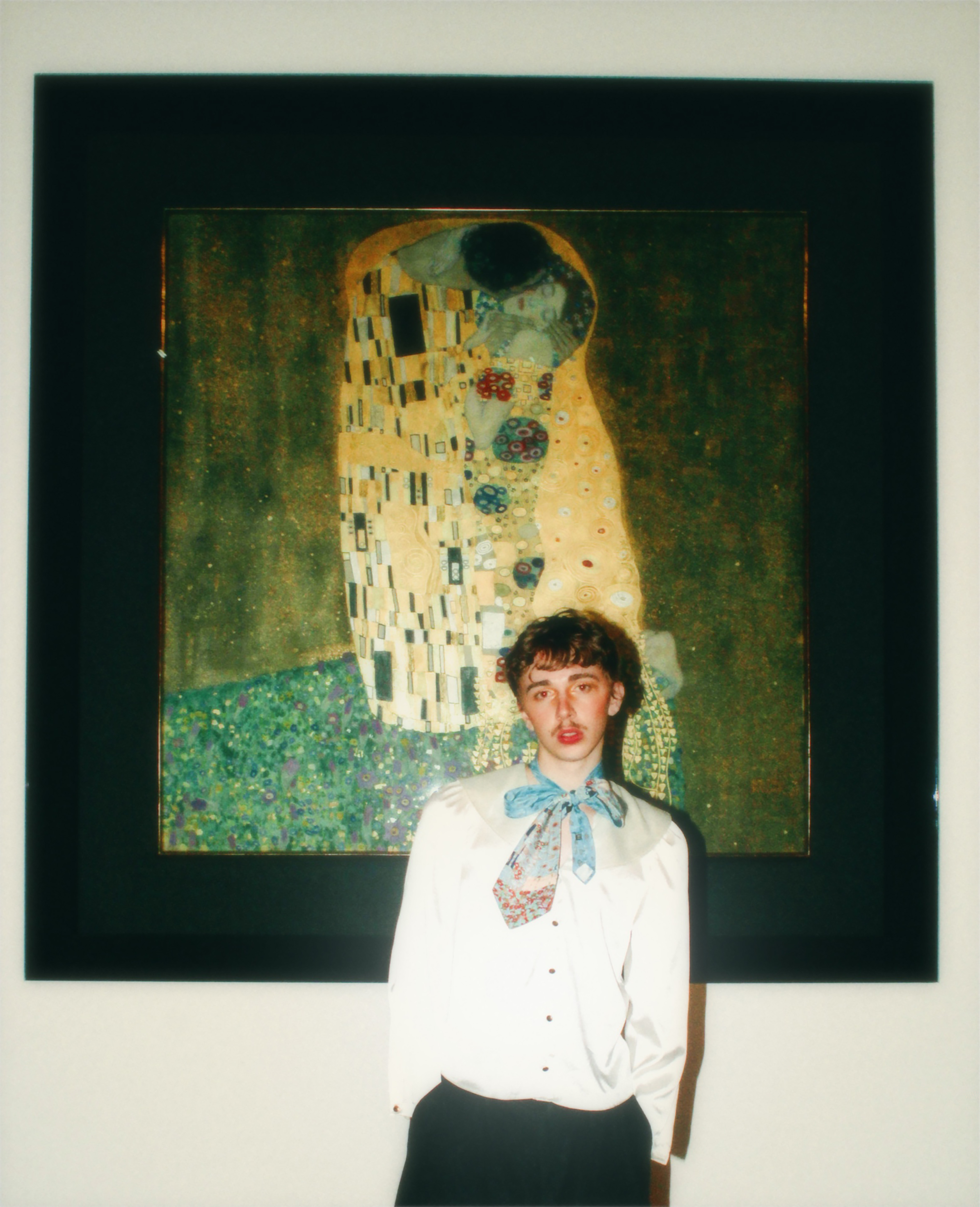
I actually only went to the Belvedere because a friend from Carinthia was visiting and really wanted to go. When you live in a city, you often never get around to visiting the major sights. And then suddenly I was standing in front of the original and understood why this painting is such a big deal.
Belvedere Stories: What was different about seeing it in person?
Oskar Haag: It’s so opulent, yet at the same time there’s something incredibly intimate about it. That really got to me. And every time I tell this story, it sounds completely made up. But at that very moment, the melody for the chorus came into my head.
I sat down in a corner somewhere and mumbled it into my phone. And then, to be honest, I went straight home. I didn’t even see the rest of the museum. I just knew: If I want to write this song, I have to get home and sit down at the piano right now, or I’ll lose that feeling.
Belvedere Stories: And how quickly did that melody turn into a finished song?
Oskar Haag: I sat down at the piano as soon as I got home. I wrote the song in about an hour. Later, I played it for my dad, and he suggested adding another section, a bridge. I wrote that pretty quickly, too.
Everything just came together with this song. Sometimes you work on a song for months, sometimes even almost two years, and still can’t get anywhere. But with Der Kuss, everything was clear right from the start. That doesn’t happen often.
“As If the Gold Were Coming from the Kiss Itself”
Belvedere Stories: You mentioned the intimacy of the painting. How did you see the two figures and their relationship?
Oskar Haag: To me, it was definitely a romantic relationship. There’s an incredible tenderness to the painting, especially in contrast to all that gold.
I saw the gold almost as if it were coming from the kiss itself and suddenly spreading across the entire canvas. As if that feeling were taking over everything. That’s actually in the song, too: “I want to paint our bodies gold.”
Belvedere Stories: That’s a very personal interpretation of the painting. Did you explore Klimt or The Kiss any further after that experience?
Oskar Haag: Not really. I’d already spent some time learning about Klimt before that. I went to a school in Klagenfurt with a focus on visual arts, and both my parents are involved in art and culture. So I grew up around those things
But I didn’t really look into the painting itself much more after that. I’d seen it, it had stirred something in me, and that was what mattered. I didn’t feel the need to learn much more about it. As long as that feeling is there, that’s enough.
When a Feeling Becomes a Song
Belvedere Stories: Is it common for a work of art to inspire you to make music so directly?
Oskar Haag: No, that doesn’t happen often. I don’t deliberately go to a museum or the theater or watch a film looking for inspiration. But sometimes another art form sparks something in me that I somehow need to process.
For example, I once wrote a song after watching Call Me by Your Name. It hasn’t been released yet, but maybe it will be someday. But feeling such a strong urge to immediately turn something into a song is pretty special.
Belvedere Stories: You mentioned that you rely a lot on intuition when making music. What does that look like when you’re writing a song?
Oskar Haag: I actually have no idea how to read music. I taught myself to play guitar and piano, and nobody ever taught me how to write a song.
I just go with what feels right. That might sound like I’m not giving myself enough credit, but it just happens. Sometimes I carry feelings around with me for a long time and don’t know what to do with them. Eventually, they find their way into a song. With Der Kuss, though, I had to get that feeling out right away.
Belvedere Stories: You’re also an actor. Do you notice any connections between acting and making music?
Oskar Haag: Yes, definitely. Performing at the Burgtheater naturally helps with my stage presence at concerts.
I also had voice training for the Burgtheater, because in such a large theater, you have to make sure people can hear and understand you even in the back rows. That actually helped my singing a lot.
And the other way around, my musical instinct gives me a certain confidence with rhythm when I’m speaking. I often get a feel for the rhythm and melody of a monologue very quickly.
Back to Where It All Began
The story behind the song eventually made its way back to the Belvedere. After someone from the museum heard Oskar tell it at a concert, the museum got in touch with him. To this day, he doesn’t know exactly who it was:
“I still don’t know who exactly it was, or whether I’ve even met them.”
When the conversation turned to a possible collaboration, Oskar had a particular idea in mind:
“Actually, I’d love to shoot a music video there. That would be pretty awesome.”
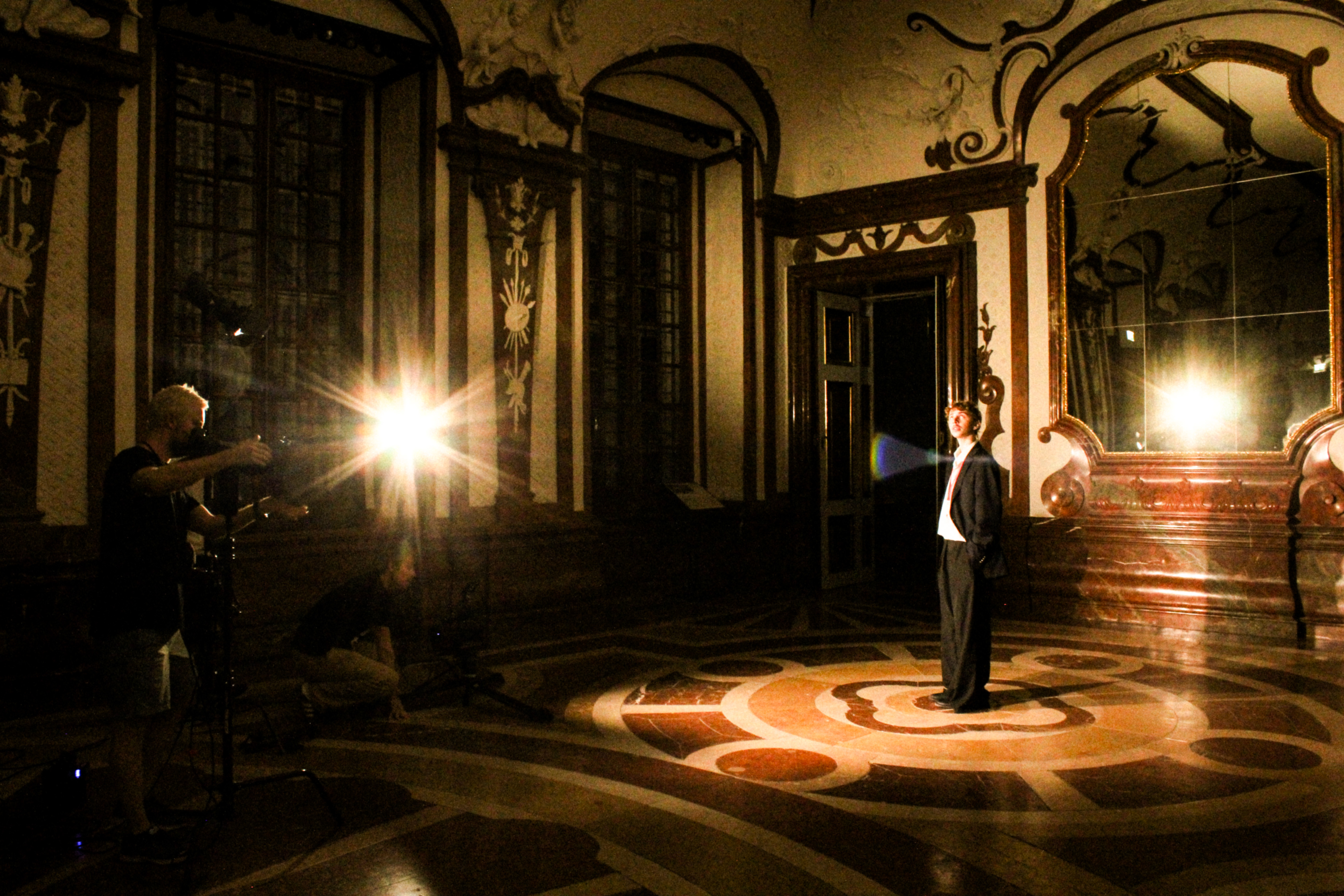
Belvedere Stories: What was it like to return to the place where the song was born, this time to shoot a music video?
Oskar Haag: It was really great. Just walking through those rooms when it’s dark and there’s nobody else around is pretty special.
And you don’t really have to come up with much when you’re shooting a music video here. The rooms themselves have so much to offer. You just stand there, sing along to the music a little, and you’ve instantly got a really striking scene.
Belvedere Stories: One scene really caught me by surprise: You slide down the grand staircase on your stomach. I could hardly believe that was actually a real person doing it. Did you use some kind of Oskar dummy?
Oskar Haag: No, that was really me! You’ve got to know how to do that! (laughs) I’ve been able to do weird physical stuff like that since I was a kid. Apparently, I’ve got a knack for doing them without hurting myself. Maybe I’ll become a stuntman if the music thing doesn’t work out.
After the interview, we head back into the museum, to the place where it all started. It’s far from Oskar Haag’s first visit since the day he stood before Klimt’s The Kiss and felt compelled to rush home to his piano.
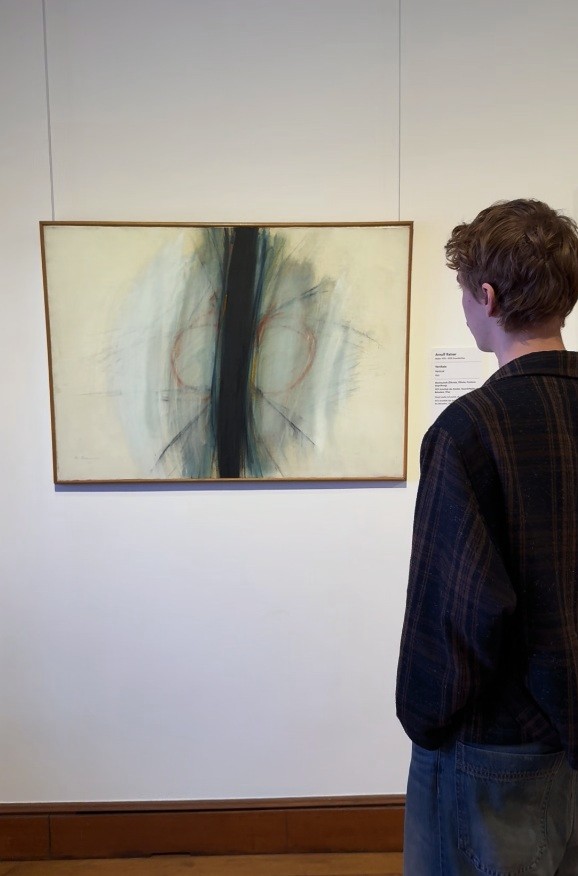
Since then, he’s also had the chance to explore the rest of the collection. He was particularly surprised to discover Vertikale (1963) by Arnulf Rainer at the Belvedere – one of his favorite artists since his school days. He also has a connection to Rainer through his acting: In Anja Salomonowitz’s film Sleeping with a Tiger, he portrayed the artist as a young man.
Now we’re standing together in front of Vertikale to record a short video for social media.
“What I actually like about Arnulf Rainer is that his paintings really stress me out,” Oskar says. “I don’t feel entirely comfortable looking at them, but somehow that’s exactly what’s so great about them.”
Unlike Klimt’s The Kiss, this encounter doesn’t immediately inspire a new song. But this work doesn’t leave him indifferent, either.