

The Last Movemen
Anton Bruckner at the Belvedere. An imagined monologue
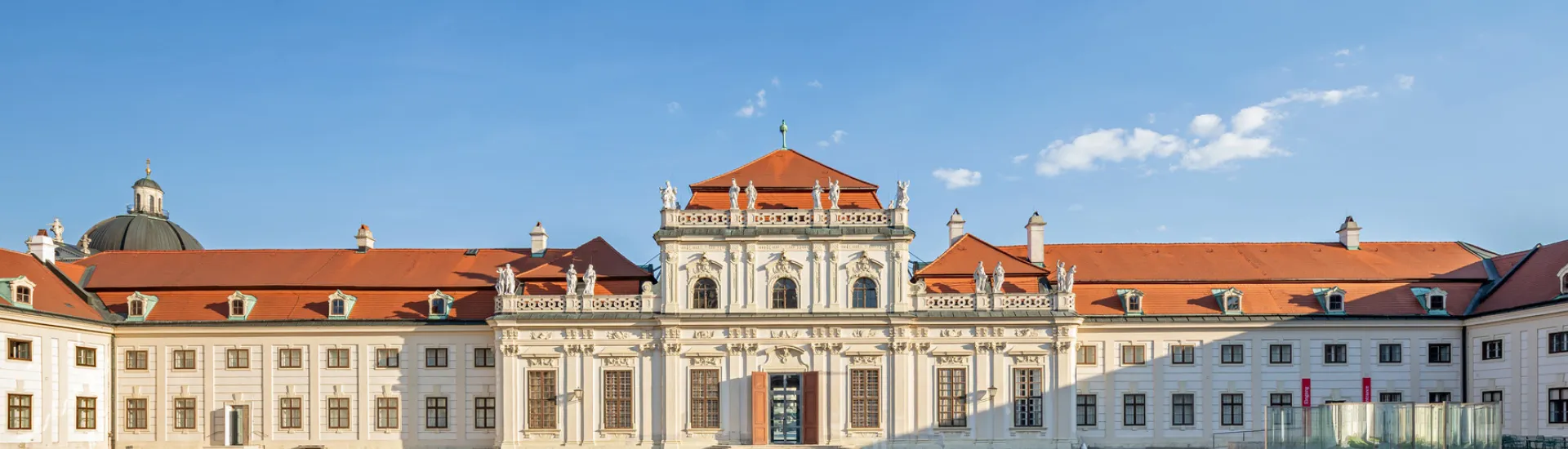
Anton Bruckner (1824–96) during his last year in the custodian’s quarters of the Belvedere. An imagined monologue by Rüdiger Görner.
Rüdiger Görner
Johannes Stoll
Too late, as always—too late! Even the blossoms out in the palace garden. Me, in a palace—old Tonerl from Ansfelden … can this be real? Who would believe it? Only a month ago I moved in here with everything a composer collects over a lifetime: the piano, of course, the scores and sketches, the death portrait of my mother. What a blessing this is, to have everything on the ground floor, within reach. They’ve even got an electric tram now down in the city—runs from Wallgarten to the Prater and Vorgartenstraße, Frau Kathi told me; said she might even try it. Not me. What for? “A fiacre running on electricity,” I told her. And she laughed, Frau Kathi—the way only she can laugh—from the bottom of her heart.
I must write to His Reverence, and to Her Most Serene Highness, the Archduchess Marie Valerie—it’s to her I owe this ground-floor comfort here in Prince Eugene’s quarters. They say he still haunts the place. I can’t say I’ve seen him. Not once—not even at midnight on his white horse. Though truth be told, every hour feels like a ghost hour for me. I call on the ghosts too—not the prince, but those crowned with sound, like the Archduchess herself. “Crowned with sound”—that just came to me now. Would anyone down in the city think I had a term like this in me? Who was it I said was crowned with sound? The phrase is so pretty, I’ve forgotten who it belonged to. Ah, yes—Her Most Serene Highness, the most musically gifted at court, the one even His almost-deaf Apostolic Majesty listens to; through her, he granted my wish. Lodgings in the custodian’s wing, with all these flowers. And otherwise? His Imperial Highness Franz Ferdinand still lives here, too, though only for a year now. But he is no friend of music, not at all.
And again they are calling—calling out unheard-of voices, calling to one another, calling to me—the horns. So it had to begin, back then, eight years gone now: the final one, the unforeseen, taken up and set aside more than once, still not knowing where, or how, or when she shall come to rest. She feels solemn, my final one—animated like a scherzo, adagio-like —a celebration of music itself, bar by bar, phrase by phrase. D minor: nothing but ever-climbing intensities. The form freeing itself, and there lies its secret. Whoever heard it said: monumental. Yes, a monument to music itself. Music is begotten mystery—I used to tell them that in the seminar, in the city below—but what could one add to that, in the final movement? But to what end?
That old Tonerl’s doing well, folks say: those sunrises up here, and sunsets too. Not a mountain, but a hill all the same; not like up on the Rigi back then, when the first rays of the sun made the rocks glisten. Yet this first and last light over the city, it shimmers like a simmering of specks of light where the gray of night melts away or is pierced through, just as in the Adagio of my Eighth, when the harps begin to play; then blinding swirls of brightness and another descent . . . sunrise and sunset become one, indistinguishable . . . but today it rains, a chill in the midst of late summer; the flowers shiver, yet the blackbirds still sing. Have I ever tried the voice of an animal in my music? No—not to imitate it, but to create it: the call of some as-yet-unknown creature, flitting like a will-o’-the-wisp over the Styrian fields, or along the slopes near St. Florian.
Again—those calls. Mother, is it you? The play of shadows on the palace wall. Have Their Majesties announced their arrival? Kathi, was something prepared? Rest easy, Master Anton. She’s never called me that before, never...
Rest easy? John 16, but which verse? yes, verse seven: it is for your good that I am going away. Unless I go away, the Advocate will not come to you.
So I am going, then—bedridden as I have become, but I am leaving—into the unknown and yet familiar. Te Deum, but sound—Kyrie, no smoke, adagio misterioso, sounds in retrograde. It was enough. It is enough when I go. There, the shores of sounds never heard, there I must go. There is comfort in going into the day-bright night.
Article first published in "Belvedere Kunstmagazin" no. 2-2024.
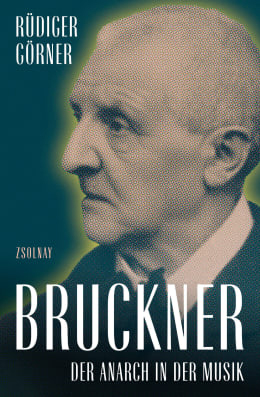
Rüdiger Görner, Professor Emeritus of German and Comparative Literature, is the author of Bruckner: Der Anarch in der Musik, published by Zsolnay to commemorate the composer’s 200th birthday.