

Playing Art
How Game Jams Open Up New Perspectives on Art
Some people create works of art. Others write about them. Still others curate exhibitions.
And some turn them into games.
What may sound unusual at first opens up a completely new perspective on art. After all, when you’re asked not just to look at a painting but to develop a game based on it, you ask different questions: What story is behind it? What decisions would players have to make? What mood could be brought to life? What added value can an interactive approach create?
Lisa Ebner-Kollmann
© SUBOTRON
© Belvedere, Wien
© Michele Agostinis
It was precisely this shift in perspective that was at the heart of the Subotron Austrian Game Jams 2026, an Austria-wide series of game jams organized by the Vienna-based gaming culture platform Subotron in collaboration with the Belvedere and Games for Change, and held at eight universities and colleges. Under the motto “Playing Art,” the Belvedere encouraged students to develop new game concepts based on artworks and themes from the collection – thereby opening up new ways of engaging with art and cultural heritage.
What exactly is a game jam?
The concept is quite simple: Within a limited timeframe, people with diverse skill sets come together, form teams, and collaborate to develop a game. Perfection isn’t the main focus. What matters most are ideas, experimentation, and the creative process.
Participants usually come from very different backgrounds. Some have years of experience with game engines like Unity, Unreal, or Godot.
Others have never programmed before but contribute conceptual, design, or narrative skills. It is precisely this diversity that makes many game jams so appealing.
The shared challenge is to turn an initial idea into a working prototype within a short period of time. This requires creativity, the ability to improvise, and the skill to combine different perspectives.
Art as a Starting Point
Game jams are particularly interesting for museums because they facilitate a shift in perspective. Instead of merely viewing or analyzing works of art, participants must actively interpret them and translate them into a new form. Questions regarding suitable game mechanics, game objectives, and motivators also play a role in this process.
But the intersection with the visual arts can be a source of inspiration for game developers and designers as well, as it enables
"a focused engagement with their own artistic heritage – preserved and made accessible by the museum,”
explains Subotron founder Jogi Neufeld. According to Neufeld, game jams like these hold the potential to forge new paths in raising awareness and education in collaboration with new partners.
Play, Learn, Help Shape
For the Belvedere, participating in game jams is part of a broader approach. Through the “Belvedere Games” initiative, the museum has been exploring the potential of games as tools for learning and cultural participation for several years. This is based on the conviction that games not only impart knowledge but can also foster critical thinking, problem-solving skills, and a shift in perspective.
The approach of this “Play to Learn” strategy is deliberately holistic. Games are intended to spark new interest in art and culture, as well as to guide visitors on-site in a playful way. At the same time, through participatory formats such as game jams, the Belvedere creates spaces where art is not only experienced but can also be collectively reimagined and reinterpreted.
Game jams are also a form of community building. They bring the museum into contact with people from the pop culture, gaming, design, and developer communities and forge new connections between cultural education, creative work, and digital culture. At the same time, they give developers direct access to and a deeper engagement with cultural heritage.
The Belvedere gained its first experience with this format as early as 2024 at the #1 Culture GameJam Vienna at Belvedere 21. The museum served as a partner institution for Change Tourism Austria – an initiative of the Austrian National Tourist Office. In 2025, the museum participated in the Truth, Lies & Democracy Game Jam, which took place as part of Vienna’s European Capital of Democracy program and addressed issues of democracy, truth, and disinformation. The participation in the Subotron Austrian Game Jams 2026 builds on these experiences and, for the first time, expands them to multiple university campuses throughout Austria.
One Collection – Many Approaches
„Playing Art“ was one of a total of four thematic areas at the Subotron Austrian Game Jams 2026. Alternatively, participants could also work on the themes proposed by Games for Change: „Outgrow Hunger“, „All in for Nature“ and „Own the Road“.
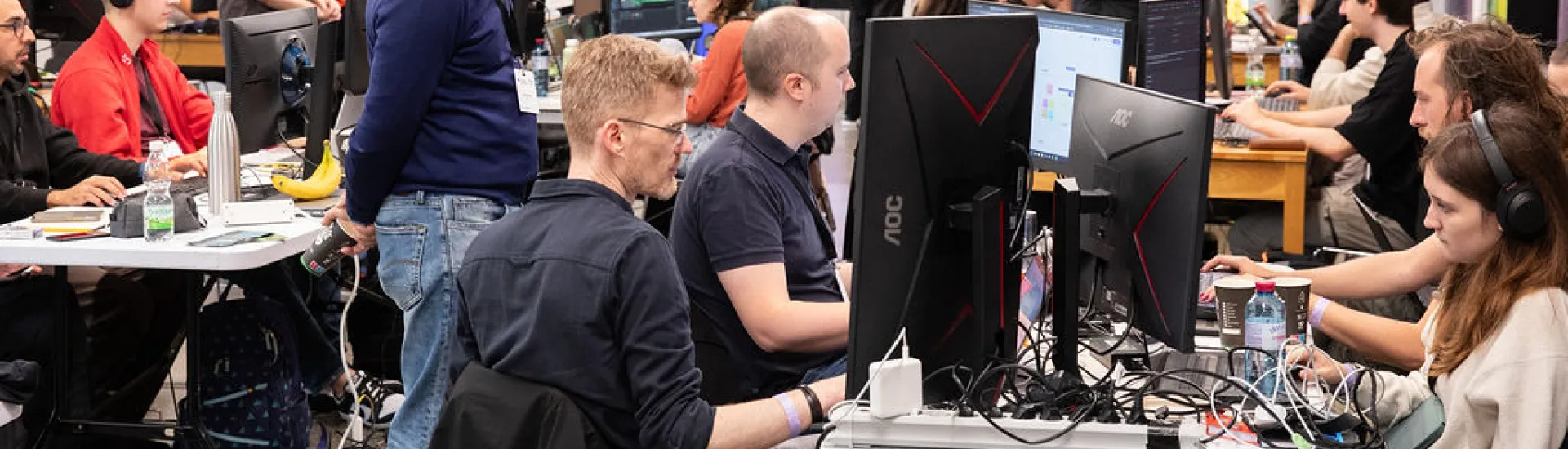
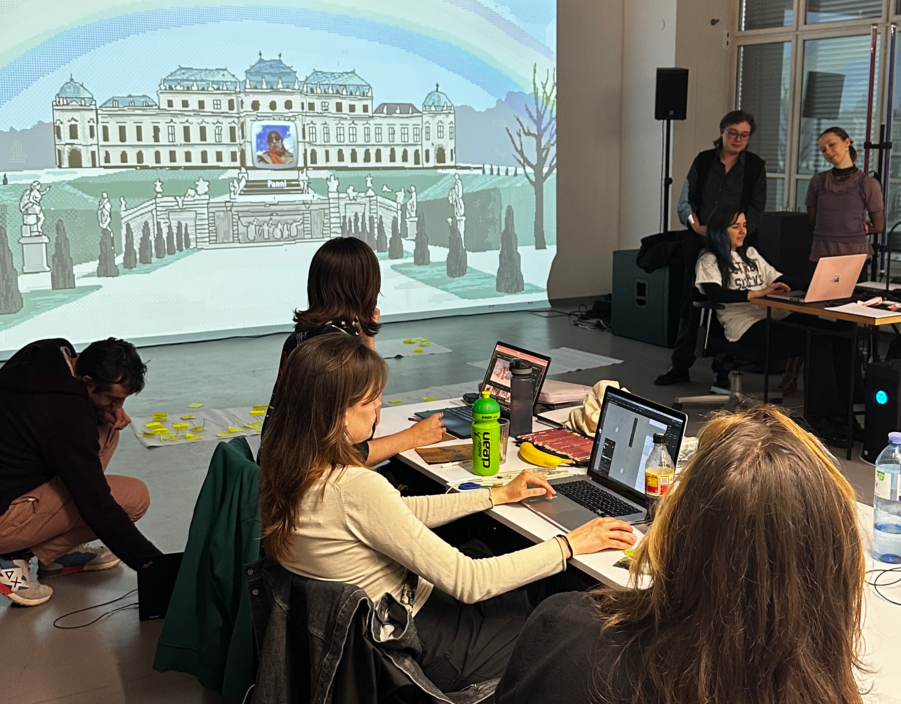
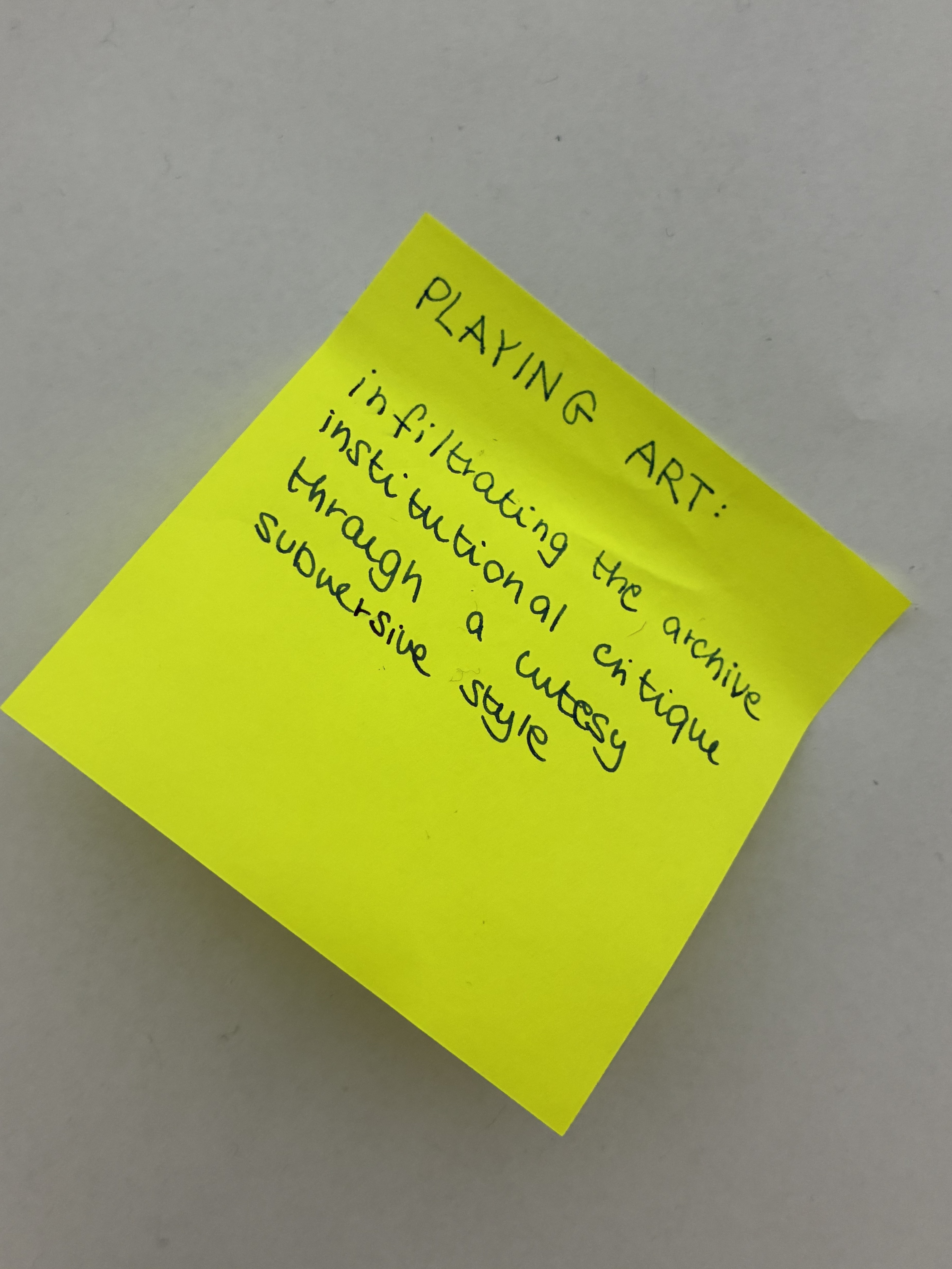
Just how varied the approaches to “Playing Art” can be was evident, for example, at the Game Jam held at the University of Applied Arts Vienna (March 26 & 27, 2026). In two rooms, students from five different classes worked together on their ideas. Collections of Post-it notes from previous brainstorming sessions were scattered on the floor, while flowcharts and progress reports were projected onto the walls.
There was discussion, sketching, and experimentation. About three-quarters of the participants were taking part in a Game Jam for the first time. Most, however, already had practical experience with game development software.
Some teams took specific works as their starting point and developed their concepts directly from those works’ motifs or visual worlds. Others approached the topic through general questions. One team, for example, experimented with textures from works of art, while another explored the question of how long we actually look at images and which details become visible in the process. Still others addressed social issues and examined the role of art as a point of reference, a space for memory, or a medium for reflection.
It is precisely this openness that makes the format so appealing: there is no single “correct” way to approach art. Instead, new perspectives emerge – ones that often surprise even the participating museums.
Game jams are inherently challenging. Tight deadlines, technical hurdles, and the task of combining diverse skills and perspectives in a short amount of time are built into the format.
Why It’s Worth the Effort
Game jams are inherently challenging. Tight deadlines, technical hurdles, and the task of combining diverse skills and perspectives in a short amount of time are built into the format. Yet these very challenges are also what make game jams so rewarding.
For participants, they offer the opportunity to try out new skills, learn from one another, and engage in unusual collaborations. For museums, they create spaces where art is not only presented but also reimagined collectively. The resulting games are less final products than they are visible outcomes of a creative negotiation process, that pay tribute to the social mission of contemporary and innovative art education, especially for young audiences.
They demonstrate how cultural heritage can be continually reinterpreted and translated into contemporary forms.
Outlook
The projects developed as part of the Subotron Austrian Game Jams 2026 are scheduled to be presented to the public for the first time at Belvedere 21 in late November 2026.
Perhaps this is precisely what makes such formats so exciting: they not only open up new ways of engaging with art but also facilitate encounters between people, disciplines, and communities that rarely come together in the day-to-day life of a museum. Viewing becomes co-creation – and art becomes a starting point for new ideas, new perspectives, and sometimes even new games.

![The image depicts a couple embracing. The figures are surrounded by a shiny golden background that is richly adorned. The one figure appears to be wrapped in a magnificent garment decorated with various patterns and floral motifs. Their faces are close together, and their eyes are closed, conveying an intimate and deep connection. The lower part of the image is filled with a lush vegetative depiction. [AI-generated with ChatGPT]](/sites/default/files/styles/stories_teaser/public/2025-08/Gustav%20Klimt_Kuss_Belvedere.jpg.webp?itok=80o-732N)