

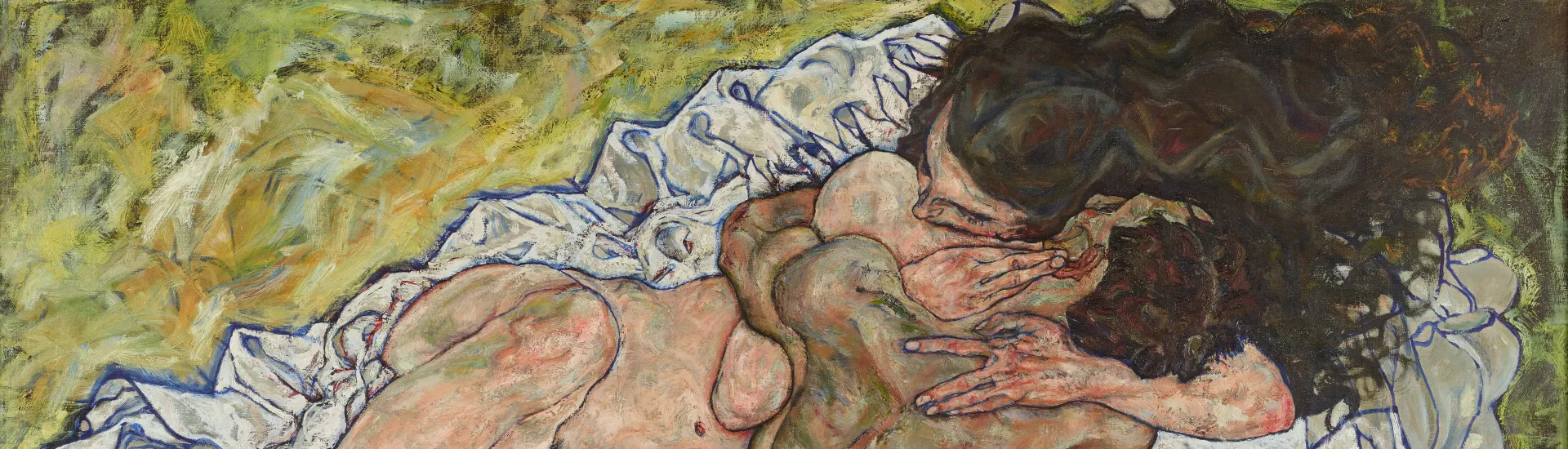
Hardly any other artist of Viennese Modernism continues to polarize opinion as much as Egon Schiele. His angular figures, haunting self-portraits, and unflinching depictions of the human body are as fascinating as they are unsettling. Schiele’s art portrays people as immediate, vulnerable, and at the same time uncompromising.
But who was Egon Schiele, really?
Lisa Ebner-Kollmann
Belvedere, Wien
Although he only lived to be 28, Schiele created a body of work that had a lasting impact on 20th-century art. Influenced by Gustav Klimt and the Vienna Secession, he developed an unmistakable visual language early on that deliberately broke away from the ideals of beauty of his time. His paintings speak less of a person’s outward appearance than of their inner state.
How did Egon Schiele become an artist?
Egon Schiele was born in Tulln, Lower Austria in 1890. At the age of 16, he was admitted to the Academy of Fine Arts in Vienna as the youngest student in his class. There, he initially received a traditional academic training, but soon came to find its methods too restrictive.
A formative experience of his youth was the early death of his father, who died after a long illness when Schiele was only fourteen years old. The loss, the family’s difficult financial situation, and the firsthand experience of illness and mortality left a deep mark on him. These defining themes would later recur repeatedly in his art.
Gustav Klimt also played an important role in Egon Schiele’s life. Klimt’s work had a decisive influence on Schiele’s own work at the beginning of his career.
Klimt himself introduced Schiele to collectors and exhibitions and paved the way for him to join the Viennese avant-garde. Although deeply influenced by Klimt, Schiele soon forged his own artistic path. In 1909, he co-founded the Neukunstgruppe with a group of like-minded young artists and quickly developed a visual language that was entirely his own.
In 1912, Schiele was held in pretrial detention for several weeks in connection with the so-called Neulengbach Affair. The most serious charges – those of “abduction” and “indecent assault” – were dropped; he was ultimately convicted because nude drawings in his studio had been freely accessible to minors. The sources on this matter are incomplete and rely heavily on media reports from that time. What is certain, however, is that these events permanently damaged his reputation while simultaneously reinforcing his image as a provocative artist.
What makes Egon Schiele’s art so special??
While many artists of his time sought beauty and harmony, Schiele was interested in the human being in all their vulnerability. His figures often appear emaciated, their bodies angular and tense, their gestures unusual and expressive. They frequently stand against an almost empty background, without narrative embellishments or spatial context.
It is precisely this that directs the viewer’s gaze entirely toward the human figure. Schiele’s portraits often resemble psychograms: they not only depict a person’s appearance but also convey moods, conflicts, and emotional tensions. His characteristic hands and gestures, in particular, become an important means of expression. These can convey closeness, insecurity, or tension and often shape the impact of the image just as strongly as the faces themselves.
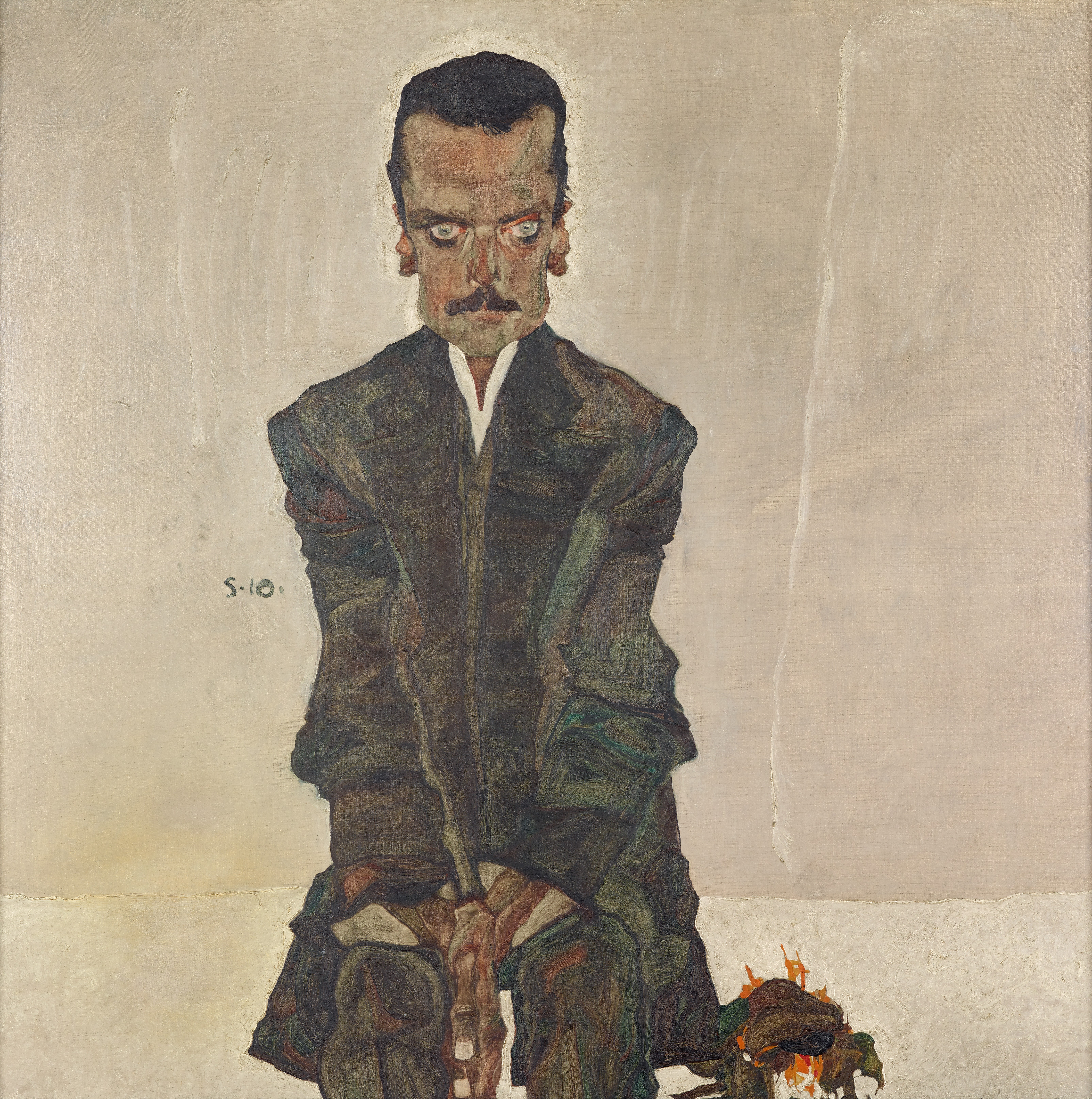
Through facial expressions, gestures, unusual poses, and a deliberate fragmentation of the body, he explored questions of identity, perception, and human existence.
Why did Schiele paint so many self-portraits?
More than 200 self-portraits were created within just a few years – an extraordinary number. However, Schiele was not concerned with self-promotion in the modern sense – as we might know it from social media. Rather, he used his own body as a canvas for experimentation. Through facial expressions, gestures, unusual poses, and a deliberate fragmentation of the body, he explored questions of identity, perception, and human existence. His self-portraits thus also reflect Viennese Modernism’s intense engagement with the psyche, the body, and individuality.
Why do Schiele’s paintings often seem so melancholic?
Many of Schiele’s works revolve around transience, loneliness, and human relationships. These themes shape not only his figure paintings but also his landscapes and cityscapes.
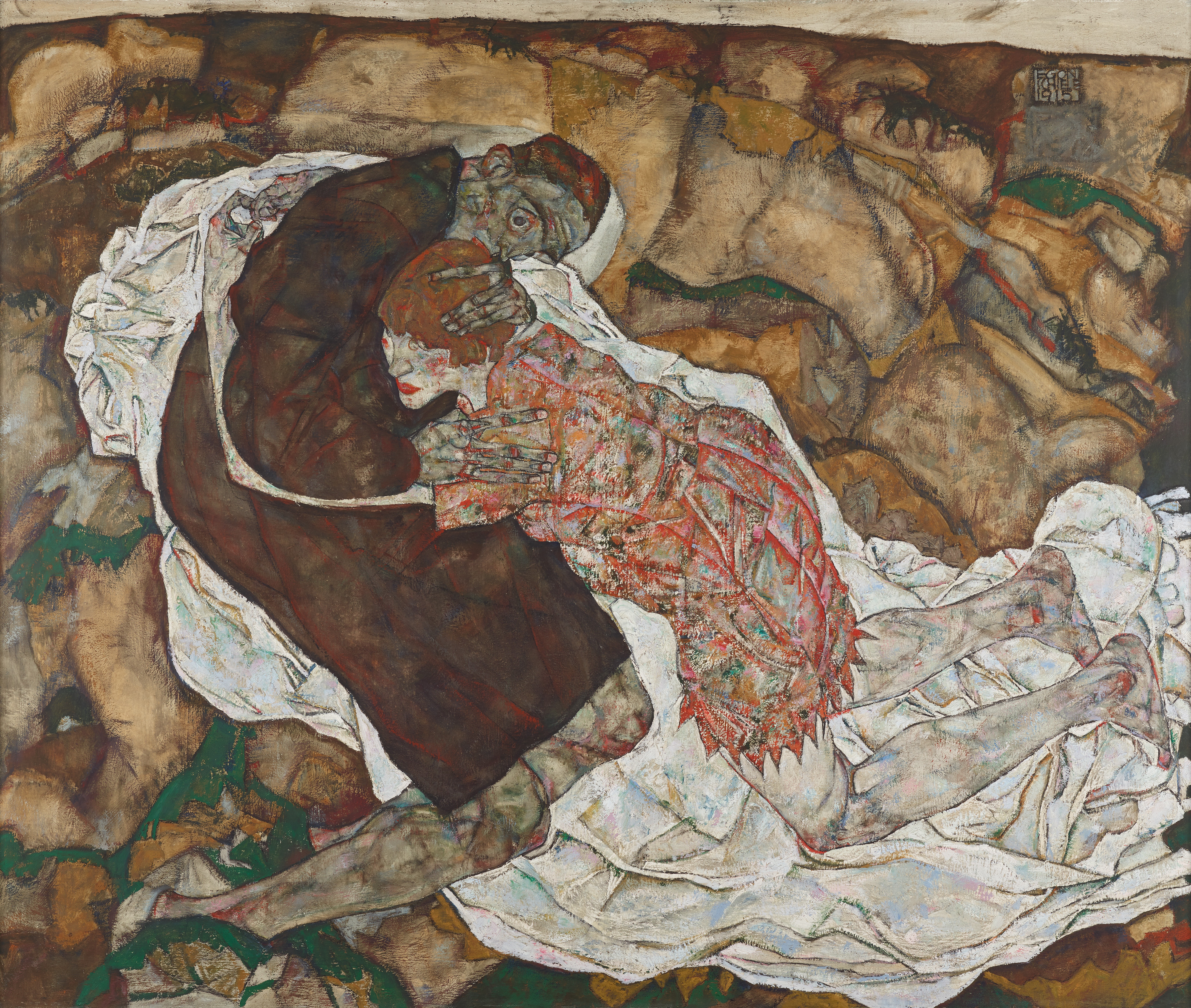
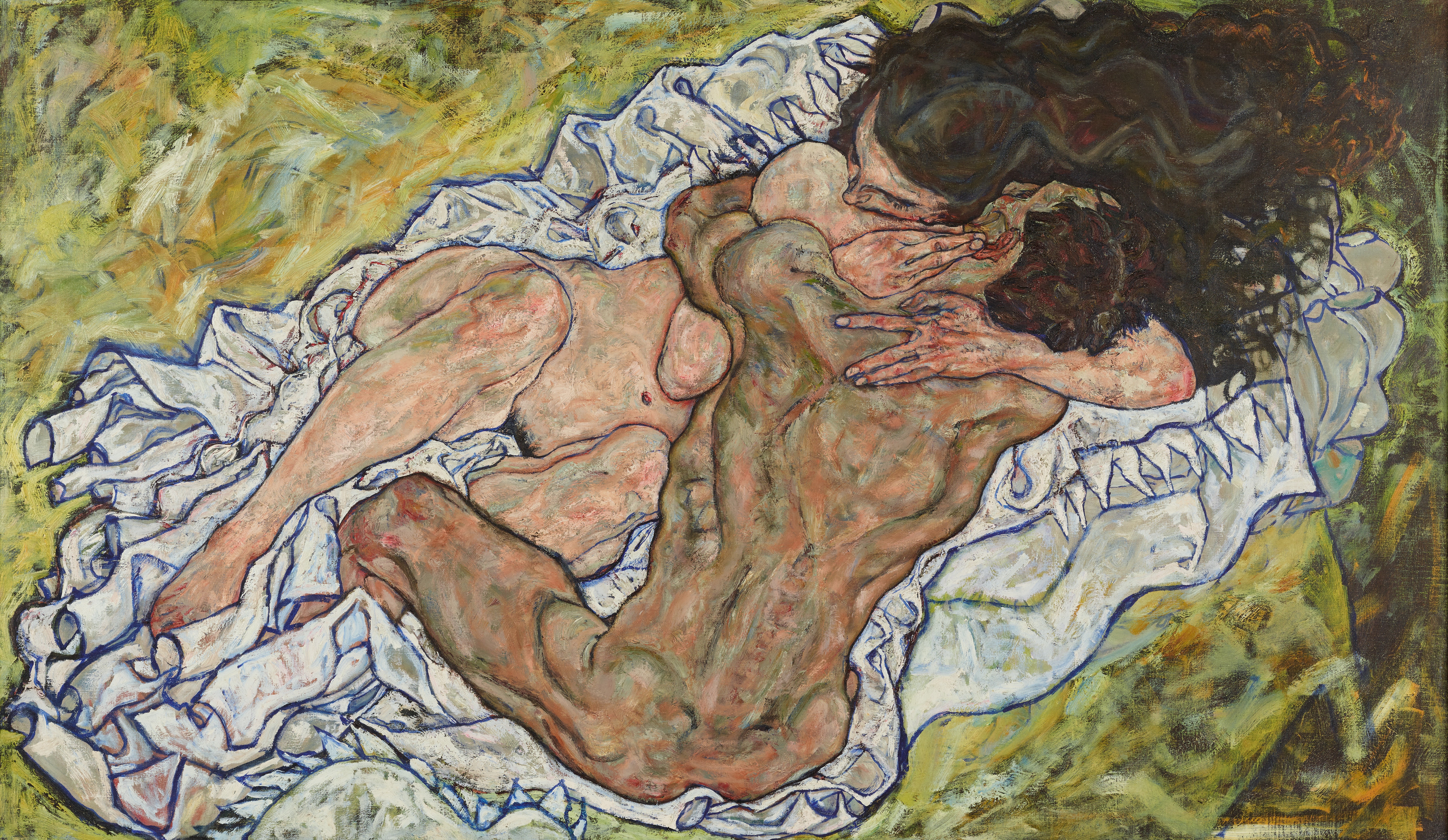
Many of these paintings reflect personal experiences. In works such as Death and the Maiden (1915), Schiele processed his separation from his longtime partner and muse, Wally Neuzil, as well as the uncertainties of a time marked by World War I. Although Schiele decided to marry Edith Harms in 1915, he found it difficult to part ways with Wally. Today, the painting is regarded as a depiction of the artist’s farewell to this relationship.
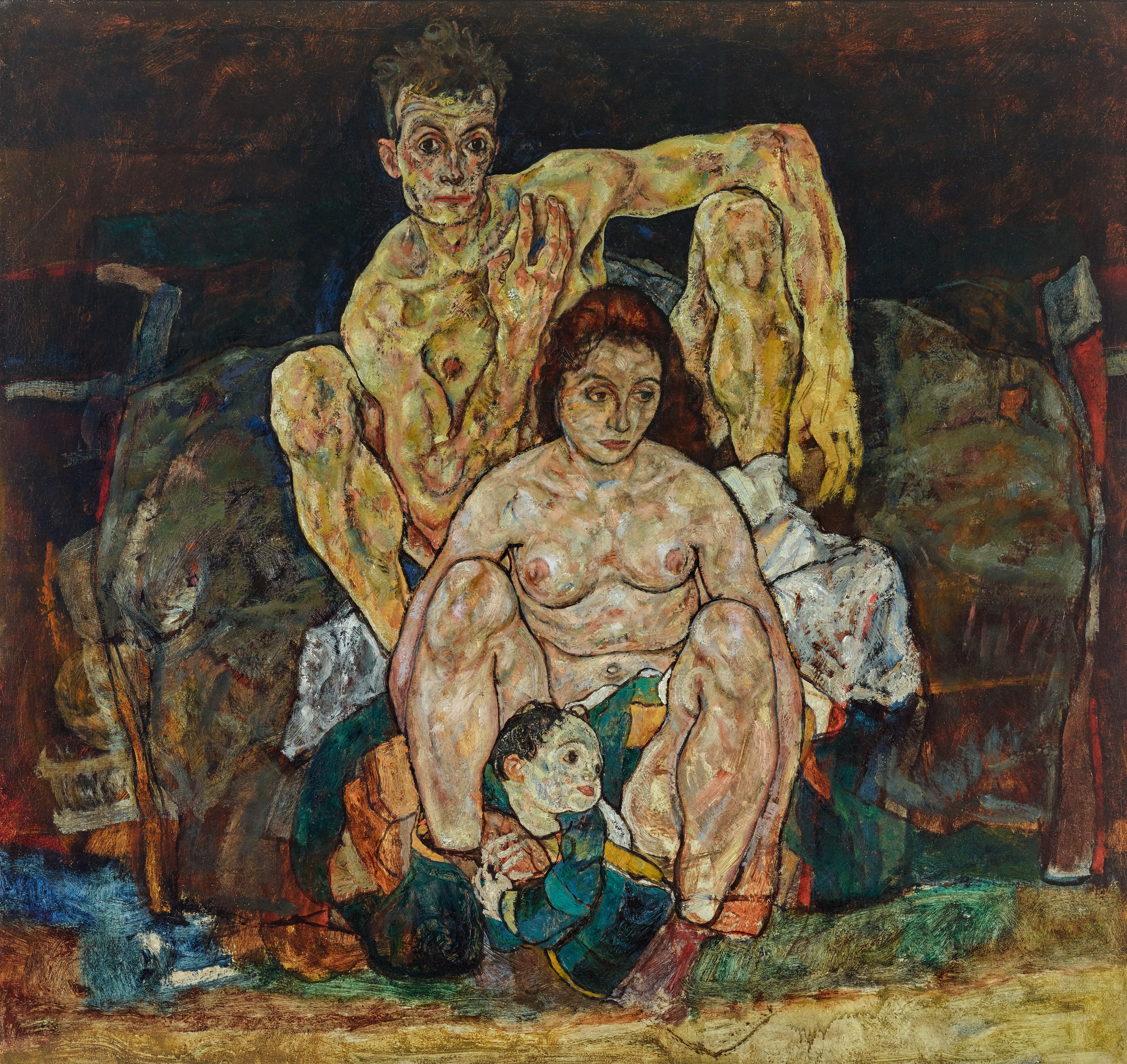
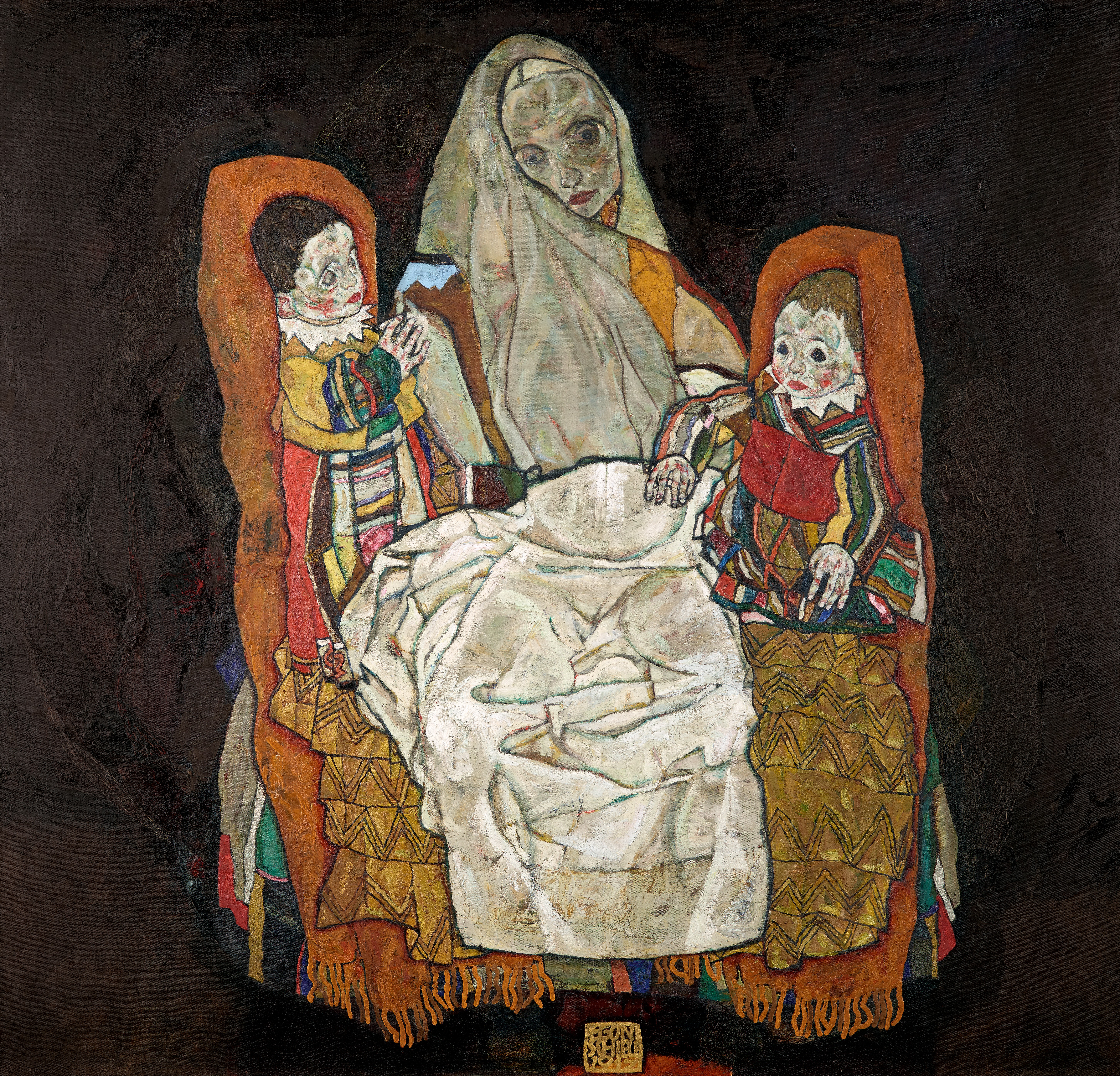
The painting Mother with Two Children III (1915–17) also powerfully intertwines life and death. Art historians see in it, among other things, Schiele’s processing of the experiences that had accompanied him since his father’s early death. His father’s long-standing syphilis and the contemporary notions of illness, sexuality, and guilt shaped Schiele’s visual world. In some works, femininity appears simultaneously as a symbol of life and fertility, but also of transience and death.
Illness, mortality, and family losses are among the themes that run like a common thread through his work.
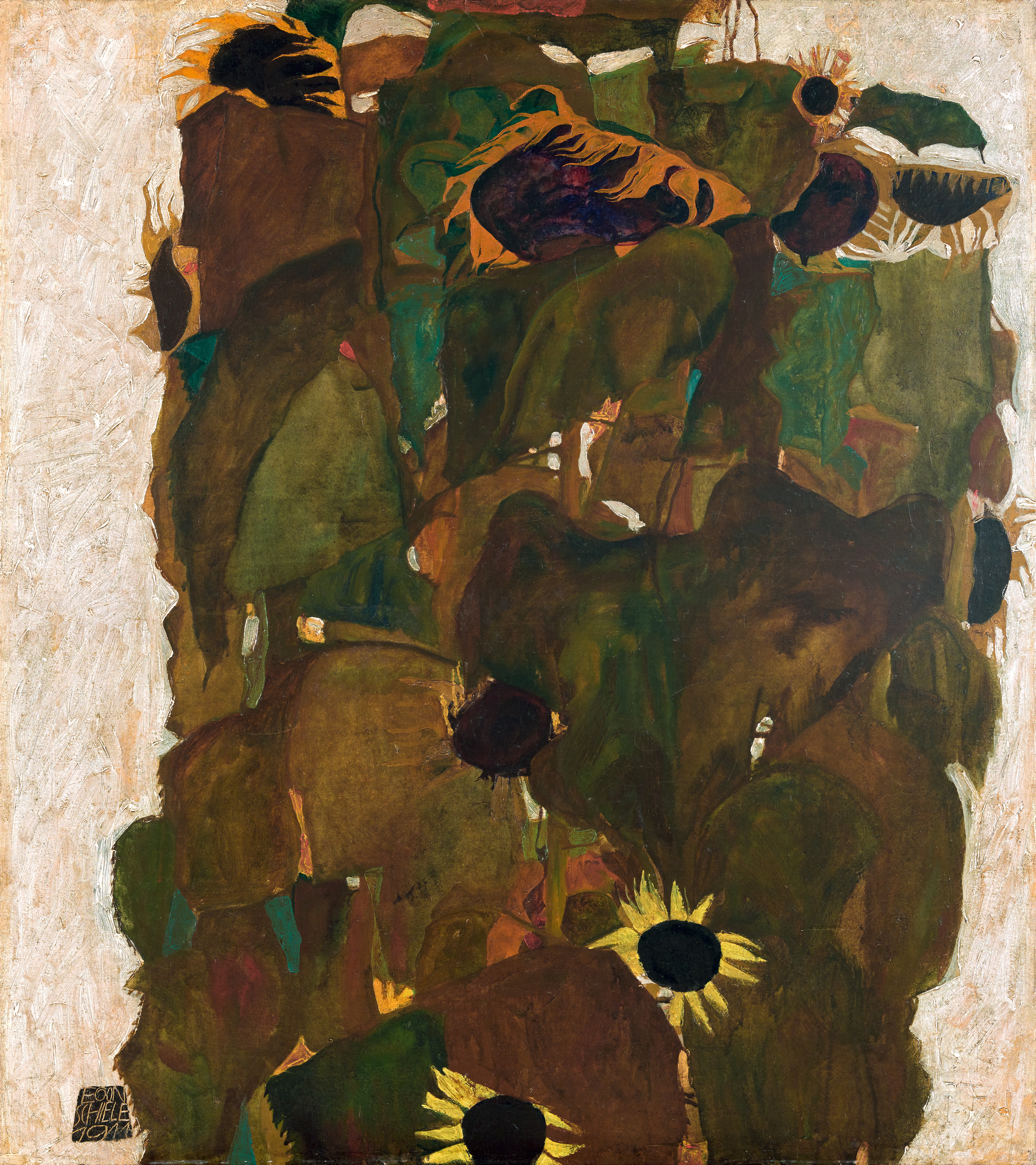
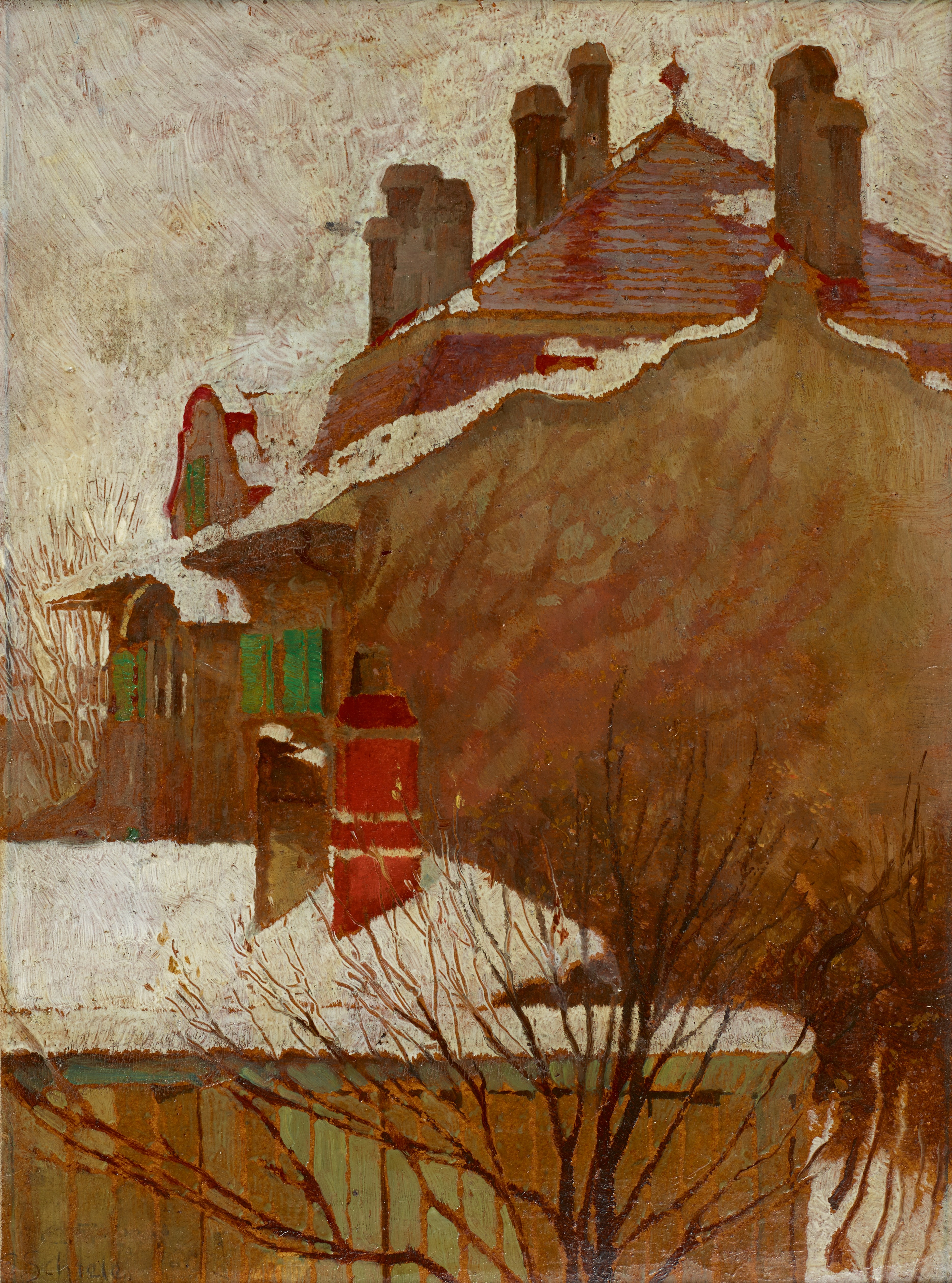
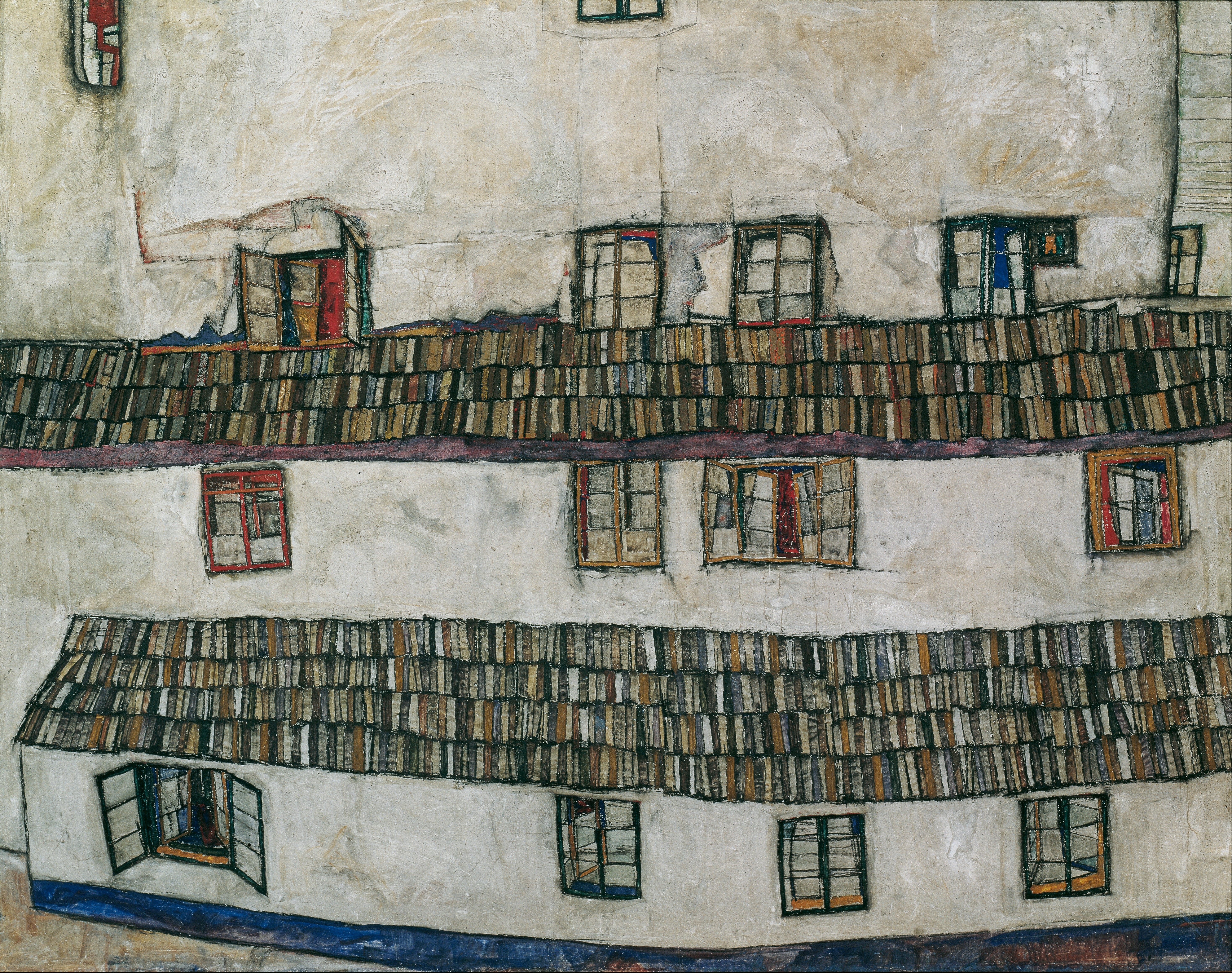
His landscapes also convey this mood. Deserted streets, weathered houses, and withering plants do not appear as lifelike depictions of nature, but as symbols of becoming and passing away. In Sunflowers (1911), also a work from the Belvedere Collection, the plants are not in full bloom but on the verge of withering – a motif that repeatedly occupied Schiele’s mind.
Why does Egon Schiele continue to fascinate us today?
Schiele was far more than an extraordinary draftsman or painter. He was part of a generation of artists who fundamentally transformed the traditional concept of art. His works do not depict people in an idealized way, but rather as vulnerable, contradictory, and existential.
The fact that Schiele is considered today one of the most significant representatives of Austrian Expressionism is due in no small part to this uncompromising, unsparing self-analysis. His paintings seem surprisingly modern today because they pose questions that remain as relevant as ever: Who are we? How do we see ourselves? And how can feelings be made visible?
Only a few months before his death, Schiele completed Portrait of the Artist's Wife, Edith Schiele" In October 1918, Edith, who was six months pregnant, died of the Spanish flu. Egon Schiele followed just three days later.
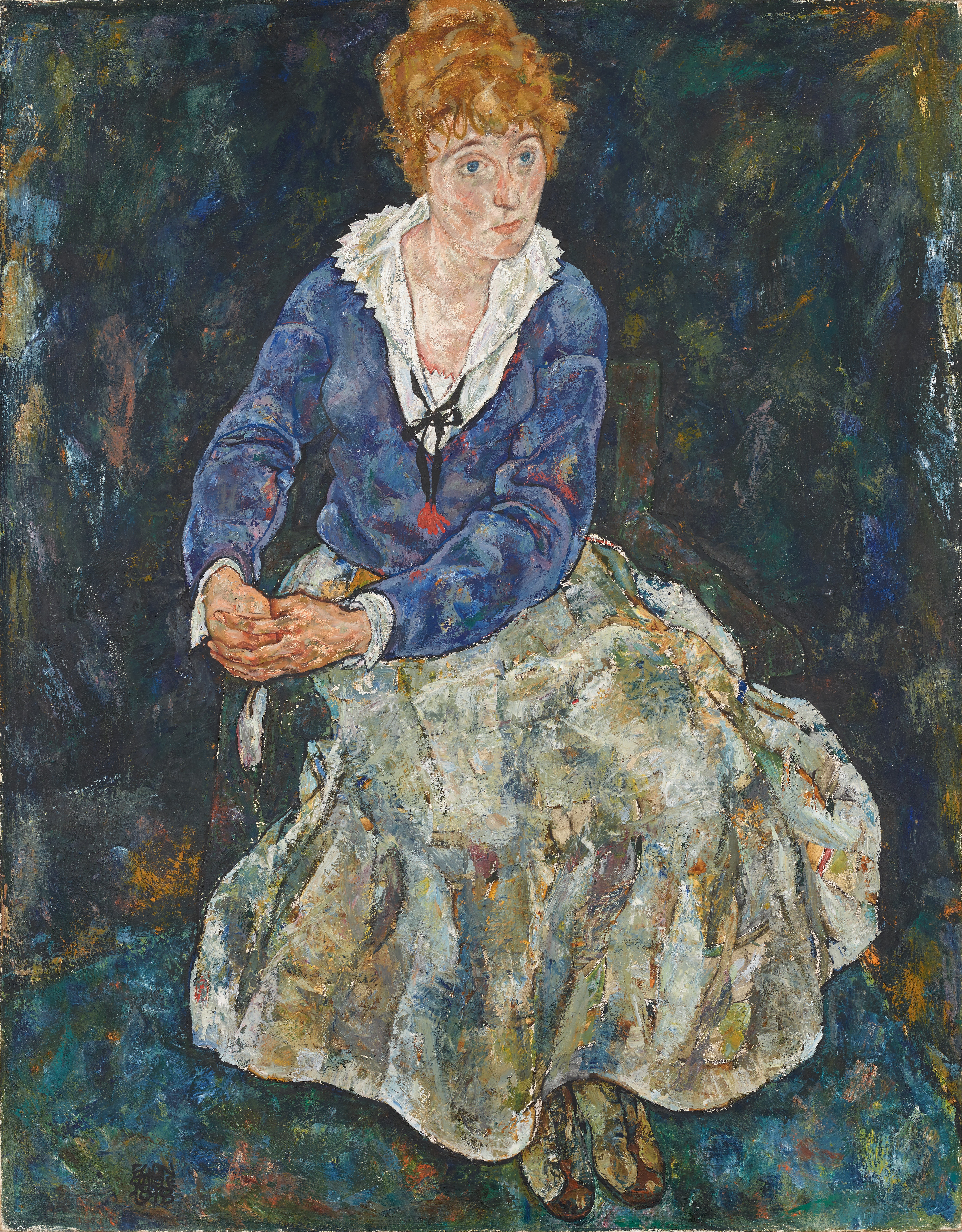
The Belvedere has been showcasing Schiele’s work for more than a century. As early as 1918, the then-Austrian State Gallery became the first museum in Austria to acquire one of his paintings – Portrait of the Artist's Wife, Edith Schiele (1918). Today, with 14 paintings and a series of works on paper, the collection ranks among the most important public Schiele collections in Austria and offers a striking insight into the artist’s brief but extraordinarily influential body of work.
Discover More Schiele
Visit the Belvedere to experience Schiele's works in person and discover even more fascinating insights into the life and work of one of Austria's most influential artists.
Gallery
![The image depicts a couple embracing. The figures are surrounded by a shiny golden background that is richly adorned. The one figure appears to be wrapped in a magnificent garment decorated with various patterns and floral motifs. Their faces are close together, and their eyes are closed, conveying an intimate and deep connection. The lower part of the image is filled with a lush vegetative depiction. [AI-generated with ChatGPT]](/sites/default/files/styles/stories_teaser/public/2025-08/Gustav%20Klimt_Kuss_Belvedere.jpg.webp?itok=80o-732N)