

Beautiful Views
From the Belvedere to “Bella Vista”. On the View and Its Meaning
Belvedere, Bellevue, Bella Vista: The timeless allure of a beautiful view has a name—one that also carries prestige, from palaces to punk bands.
Michael Freund
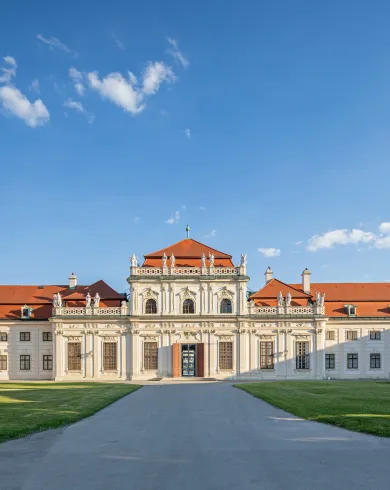
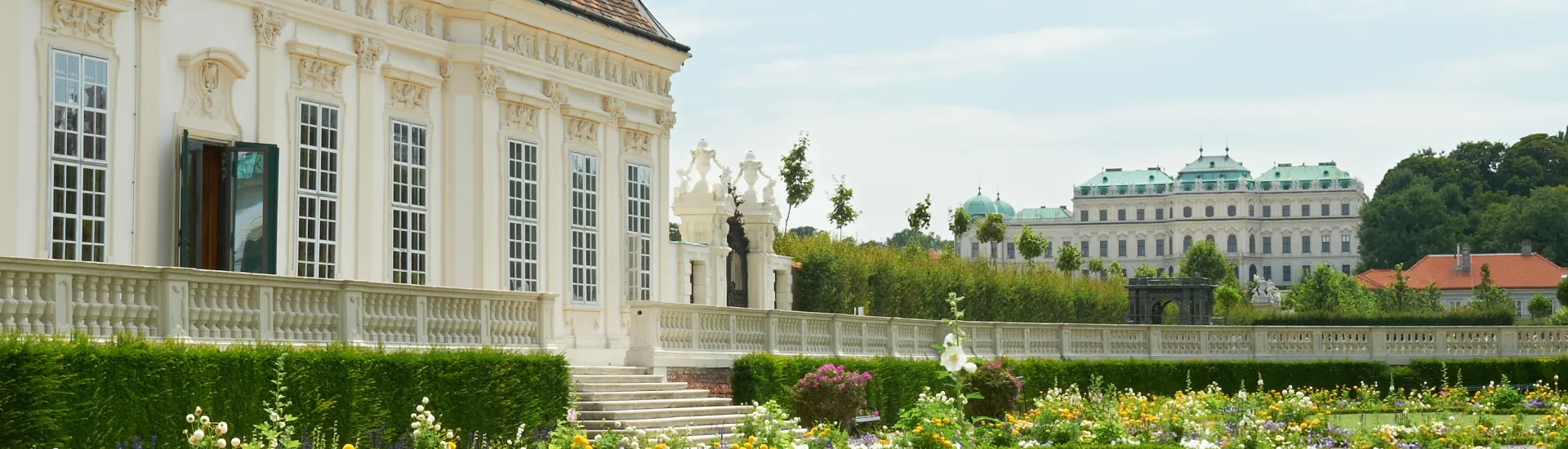
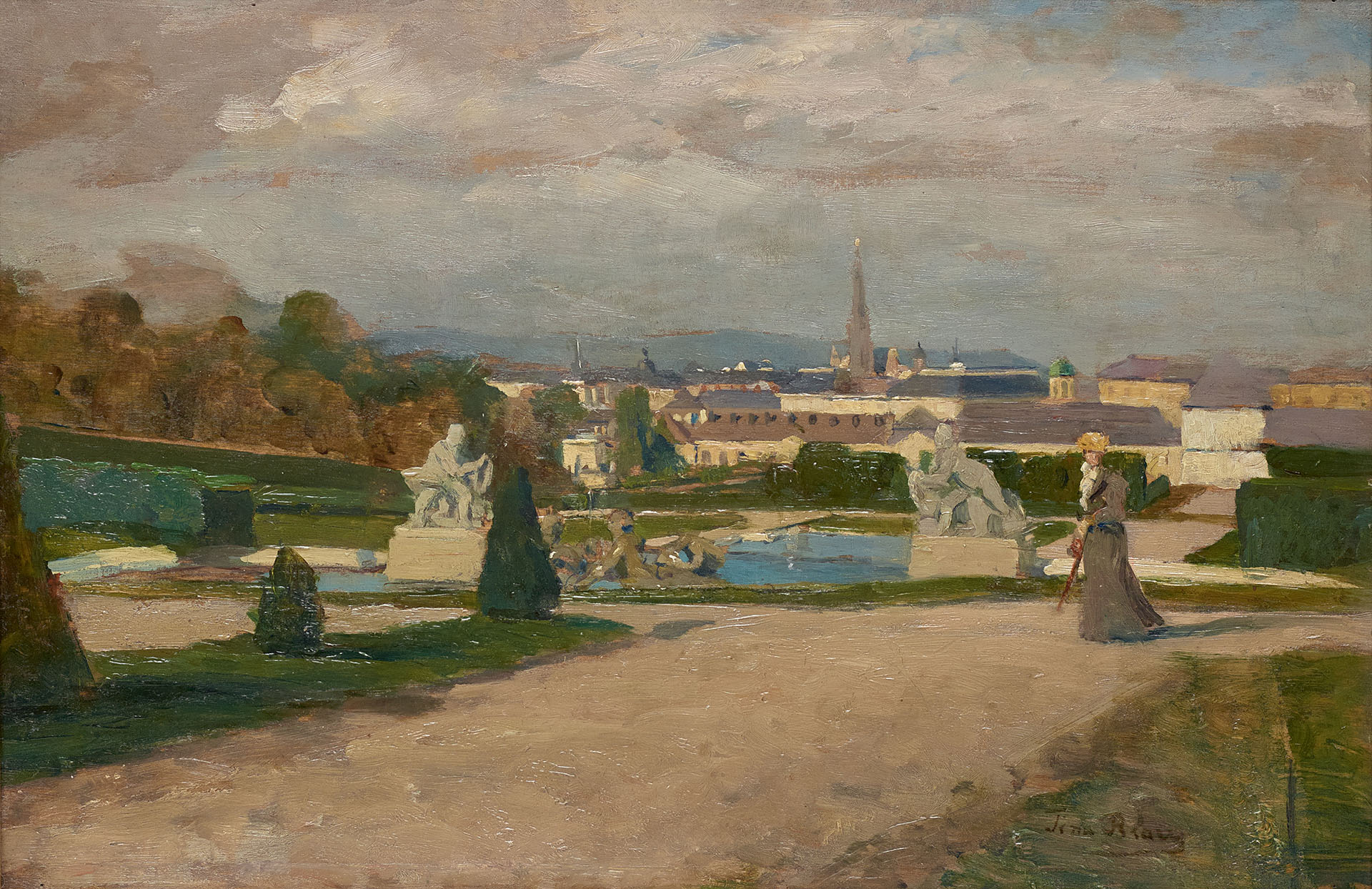
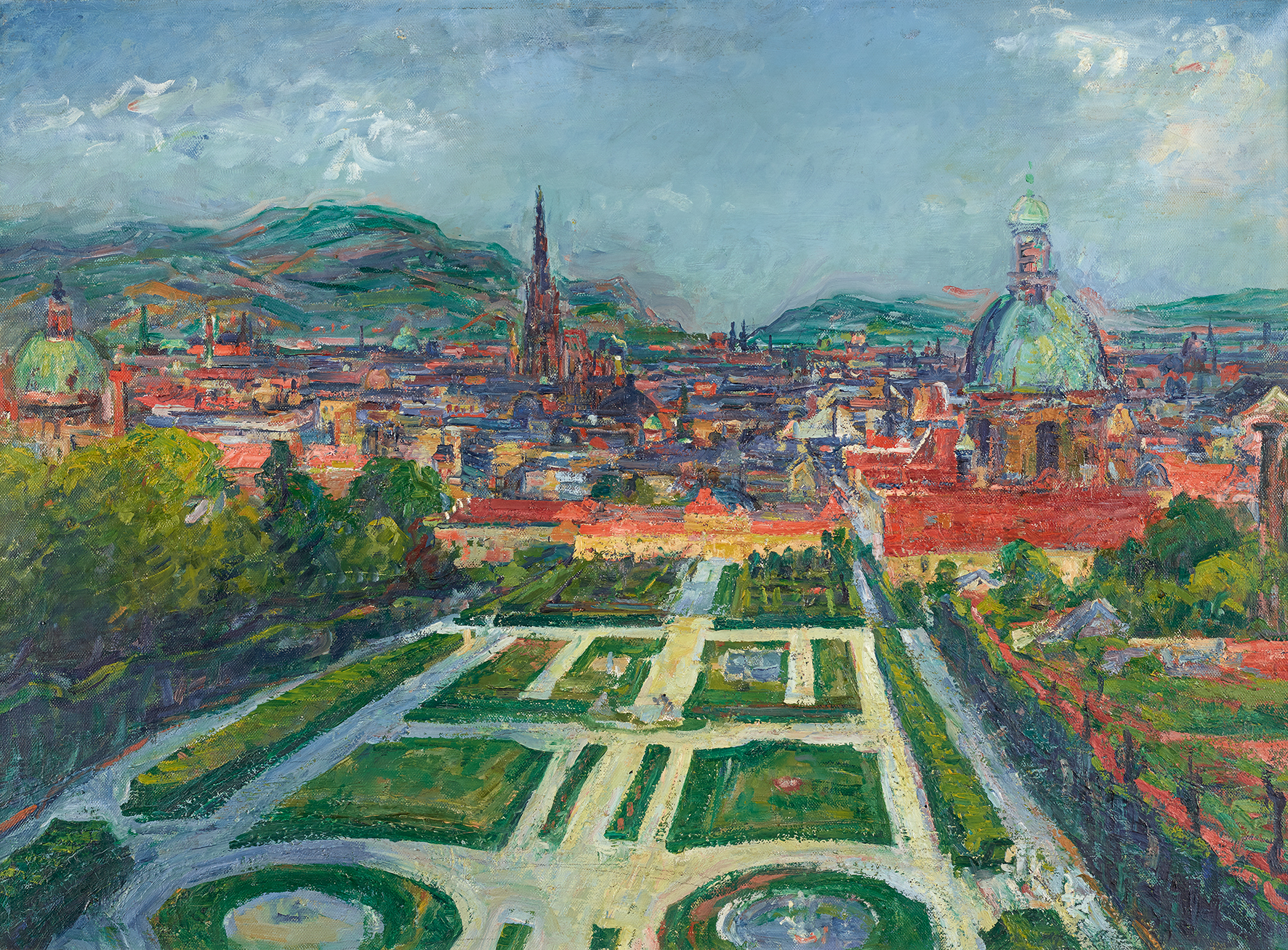
Palaces, mansions, and country estates with beautiful views were among the prestigious properties for the wealthy classes during the Baroque period—they were the luxury yachts of the eighteenth century. It was only fitting that Prince Eugene of Savoy chose to crown the gently sloping vineyard he had acquired south of Vienna in 1697 with a building from which he could take in the full sweep of the city below, stretching as far as Grinzing and the Kahlenberg—truly, a belv edere. A few decades later, the painter Canaletto would immortalize that very panorama.
It was, however, not the only building in the vicinity of Vienna to bear that name. As early as 1688, Fischer von Erlach had conceived a garden palace for the Prince of Liechtenstein at the city’s northwestern edge. By 1720, the building was likely completed, although not without some modifications. Through its grand arched gateway, it offered a view toward the Vienna Woods, with the Kahlenberg lying considerably closer from that vantage point. In 1873, however, the Liechtensteins had their aging pleasure palace torn down and replaced with a more utilitarian structure in keeping with the Ringstrasse era: evidently, they needed a site that could accommodate a building providing living quarters for family members.
Originally Italian, globally in vogue
It is no coincidence that the term belvedere is Italian, for its roots reach back to the fifteenth century, when the Medici near Florence and the popes in Rome commissioned buildings whose upper floors, roof halls, or loggias were designed to allow their owners and guests to enjoy nature with a sense of lordship, as if from an upper deck. The desire for an open outlook was not new even then, but now it had a name, one that would spread across Europe.
Soon one Belvedere after another appeared across the German lands—from Badenweiler in Württemberg to Lake Tollense near Neubrandenburg, where the building on its shore was designed to resemble a Greek temple overlooking the water. The Belvedere Palace in Weimar, as old as Prince Eugene’s Viennese counterpart, is likewise a UNESCO World Heritage Site. Potsdam has two: the Belvedere on the Klausberg, built under Frederick II, and the palace on the Pfingstberg, designed in the Neo-Renaissance style decades later.
According to Wikipedia, the Torre Belvedere is the only building in Switzerland to bear the name—a small stone lookout tower above Maloja in the canton of Graubünden, offering a beautiful view over the Upper Engadine and Lake Sils.
“The desire for an open outlook was not new even then.”
Michael Freund
In France, Belvedere mutated into Bellevue. From there, the name was successfully exported: in Berlin, it designates the official residence of the Federal President; and in Vienna, beginning in the 1850s, there was a château-like property of that name perched above the city in the Vienna Woods — très belle vue! Around 1900, it became a hotel, spa, and popular summer retreat, frequented by Viennese intellectuals and artists. Sigmund Freud dreamed his most famous dream there, an event now commemorated by a memorial stone. After the demolition of the building on Himmelstrasse, the city of Vienna commissioned the Ausflugsrestaurant Bellevue, completed between 1961 and 1963; lacking success and falling into decay, it was torn down in 1982.
In the United States—curiously enough, especially in the South—there are more than four dozen places called Belvedere or Bellevue, and about twenty more if you count Belvidere. Bella Vista, by contrast, is found mainly in Spanish-speaking countries, despite its Italian origin.
Let’s stay with the original for a moment: where does the popularity of this decorative name come from? Often the panorama itself may have provided the inspiration. There is also the prestige associated with the word Belvedere—and, quite simply, it sounds good, no matter how attractive the actual view may be, or whether there is one at all. Hence, the name has been given to a British transport helicopter, a Chrysler car model, a Polish vodka, a Canadian punk band, and many more surprising things besides.
Article first published in "Belvedere Kunstmagazin" no. 2-2024.
Gallery