

Please touch!
How tactile models enhance the art experience
With a new tactile station dedicated to Franz Xaver Messerschmidt’s Beak Head, the Belvedere is taking another step toward making art accessible to all. Accessibility expert Susanne Buchner-Sabathy put it to the test—and it quickly became clear: even those with perfect vision have something to gain.
Paula Pfoser
belle & sass
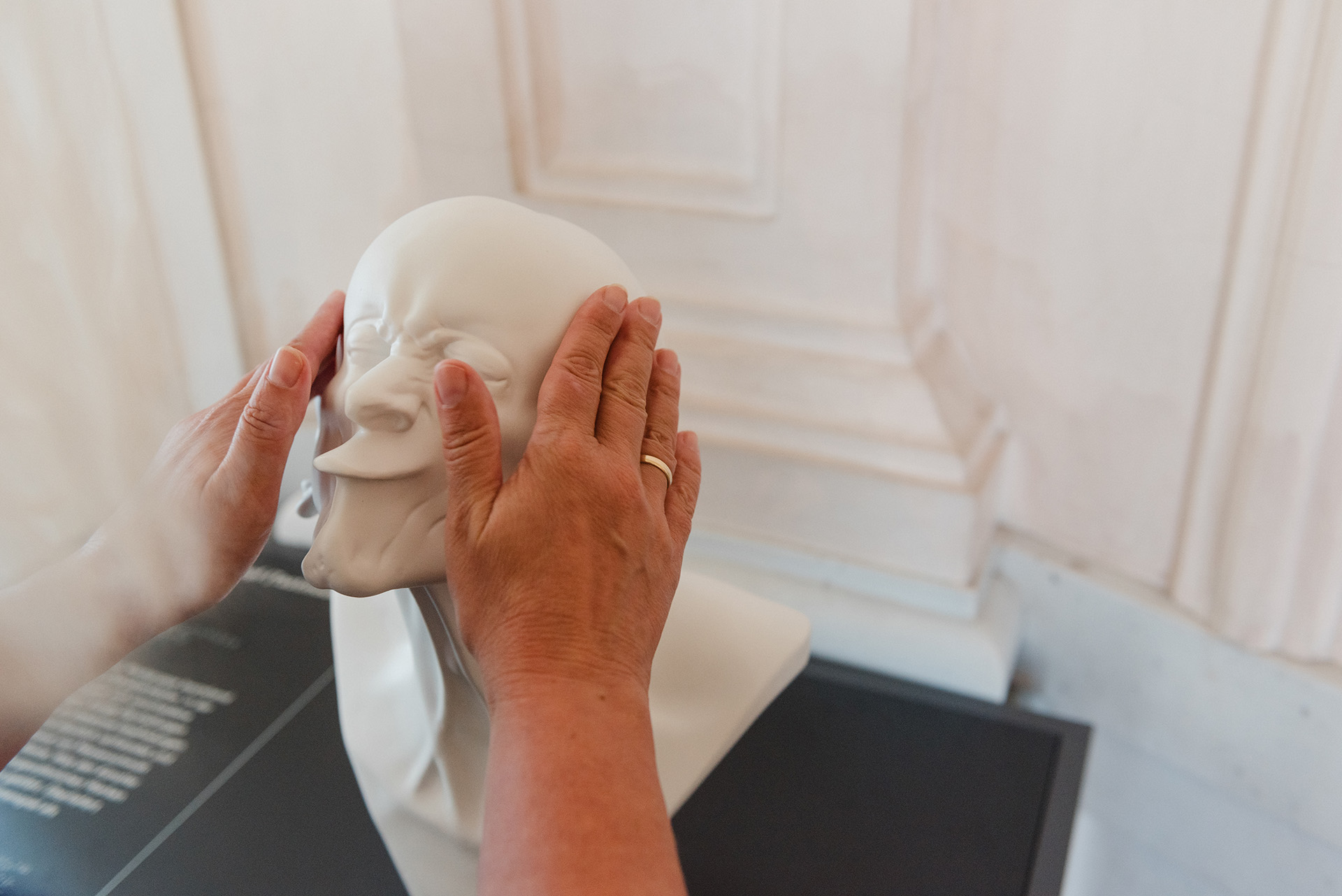
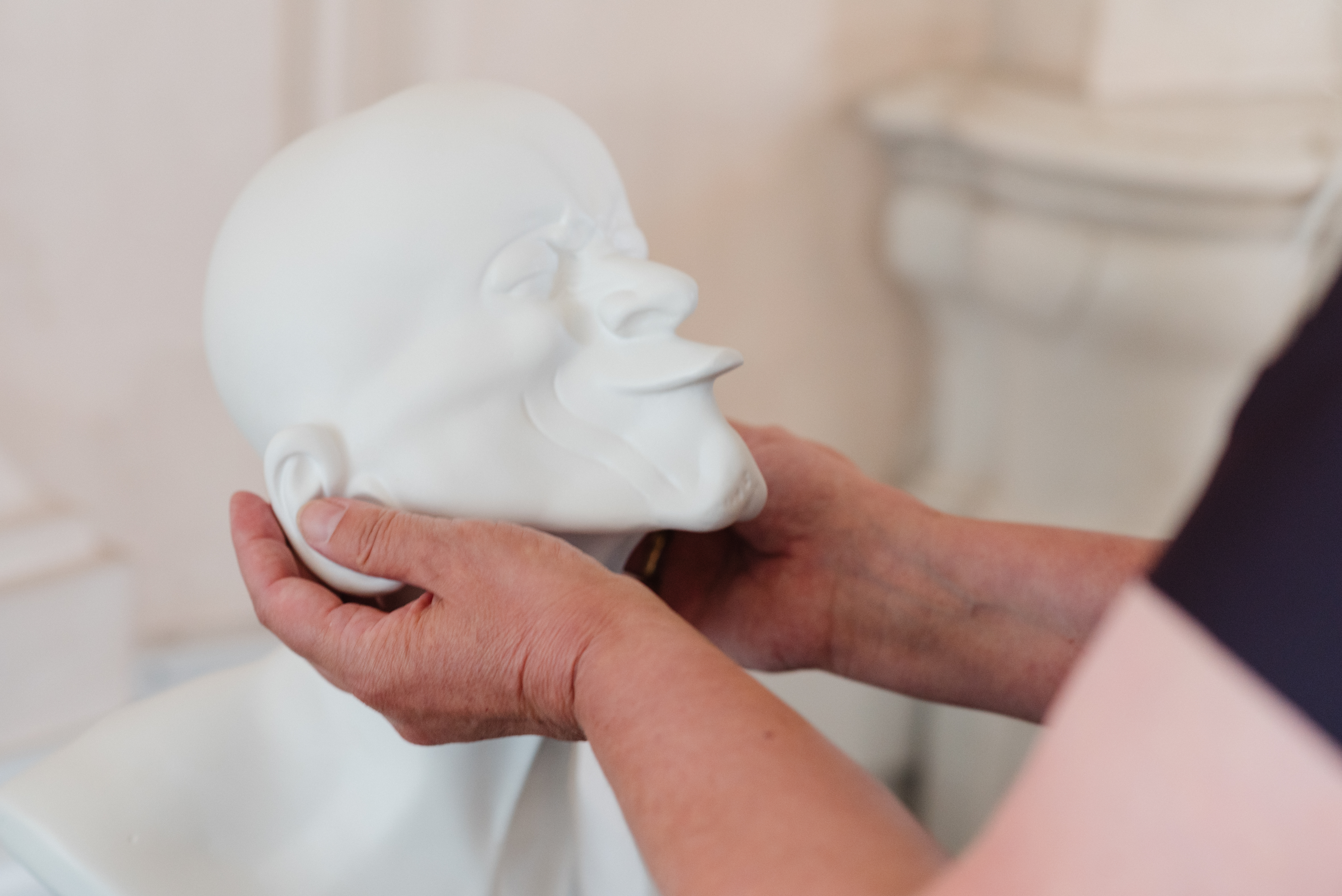
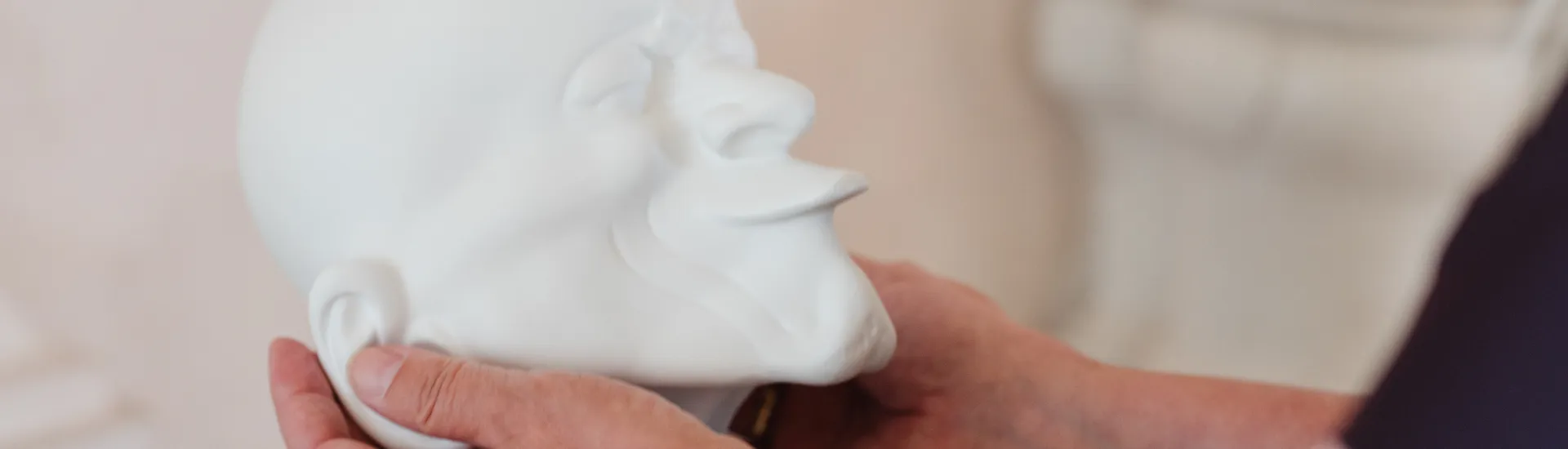
Is this some Baroque duck face—or what’s going on with this facial expression? Franz Xaver Messerschmidt’s Second Beak Head (1777–81) shows a face stretched to its limits: nose, mouth, and chin all thrust sharply forward into something like a human beak. “There’s something kind of… lemony about it,” says Susanne Buchner-Sabathy, as she runs her hands over the sculpted head.
The “Character Heads,” modeled by the German-Austrian sculptor 250 years ago and now among the Belvedere’s most popular attractions, have long inspired museumgoers to follow suit and try out the grimaces for themselves. After all, who doesn’t want to know what these expressions would look like on their own face? Now, a new tactile station opens that experience to blind and visually impaired visitors as well. Through touch, they can approach the enigmatic, almost hypnotic Beak Head in their own way.
“In museum work, the Belvedere really is a pioneer when it comes to inclusion”
Susanne Buchner-Sabathy
A Pioneer in Museum Inclusion
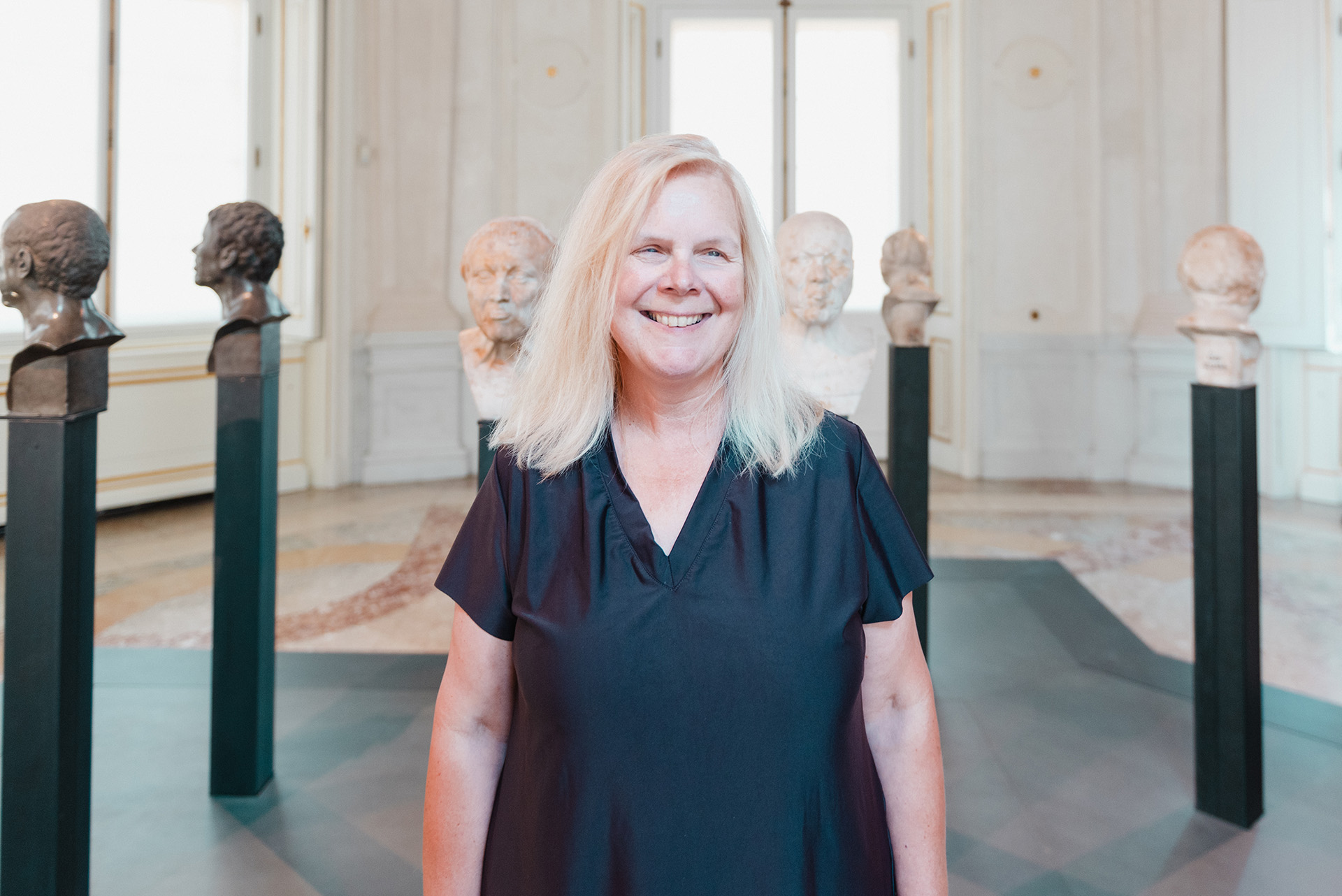
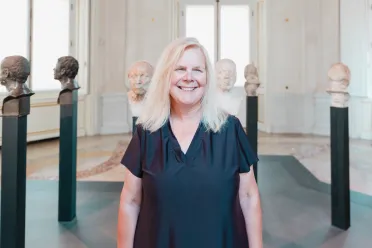
“In museum work, the Belvedere really is a pioneer when it comes to inclusion,” says Susanne Buchner-Sabathy—and she speaks from experience. A trained academic translator, she also works as an accessibility consultant. Visually impaired since childhood and completely blind since her forties, she now shares the expertise that comes from her own experience with museums. At the Belvedere, she spent a year serving on the “Focus Group,” an advisory board established to ensure inclusion is more than just lip service. Instead of the patronizing “be glad we’re doing something for you!” attitude, here people with disabilities are involved from the very beginning—as equal partners. And at the Belvedere, that means paid professional work, not volunteer help. After all, who better to know what makes art truly enjoyable?
Tactile Surprises
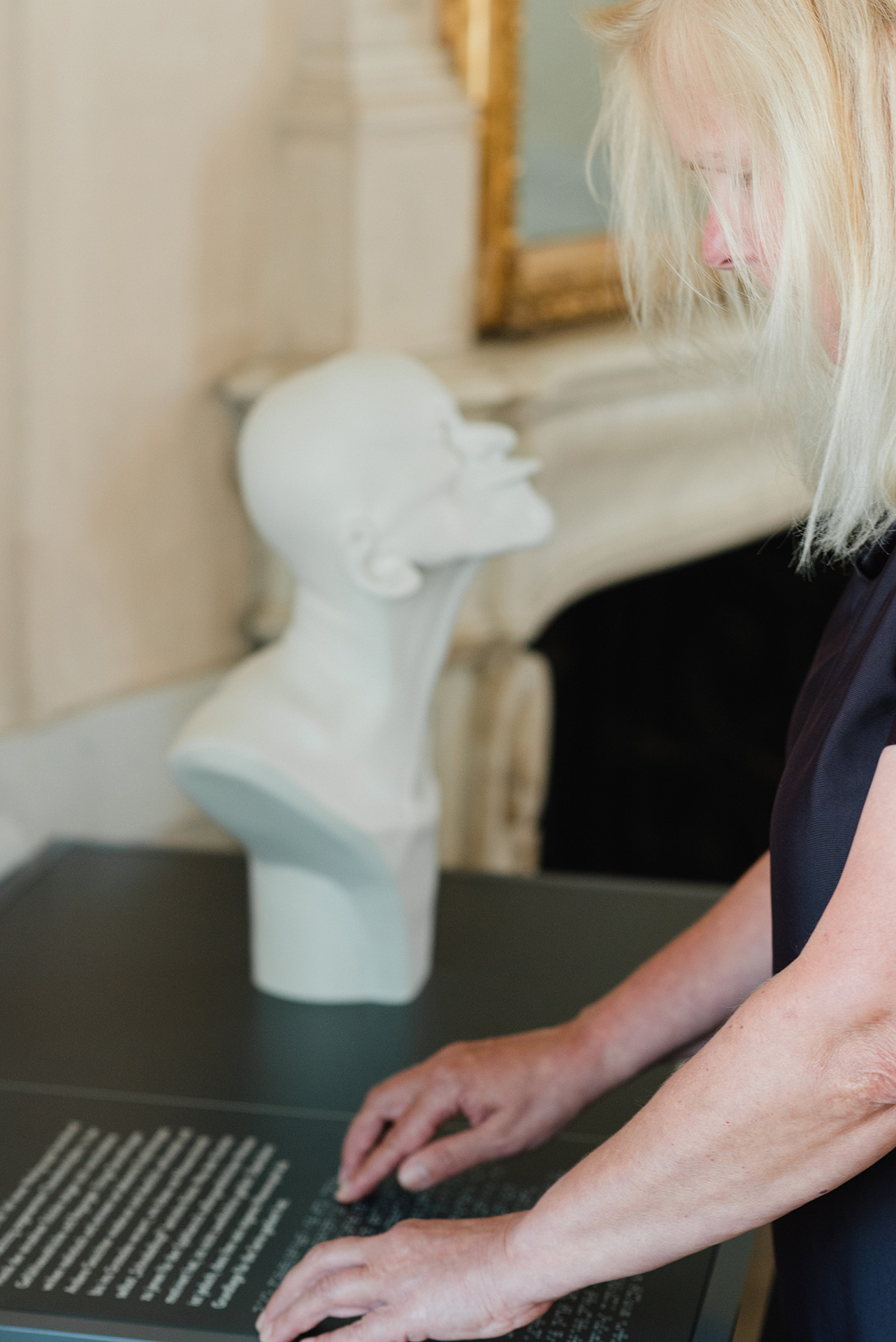
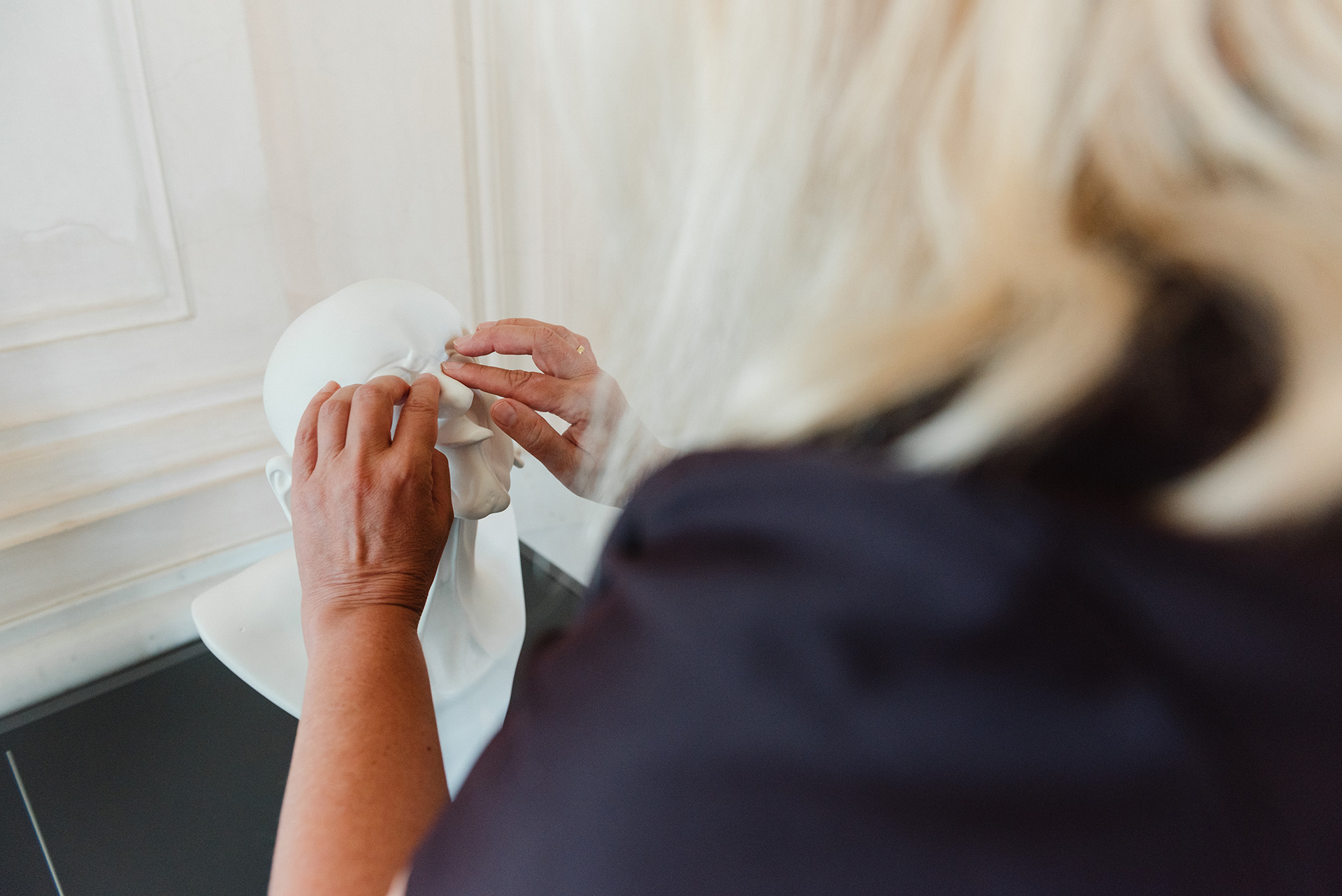
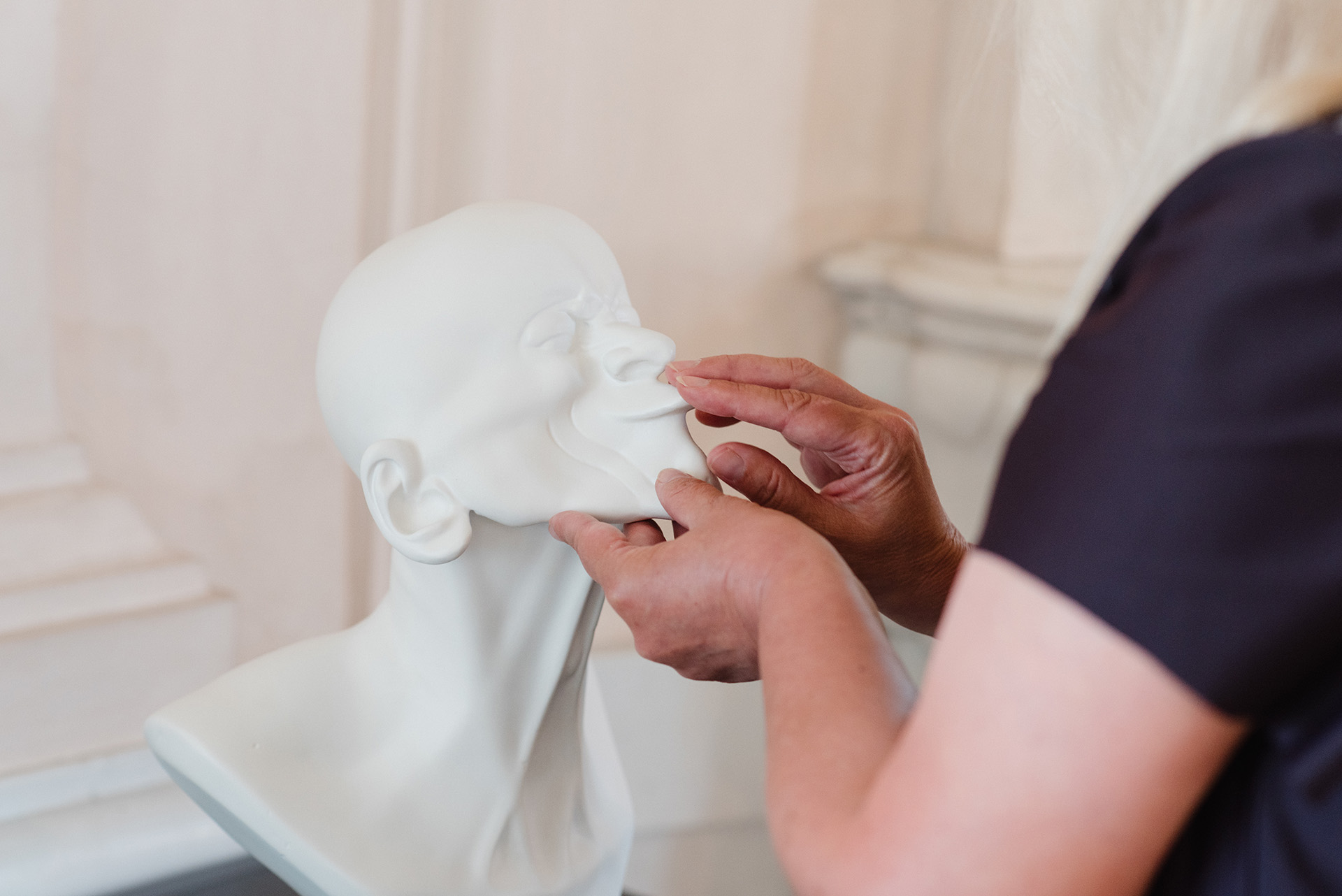
When examining the Beak Head, Buchner-Sabathy first feels the Braille text, which summarizes the key information, before her hands begin to explore the model itself. The 1:1 cast is crafted down to the finest details: the prominent ears, the skull with its indentations, the mouth, nose, and eyes drawn tightly together in such a small space. “I was, of course, familiar with Messerschmidt,” says Buchner-Sabathy, “but it’s still surprising how precisely he uses his sculptural means.” The tactile experience, however, also holds discoveries for sighted visitors. It is only through touch that one notices how deeply Messerschmidt hollowed out the area beneath the chin — the beak shape, it turns out, begins right at the base of the neck.
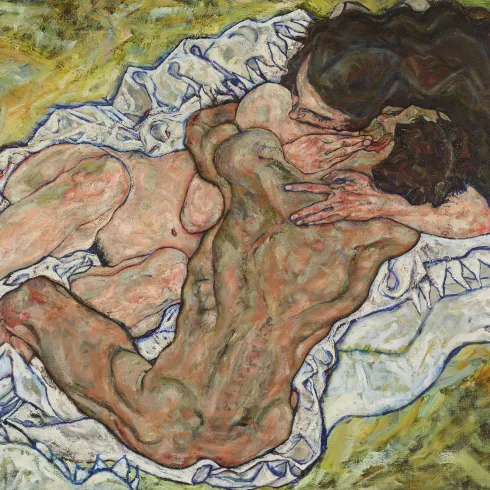
Alongside Messerschmidt’s head, the museum now boasts four of these finely crafted tactile stations. The first was introduced in 2016 with Gustav Klimt’s iconic The Kiss (The Lovers) from 1908/09, followed by Egon Schiele’s Squatting Couple (The Family) from 1918 and the medieval Fall of Man by Master I. P. Each interactive display has been custom-designed and was refreshed for the Belvedere’s 300th anniversary. At The Kiss, for instance, the meadow, the embracing figures, and the halo unfold in a play of textures, with surfaces ranging from grainy to grooved, complemented by Braille captions and a legend that decodes tactile details, such as “round shapes on the woman’s dress.”
At the Core: Guided Tours for Everyone
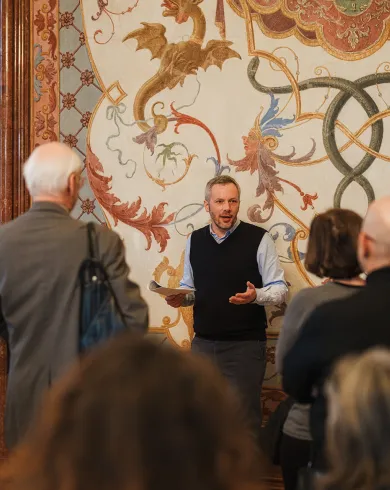
The core of the museum’s accessibility program is guided tours, which can be booked for as few as one person. The Belvedere also offers a regular monthly lineup of tours designed for everyone: themed tours presented in plain language; participation-based tours for people living with dementia or memory difficulties; interpretation in Austrian Sign Language; and multisensory tours for visitors who are visually impaired, blind, or sighted.
Art educator Julia Haimburger, who has spent the past five years advancing accessibility at the museum, emphasizes that all tours are meant to bring people with and without disabilities together. “We make sure to create the conditions for an equal museum experience,” she says, citing image descriptions, dialog-based communication, and spatial-orientation plans as key strategies.
No Single Truth
“But do you actually see the painting now?” It is a question a sighted visitor might ask a blind participant after a work has been discussed on a tour. Yet by the end, everyone understands: there is not one true image, no single truth. “It’s always a matter of personal perception,” says Buchner-Sabathy. “Art is always an encounter.” That, by the way, holds true for Messerschmidt’s enigmatic Beak Head as well, Haimburger adds. Where Buchner-Sabathy feels a “lemon face,” another might sense bitterness—and a third, amusement.
Article first published in "Belvedere Kunstmagazin" no. 3-2023.
Gallery